
The opening night of “The Front Page” on August 14, 1928, at Times Square Theatre in New York, was met with enthusiastic applause. Amidst the excitement, one of the play’s authors proposed to Helen Hayes, a renowned actress, and she accepted. Their story is memorable and true. Equally true is that this play, created by Ben Hecht and Charles MacArthur, reflects a Chicago immersed in political corruption, offering a durable and influential narrative.
The plot is straightforward. Reporter Hildy Johnson plans to quit journalism, marry, and move to New York for a job in advertising. His editor, Walter Burns, wants him to stay. When convicted murderer Earl Williams escapes jail before his scheduled execution, Burns persuades Hildy to cover one last story. The action unfolds in a press room filled with poker-playing reporters, a mayor concerned about re-election, and a corrupt sheriff.
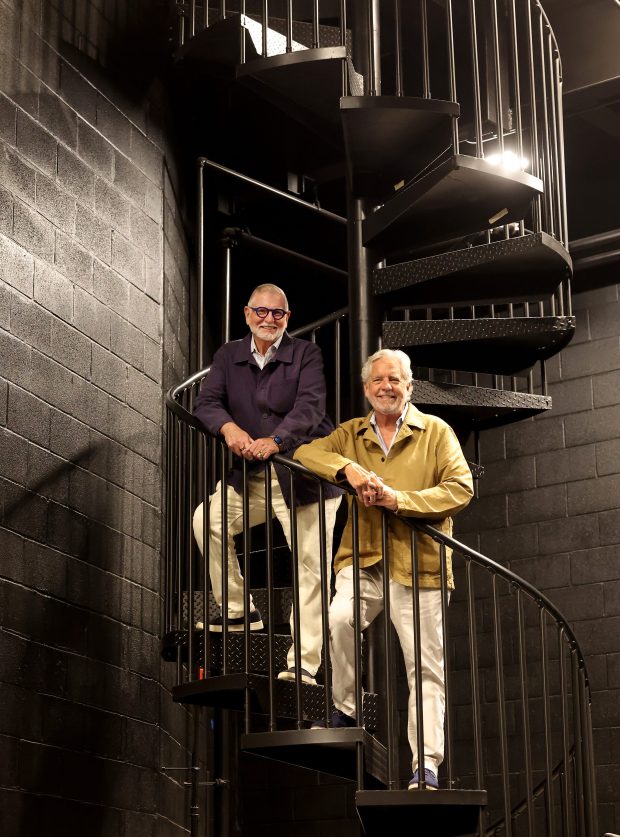
This nearly century-old play is the inaugural production at Northlight Theatre’s new Evanston location. Artistic director BJ Jones expresses excitement, emphasizing the play’s continued relevance to contemporary issues and its deep connections to Chicago. Executive director Tim Evans agrees, noting the play’s complexity and ongoing pertinence.
The play’s success was bolstered by producer Jed Harris and director George S. Kaufman, an influential figure in comedy during the 1920s and ’30s. Although the stars like Osgood Perkins and Lee Tracy are less known today, the play’s impact was profound. A 1928 review in The New Republic labeled it vulgar, yet E.B. White of The New Yorker praised its raw depiction of journalism. The play’s unfiltered language and daring topics, such as sex and prostitution, revolutionized American drama.
“The Front Page” debuted with 278 performances and has been revived on Broadway four times, most recently in 2016 with a notable cast. The 1931 movie adaptation kept the original title, while the 1940 film “His Girl Friday” refashioned Hildy Johnson as a woman, played by Rosalind Russell. A 1974 film directed by Billy Wilder featured Jack Lemmon and Walter Matthau. The play is frequently performed, including a 2011 production by TimeLine Theatre Company in Chicago.
This latest version, adapted by Jeffrey Hatcher, follows the “Girl Friday” model. Previews for the production, featuring a prominent Chicago cast, started on September 9. Gary Houston, a veteran of Chicago theater, previously participated in a 1981 Goodman Theater production of the play. Recalling the experience, Houston noted the unique blend of gruffness and elegance in the dialogue, capturing both humor and incisive timing.
The landscape of journalism has shifted significantly since the play’s debut, focusing more on digital media and social platforms today. Yet Hecht and MacArthur’s creation captures a timeless struggle with headlines taking precedence over human interest, prioritizing speed over accuracy and highlighting widespread distrust in politics and the media. As E.B. White acclaimed, the brilliance of the play lies in its near perfection.
On a personal note, I once lived near Bowery and Houston in Manhattan and was acquainted with Hecht’s widow, Rose. A former reporter and author, she recounted tales from her storied career and shared the remarkable story of the play’s opening night proposal, a tale she assured was true.