
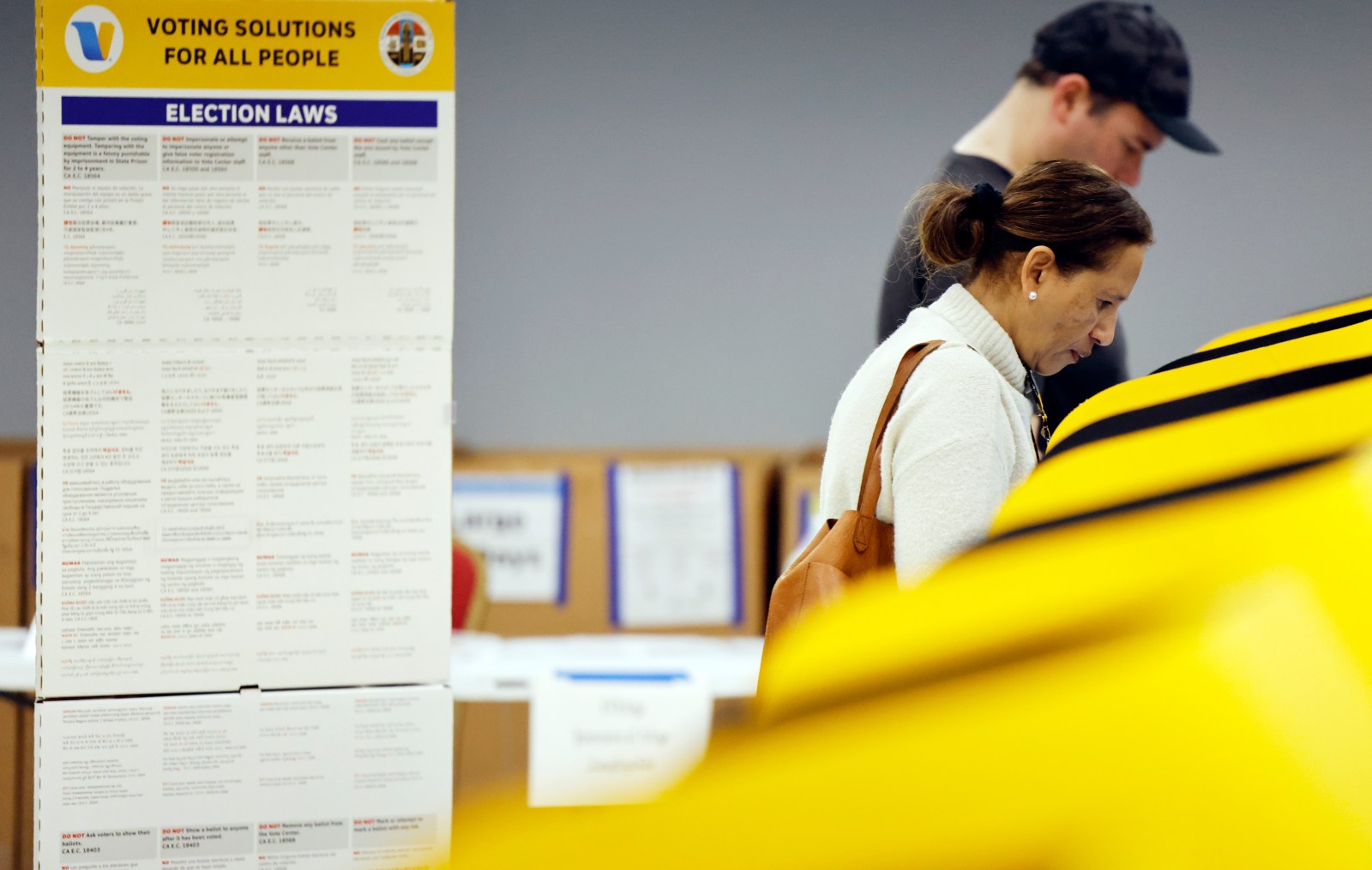
The Trump administration, through U.S. Attorney Bill Essayli, criticized California’s voter ID rules, stating that voter registration operates on an honor system without checks for citizenship. This criticism aligns with planned Homeland Security investigations into voter fraud in states like New York, Pennsylvania, and California.
Essayli shared concerns with Fox News about California’s lack of verification systems, highlighting a case of suspected voter fraud. DHS plans to provide further details on the crackdown, stressing efforts to restore integrity in elections, emphasizing that only U.S. citizens should elect American leaders.
“While ICE Homeland Security Investigations is not able to comment on any active investigations, HSI is actively rooting out and investigating election fraud wherever it can be found,” a DHS spokesperson informed Newsweek. “Under President Trump, HSI is committed to restoring integrity to our election systems and ensuring that American citizens and only American citizens are electing American leaders.”
Nationally, many states, including those with varied political alignments, do not ask for documentary proof of citizenship for voter registration. Instead, they verify information through Social Security and other databases. According to Charles Stewart III of MIT Election Data and Science Lab, the frequency of noncitizen voting is low, prompting states to focus elsewhere.
The Trump administration has offered states tools to verify citizenship, but the accuracy of these tools has been questioned, leading some states to resist their use.
How Voter Registration Works in California
California law requires registrants to declare U.S. citizenship on their registration forms. Missing this declaration results in application rejection. Identification via state ID or Social Security numbers is key, verified through various databases although documentary proof of citizenship is not mandated.
Unique identifiers are used when registrants lack common identification forms. Eligibility criteria include being a U.S. citizen, California resident, and age qualifications.
Comparing Voter ID Rules Across the U.S.
Implementation of voter ID laws varies greatly across states. While some states require strict photo ID, others offer alternative verification methods. This diversity stems from the constitutional empowerment of states to administer elections.
The National Conference of State Legislatures notes that some states enact proof-of-citizenship laws, although court rulings have impacted their enforcement. Meanwhile, 36 states have voter ID laws, with some offering exemptions and alternatives.
California’s Voter ID Controversy
Essayli reported that 400,000 individuals registered without ID records in California, stirring debates amid Proposition 39 discussions. This proposal seeks to mandate ID display during voting, arguing it enhances verification and aligns with nationwide practices.
Proposition 39 is opposed by groups citing potential disadvantages to low-income and senior citizen voters. Critics argue voter fraud is scarce, challenging the need for stricter regulations.
National Debate Over Voter ID and Citizenship Verification
The divide over voter ID and citizenship verification sees Republicans advocating for tighter controls. Democrats and voting rights groups contest these measures, highlighting the potential disenfranchisement of eligible voters.
The issue has seen various legal challenges, including those against Trump administration orders, citing burdens on eligible voters and state-administered election processes. Recent legislative proposals seeking nationwide voter ID standards face resistance, as critics emphasize safeguarding existing systems that prevent fraud.