
The recent announcement by the White House has generated significant attention as they have hailed a new oil deal with Venezuela, labeling it as the largest in world history. The claim is that this agreement will lead to lower gas prices. However, political and practical obstacles remain unresolved within the framework of this agreement.
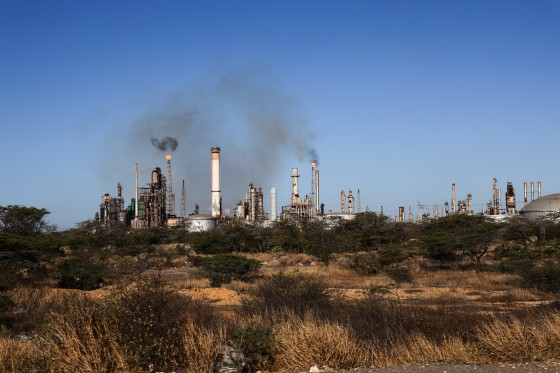
On January 2026, the picturesque Amuay oil refinery in Amuay, Venezuela, serves as a notable backdrop for this development. The image, captured by Jesus Vargas, illustrates the complex landscape where these negotiations are unfolding.
To provide a comprehensive understanding, we draw insights from Yasmin Vossoughian and Emily Ngo who contribute to the Inside Scoop newsletter. They point out the contradictions in the claims, prompting the public to assess the viability of the promises being made regarding gas prices.
Former President Donald Trump has been vocal regarding this offshore oil deal with Venezuela. He announced via Truth Social that this agreement involves a private business, granting the U.S. control over more than 65 billion barrels of Venezuelan oil reserves. His declaration, “THE BIGGEST OIL DEAL IN WORLD HISTORY!”, emphasizes the magnitude of the deal.
“We are trying to figure that out today.”
Further overshadowing this scenario is the peculiar case of George Santos. Known for his expulsion from Congress in 2023, Santos now faces a lifetime ban from Kalshi, a prediction market. The intriguing circumstance prompts further questions regarding the reasons behind this decision.
In conclusion, while the agreement showcases potential for substantial impact, critical examination of its practical aspects and political implications remains essential. These ongoing discussions highlight the complexities of international cooperation and economic strategies.