
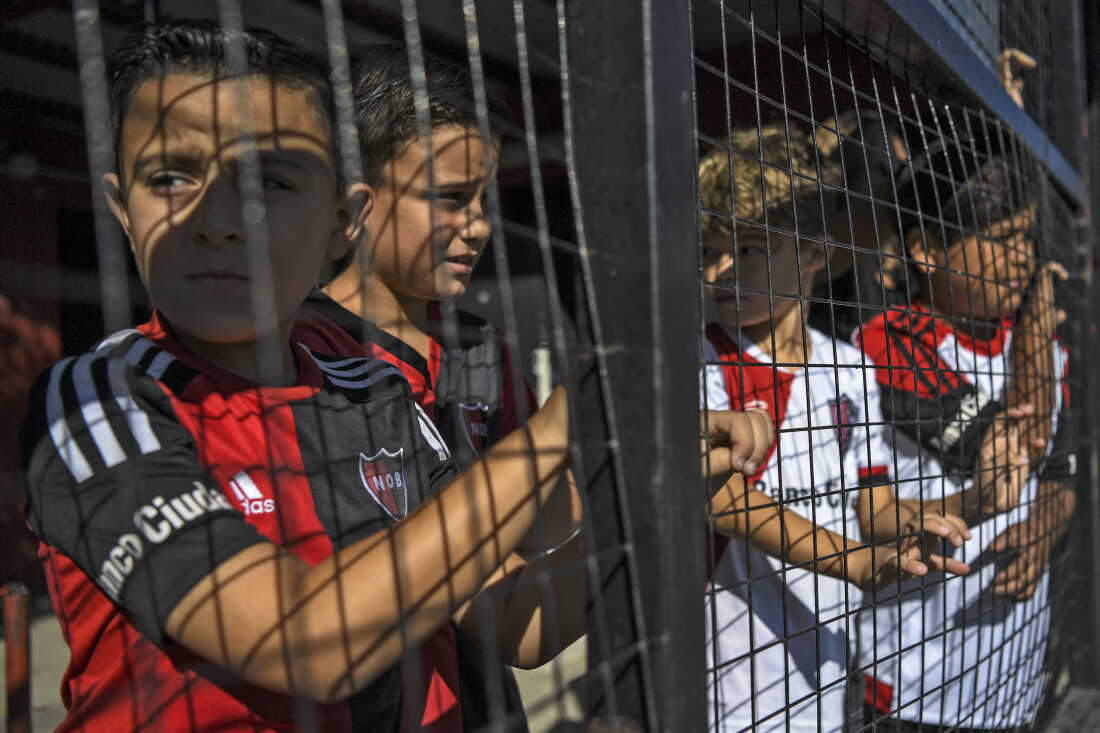
In Rosario, Argentina’s third-largest city, the Newell’s Old Boys soccer club stands out as a prominent institution. It’s known not only for its professional team but also for its youth academy. Over 700 children aged 4 to 12 train at its facilities each week, surrounded by murals of famous alumni like Lionel Messi.
Newell’s offers a platform for young players through its “baby football” academy. Promising talents receive scholarships for free training. Others pay approximately $25 monthly for two weekly sessions with coaches who are mostly ex-professionals. On weekends, competitive matches occur against city teams.
Carlos Gil, a fencing contractor, supports his 8-year-old son’s training at Newell’s. He appreciates the quality coaching available at an affordable cost compared to the United States, where equivalent training could cost parents between $1,000 to $3,000 annually. Gil believes high fees in youth clubs could affect Argentina’s soccer prowess, as many top players emerge from low-income backgrounds.
The affordability of youth soccer in Argentina raises questions about the pay-to-play model prevalent in U.S. youth soccer. Critics argue it hinders the country’s potential in men’s soccer. In contrast, clubs like Newell’s keep their programs affordable and consistently produce world-class players, serving as a potential model for the U.S.
“The kids that we are training today are what sustains this institution,” says Gustavo Tognarelli, head of youth development at Newell’s.
Newell’s earns revenue from its professional team’s ticket sales, broadcasting rights, and player transfers. Unlike their American counterparts, Argentine youth clubs receive a share of transfer fees for players they have trained from ages 12 to 23. This training compensation and solidarity payments provide a financial foundation for the clubs.
In contrast, U.S. youth clubs depend mainly on parental payments. Rory O’Neill, a Pennsylvania-based coach, points out that youth clubs in the U.S. miss out on these revenues as MLS teams are not required to share transfer fees. O’Neill suggests an open system where teams improve through merit-based promotion to higher divisions could boost youth soccer investment.
Filippo Silva, a coach and business owner, supports this view. He believes that allowing small investors a chance to gain from soccer would attract more money if the league’s structure became merit-based.
Argentina has long operated with a system of promotion and relegation, offering thousands of clubs the opportunity to ascend to the top division. Clubs invest in youth development with hopes of advancing in the football hierarchy or earning from player transfers.
Newell’s invests in around 400 players aged 12 to 18, offering them extensive training. Even younger children receive scholarships for training. Carlos Gil, despite living 120 miles away, commits to transporting his son to Newell’s, acknowledging the support the club’s scholarships offer.
Gil comments on life in Argentina, noting how limited financial resources don’t impede the quality of life in some insightful areas like youth soccer development.