
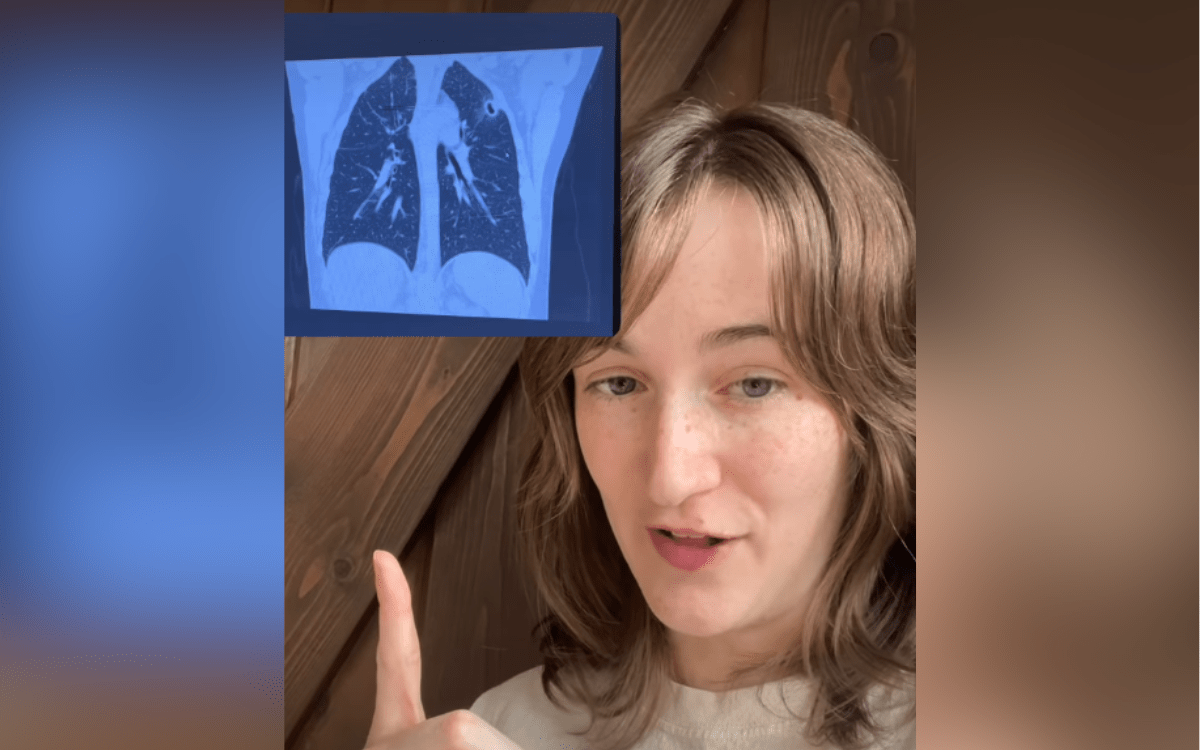
For years, a woman was misled by medical professionals who attributed her persistent cough to allergies. Only after an X-ray was conducted did the real cause come to light. Autumn, who prefers not to disclose her full name, resides in Houston, Texas, and has faced numerous health challenges throughout her life.
Autumn stated, “I was born with congenital heart defects, so my heart is severely deformed.” Despite undergoing multiple open-heart surgeries to improve its function, she expressed dissatisfaction with the medical response to her enduring cough, which originated in 2018.
A 2022 survey by MITRE-Harris Poll revealed that 52 percent of Americans felt their symptoms were ignored or dismissed by healthcare providers.
When Autumn initially sought medical advice, she described her symptoms: “It was a productive cough with green and yellow sputum and tasted sour, similar to pneumonia.” The response she received was a diagnosis of allergies.
During the COVID-19 pandemic, while receiving treatment for her heart condition, Autumn sought advice again. Despite prior assurances, she was advised to undergo a COVID test. Autumn questioned this logic, stating, “If it sounded like my lungs had an infection, why couldn’t it still be an infection despite having it before COVID?”
Over five years, Autumn consulted with two doctors, trying various allergy medications to no avail. Her cough persisted, with yellow and green sputum and severe fatigue. These symptoms were mainly attributed to her heart condition, despite her previous regular exercise.
Following a cardiac ablation to treat an arrhythmia, Autumn developed pneumonia. Although she received treatment, her cough worsened. “I started coughing up blood and decided to see a new doctor,” Autumn explained. The new doctor reviewed old X-rays, found an anomaly in her lung, and ordered a CT scan.
Autumn received a diagnosis of Valley fever, a fungal infection from inhaling spores of the fungus Coccidioides found in parts of the southwestern United States. Often mistaken for allergies, colds, or flu, Valley fever can lead to misdiagnosis. While many recover without intervention, it can become serious. The CDC estimates 5 to 10 percent of sufferers may develop long-term lung complications.
Autumn is scheduled for lung surgery in October to address her condition and is undergoing cardiac catheterization due to lung-related issues. By sharing her story, she hopes to inspire others to trust their instincts and seek medical attention. She urges doctors to re-examine their “implicit biases” and strive to overcome them.
“Women often get dismissed by doctors, and it’s both frightening and frustrating,” Autumn emphasized. “Though discouragement is inevitable, we must persist in seeking a healthcare professional who truly listens.”