
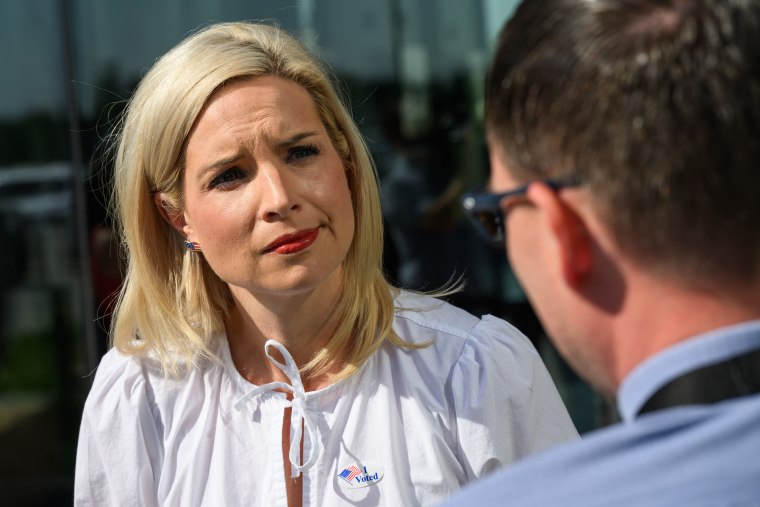
Concerns about the economy and high costs influence undecided voters in Iowa and Georgia. These states are central to the upcoming Senate elections. Participants in recent focus groups shared insights that reflect broader economic anxieties.
Economic Impact on Voter Decision-Making
Patty O., a 59-year-old Georgia Republican, expressed concerns over the rising cost of living, including steep prices for food and gas. She was among a dozen undecided voters in focus groups organized by Syracuse University, Engagious, and Sago. This group included six independents, five Republicans, and one Democrat. Nine of them voted for Donald Trump in the past, while three supported Kamala Harris.
The majority feel more anxious about the economy now than when Trump took office. Eight participants criticized Trump for not addressing the issue adequately. These concerns are consistent with broader polling data showing widespread economic unease.
With fewer than three months to the midterm elections, these voters remain undecided about their Senate choices, though some have picked favorites for governor. However, the economy is a major factor in their decision-making process. Almost all focus group participants agreed that economic issues would be crucial in their November votes.
Disapproval of Trump’s Economic Policies
“Among these undecided voters, pervasive economic anxiety is the animating issue in the midterms,” remarked Rich Thau of Engagious.
Overall, eight out of 12 undecided voters disapproved of Trump’s economic performance. Jamie G., a 55-year-old Iowa independent, expressed disappointment in Trump’s leadership, citing tariffs and what he perceived as unnecessary wars. He criticized Trump’s focus on personal projects instead of national concerns.
While some approved of aspects of Trump’s presidency, like his immigration policies, others raised concerns about tariffs and conflicts. Tyler R., a 24-year-old Iowa Republican, appreciated Trump’s stance on immigration but found the economic impact of tariffs troubling.
Drew G., a 59-year-old Georgia Republican, noted positive financial outcomes in his investments but criticized rising living costs caused by broader economic issues.
Economic Strains and Personal Sacrifices
Participants expressed how economic challenges affected their daily lives. Some reported forgoing major purchases or cutting back on expenses to cover necessities. Jennifer B., a 43-year-old Iowa independent, acknowledged her investment gains but lamented her inability to spend due to high living costs.
Patty O. shared her struggle with rising utility bills and having to give up luxuries, such as gym memberships. Sarah M., a 47-year-old Iowa voter, highlighted middle-class economic pressure, citing rising taxes and food costs.
Midterm Election Considerations
A majority expressed disapproval of Trump’s policies. However, many were not strategizing their midterm votes to counterbalance the presidency. Margaret Talev, from Syracuse University’s Institute for Democracy, Journalism and Citizenship, cautioned Democrats against assuming anti-Trump sentiment alone would win them races.
Tyler R. showed an openness to Democratic candidates due to dissatisfaction with Trump’s economic management. Recognizing political polarization as a problem, he valued candidates open to bipartisan cooperation. Nevertheless, many Iowa panelists were unfamiliar with Democratic Senate nominee Josh Turek and had limited knowledge of the Republican, Rep. Ashley Hinson.
In Georgia, voters remain uncertain about their Senate choices between incumbent Democratic Sen. Jon Ossoff and GOP Rep. Mike Collins. In the gubernatorial race, some already support Republican Rick Jackson citing his achievements, but others remain undecided.
While some participants raised issues like the war in Iran and burgeoning data centers, the economy remains the most pressing concern. Voter perspectives like those of Alice N., a 47-year-old Georgia Republican, underline a desire for candidates who prioritize economic improvements. Her focus is on reducing living costs and addressing everyday financial strain.