
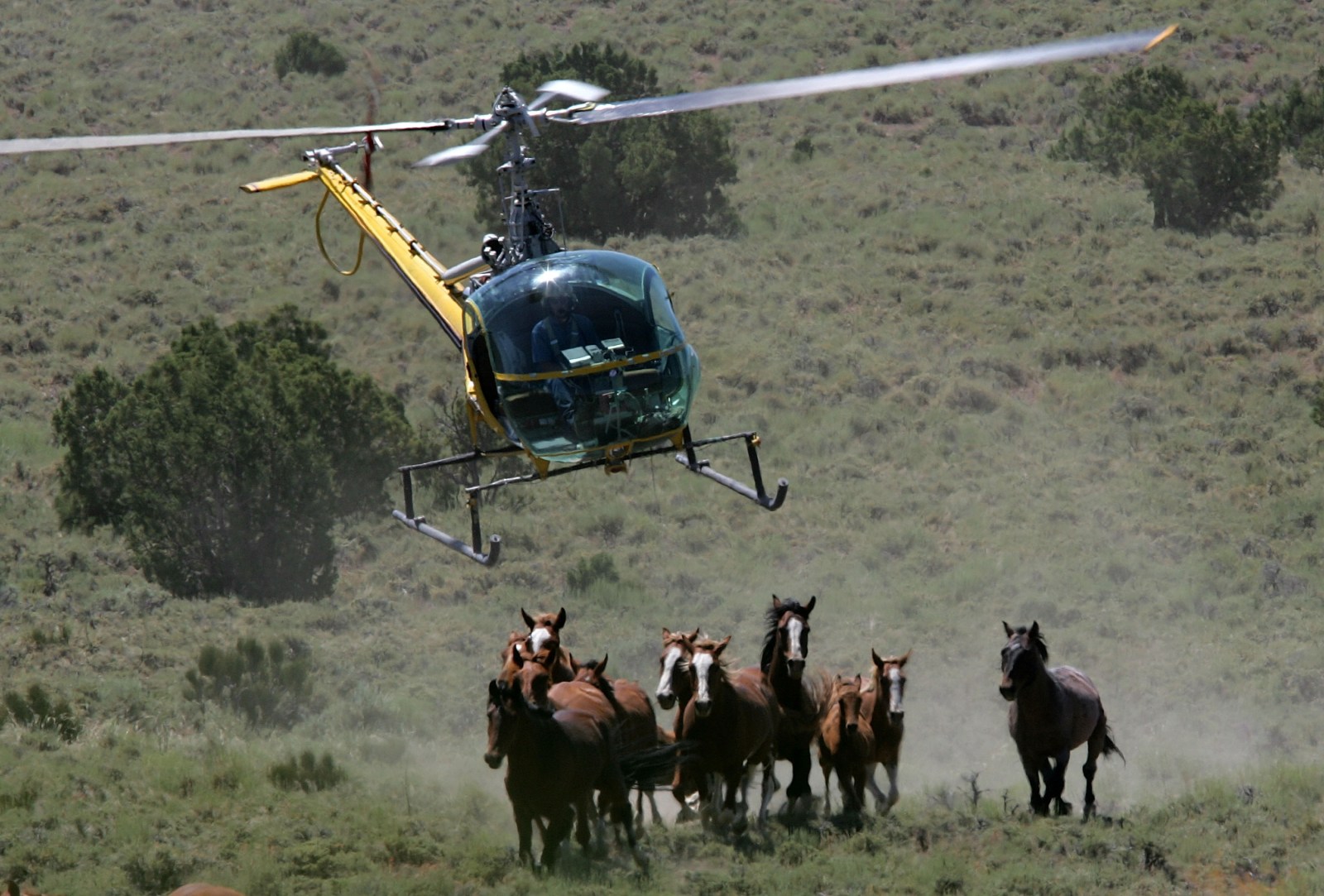
The Trump administration saw a significant rise in the federal sales of protected wild horses, sparking worries among animal welfare groups that some may eventually end up in slaughter channels. This issue came to light following an investigation by The New York Times into the Bureau of Land Management’s (BLM) Sale Authority program. The program allows horses deemed unadoptable to be sold after failing to attract interest during three one-week adoption listings.
Once sold, these horses lose their statutory protections, which are preserved for adopted horses. Although initial buyers must pledge not to slaughter them or sell them to anyone with such intent, critics point out that this restriction can be bypassed if the horse is resold to intermediaries not bound by the agreement.
The investigation noted a surge in sales following Trump’s return to office. BLM records show that about 3,700 horses were sold in 2025, more than double the previous year’s figures. Approximately 73,000 wild horses roam federal lands in the West; an additional 58,000 are in BLM holding facilities at an annual cost of around $100 million. The government estimates that selling horses in 2025 could save $56 million in future care costs. The Department of the Interior states that removing excess animals through adoption or sales is part of its legal obligation to maintain healthy herds and reduce overcrowding on public lands.
The Interior Department clarified to Newsweek that BLM does not send wild horses or burros to slaughter. Allegations of law violations or agreements are reviewed and referred to law enforcement when necessary.
In a statement, the Department emphasized ongoing federal responsibility under the Wild Free-Roaming Horses and Burros Act of 1971, and the 2004 congressional directive to make certain excess animals available for sale with safeguards against commercial processing.
Sales Spike Under Scrutiny
Patricia Miller, executive director of American Wild Horse Conservation, highlighted increased scrutiny of the Sale Authority program. Her organization began monitoring the program over a year ago due to rising efforts to relocate horses from long-term holding facilities, correlating with plans for more roundups.
Miller’s group observed Sale Authority’s heightened use in relation to pressure to reduce the holding facility population. Documentation acquired via Freedom of Information Act requests revealed the scale of the program’s utilization.
Miller reported alarming instances of large groups of horses being sold to inadequately vetted buyers. The scrutiny emerged after a separate federal court decision in 2025 led BLM to halt its Adoption Incentive Program, which provided adopters up to $1,000 to take horses and burros. Animal rights groups alleged some animals from that program ended up in slaughter channels.
Key Vetting Concerns
Miller expressed concerns about the buyer demographics. The Times reported on Brandon Jones, an Ohio livestock trader who obtained hundreds of horses through the federal program, becoming a central figure in its investigation.
Jones denied selling horses for slaughter, stating he resold them in small numbers to good owners. However, he declined to disclose the destinations of the hundreds he purchased.
The Interior Department stated that most adopters provide proper care and discouraged confusing program abusers with responsible Americans. Miller noted volunteers and rescue groups reported finding horses from Sale Authority in “kill pens,” where they are collected before being sold to slaughter buyers or shipped elsewhere.
Despite BLM’s requirement that buyers avoid slaughter sales, critics argue the contractual restrictions are difficult to enforce following resale to non-signatory intermediaries.
Birth Control Debate
The controversy rejuvenated discussions around federal management of wild horse populations. Some argue that the government overly relies on roundups, long-term holding facilities, and sales, rather than expanding fertility-control efforts to curb population growth.
Miller criticized the current approach, noting no plans for fertility control measures while removing 14,000 horses this year, potentially leading to repeated roundups.
BLM maintains fertility control is essential but not exhaustive. Treatments face limitations, requiring boosters and proving most effective in smaller herds. Studies suggest treating about 75% of mares in a herd to significantly impact population growth.
Management Challenges Highlighted
The dispute emphasizes broader issues faced by federal land managers. The U.S. Forest Service and BLM together oversee numerous wild horse territories across extensive public lands. Rapid growth among wild horse populations poses pressure on forage, water, and wildlife habitats.
The Forest Service utilizes gathers and vaccines for fertility control, while U.S. Geological Survey researchers continue examining population dynamics and ecological impacts. Advocates urge addressing underlying population growth factors, arguing increased sales reflect a mismatch with management strategies.
Miller expresses concern over Sale Authority’s application to younger horses, deviating from its intended use for older, less adoptable animals. She notes young, saleable horses are often pushed through online sales and Sale Authority.
As debate ensues, focus intensifies on post-sale horse fates and federal efforts to curtail population expansion through management tools.