
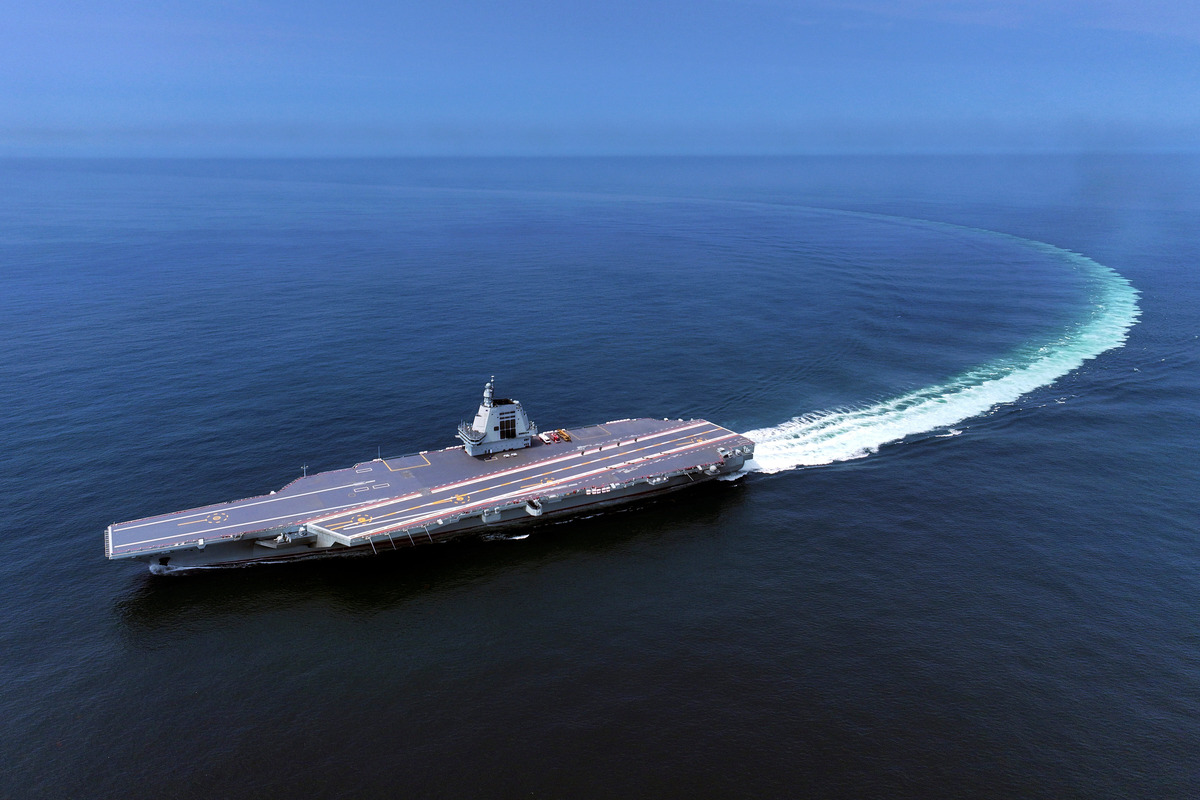
The USS George Washington aircraft carrier is heading to the Middle East to relieve personnel on the USS Abraham Lincoln. This move has brought attention to living conditions aboard U.S. Navy ships as concerns grow about not having a carrier positioned in Asia to counter China. Lawmakers demand details about the Lincoln after reports of plumbing issues, low morale, unreliable water, and food shortages. The Lincoln has been at sea over 200 days without docking and was expected back in San Diego in May, but its return was delayed due to tensions with Iran, extending its deployment several times.
Images have surfaced showing mold around the Lincoln’s toilets and dirty pipes. The Navy is investigating. Separately, a power failure on a guided-missile destroyer left it adrift in the South China Sea, with crew members lacking access to basic amenities for several days. The USS Benfold faced challenges with toilets and air conditioning during this period.
The 5th Fleet based in Bahrain also addressed claims of low feminine hygiene supplies on the USS Boxer, a ship serving in the Middle East. Despite the Navy’s global presence, it has struggled to maintain its ships due to prolonged conflicts with Tehran and other operations. The U.S. shipbuilding industry lags behind China’s, which boasts more than 300 shipyards and surpasses U.S. ship production. The U.S. built only five large merchant ships in 2024, while a single Chinese shipbuilder produced 250 vessels that year.
President Trump, acknowledging these challenges, permitted the Navy to use some foreign-made vessels, as domestic shipyards can’t meet demands. The Navy has unveiled a new shipbuilding strategy, currently operating 291 battle-force ships—below the legal requirement. A Government Accountability Office (GAO) report highlighted ongoing maintenance challenges for non-nuclear ships due to spare parts and qualified personnel shortages.
Extended deployments impact sailors’ mental health, as stated by experts. The lack of clear deployment end dates can cause anxiety. Retired Rear Admiral Mark Montgomery emphasized the stress of uncertainty during deployments. The increased length of deployments raises concerns, as highlighted by Senator Richard Blumenthal. He expressed his worries in a letter to the Defense Secretary and acting Secretary of the Navy.
President Trump’s comments and the statements from Navy officials suggest mixed opinions about the conditions on the Lincoln. A Navy spokesperson cited no evidence of a mental health crisis aboard. Admiral Brad Cooper, during a visit, praised efforts to prioritize crew well-being, acknowledging challenges faced during long sea stints.
Unlike the U.S., China has historically kept its ships closer to home. However, recent efforts show China is learning to operate further afield. A 2018 study on Chinese navy personnel revealed impacts on mental and physical health due to deployment length and personal factors. Another study from 2016 showed higher mental health issues among deployed Chinese sailors compared to those onshore.