
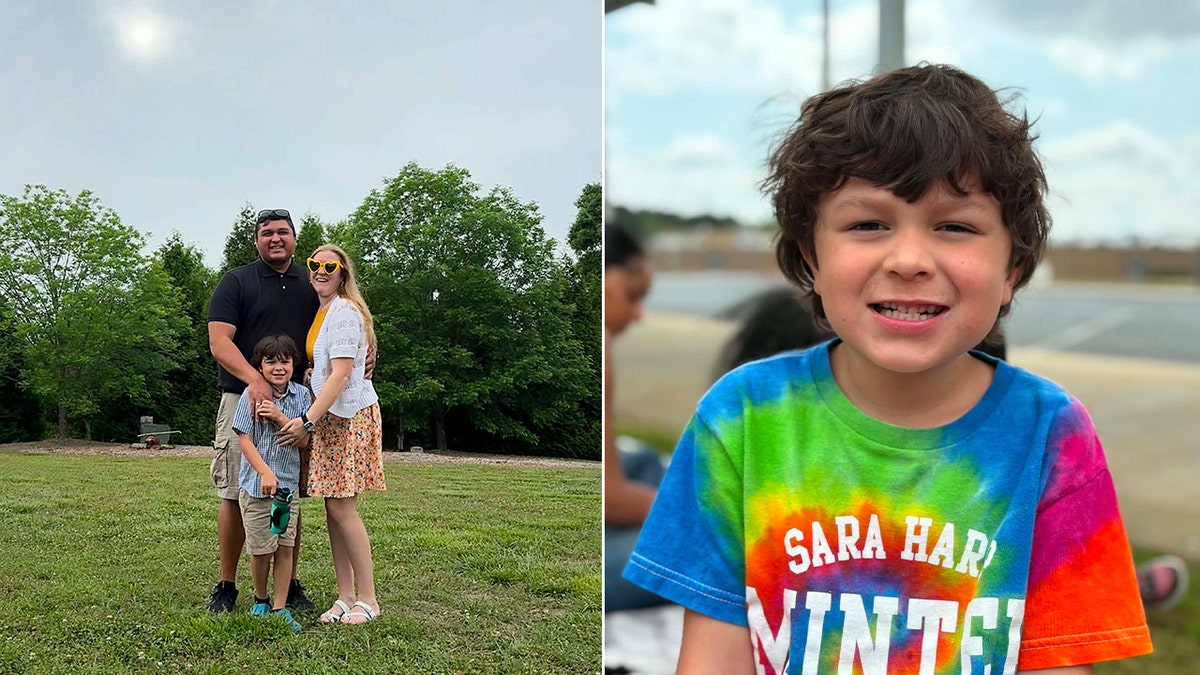
The parents of a first-grader with autism in Georgia are expressing concerns about the handling of their son’s behavior at school. Their son, a six-year-old named John Medina, was suspended for shaping his sandwich into what looked like a gun and pointing it at a classmate during lunch. The parents argue that the school’s strict policies do not consider his developmental challenges.
Disciplinary Concerns for Students with Autism
In March last year, John was suspended while in first grade at Sarah Harp Elementary School, located in Fayette County, near Atlanta. Diagnosed with level 1 autism at age four and later ADHD, John’s parents explain that his conditions can make understanding social norms difficult for him.
According to Kristin and Ricky Medina, John’s parents, he is academically advanced. However, strict school policies combined with a lack of initial developmental support have led to approximately 15 suspensions and over two dozen disciplinary actions since 2023. While some incidents were serious, others involved harmless actions like drawings or gestures.
The frequent disciplinary actions have impacted John’s self-esteem. He struggles to make friends and often feels isolated, describing himself as a ‘bad kid’ based on how he perceives treatment from peers and the school environment.
“I felt like they were cracking down more on small stuff.” – Ricky Medina
Challenges and Concerns
Kristin was shocked to learn about John’s suspension over the sandwich incident and questioned the school’s disciplinary system. Incidents such as making gestures or speaking certain words have led to escalations, raising concerns about the school’s approach.
John has been involved in some physical incidents. His parents mention that many disciplinary actions resulted from what they view as innocent hand gestures or drawings, leading to unnecessary scrutiny. Topics related to weapons are not discussed at home, but external influences can affect John.
Due to his autism, traditional punishments may inadvertently give John the idea that using certain words could allow him to leave school during challenging days. Kristin emphasized the need for teachable moments rather than punishment, promoting understanding rather than isolation.
Seeking Developmental Accommodations
The family faced resistance from the school initially regarding developmental accommodations. It took several suspensions and another ADHD evaluation before John was approved for an Individualized Education Program (IEP). Although academically advanced, the school didn’t first recognize his autism.
John’s parents are concerned that focusing on what they perceive as harmless behaviors reinforces his negative self-image and makes him reluctant to attend school, fearing ridicule for his choices.
“I just want to see John start to get his self-esteem built up.” – Kristin Medina
Positive Changes and Advocacy
Fortunately, John completed the last school year successfully, reading at a third-grade level and nearly qualifying for the gifted program. The school’s approach to suspensions has softened, particularly after the involvement of a special education advocate.
John now has a behavioral plan that includes an aide during unstructured times, contributing to better performance in a smaller classroom setting.
Ricky hopes for less severe punishments and more opportunities for John to learn through discussions rather than suspensions, focusing on serious concerns that need attention.
Efforts to contact the Fayette County Public Schools for specific comments were met with a suggestion to consider John’s entire disciplinary context rather than focusing on singular events.