
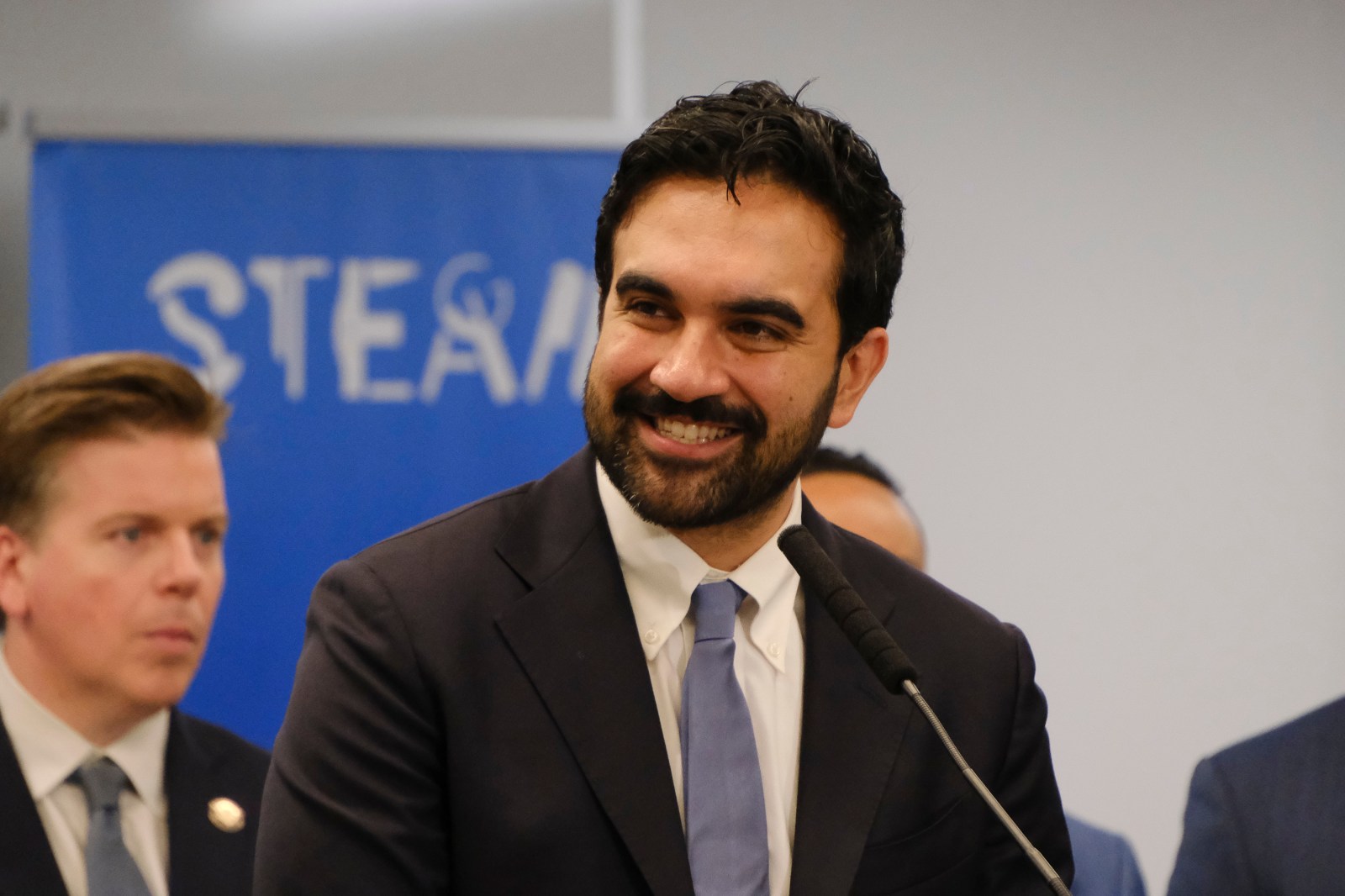
New York City Public Schools, the largest school district in the United States, has announced a one-year ban on the use of student-facing generative artificial intelligence (AI) for students in pre-K through eighth grade. This measure, announced by Mayor Zohran Mamdani and Schools Chancellor Kamar Samuels, aims to explore the technology’s effects on education and children’s development. Approximately 600,000 students are affected by this restriction, which prohibits AI companion chatbots across all grade levels.
Mayor Mamdani emphasized the importance of teacher-student interaction and human relationships in education, stating that students need to develop critical skills and engage with challenging problems without relying on AI. Samuels echoed these sentiments, highlighting the district’s dedication to maintaining human connection, curiosity, and creativity while evaluating the role of technology in learning. Both leaders stressed that technological innovation should support education, not hinder it.
The decision aligns with ongoing debates among educators, parents, and policymakers about AI’s place in schools. Some districts have embraced AI literacy programs, while others have sought to limit AI use due to concerns such as diminished critical-thinking skills, increased screen time, and potential privacy issues. Newsweek reached out to Mayor Mamdani’s office for further comments.
NYC AI Moratorium: Details and Justification
The moratorium affecting pre-K to eighth graders will take effect in the 2026-27 school year as the city analyzes the implications of AI on learning. The Technology in Schools coalition, comprising students, educators, parent leaders, officials, advocates, union partners, and experts, will assist in evaluating the policy’s impact and producing a report.
Mayor Mamdani stated that, contrary to the tech industry’s beliefs, early AI education is not a necessity, which led to the introduction of this moratorium. The district also plans to launch five limited AI pilot programs for high school students using tools like Quill, Edia, Brisk Teaching, Playlab, and Intel AI-Ready Schools.
New York Governor Kathy Hochul expressed support for the moratorium, commending the effort to prioritize students’ learning and development over mere technological engagement.
Comparison with Other Districts
New York City’s policy is among the most restrictive in the nation, though not entirely unique. Meredith Coffey from the Thomas B. Fordham Institute highlighted similar measures in other districts, such as Los Angeles Unified School District, which restricts AI use for students under 13, and Fairfax County, VA, which bans AI in grades K-5.
Conversely, Chicago’s public schools incorporate AI literacy in their K-12 curriculum. The Los Angeles Unified School District has also reduced screen time and limited devices for younger students to address concerns about technology’s impact on learning and development.
Katy Independent School District in Texas has introduced a framework for the 2026-27 school year that restricts generative AI use for kindergarten through sixth-grade students. For older students, AI use requires teacher authorization and must be stated where applicable. Similar initiatives have been observed in Fairfax County Public Schools and proposed in states like Oklahoma and Idaho.
Debate on AI in Education
There is a consensus among teachers, parents, and students that AI’s presence in education and the workplace is inevitable, necessitating AI literacy as a key skill. Proponents argue that AI can aid in idea generation, provide personalized assistance, alleviate staffing shortages, enhance skill development, and prepare students for an AI-driven world.
However, many emphasize the necessity of caution, particularly for younger students, due to the risks AI might pose to cognitive development, social-emotional growth, and privacy. Coffey points out these risks but also notes the potential advantages of carefully designed educational tools using AI, urging further research on their academic benefits.