
JOHANNESBURG: The Iran-backed Houthi attacks on shipping routes in the Red Sea have prompted analysts to suggest a shift in U.S. strategy. These attacks on vessels in a key maritime passage might push the U.S. to strengthen ties with stable partners along Africa’s coast.
Since declaring independence from Somalia in 1991, Somaliland has emerged as a pro-U.S. territory. It offers the U.S. access to some of the region’s most valuable assets, including a long runway, an air base, and a deep sea port on the Red Sea.
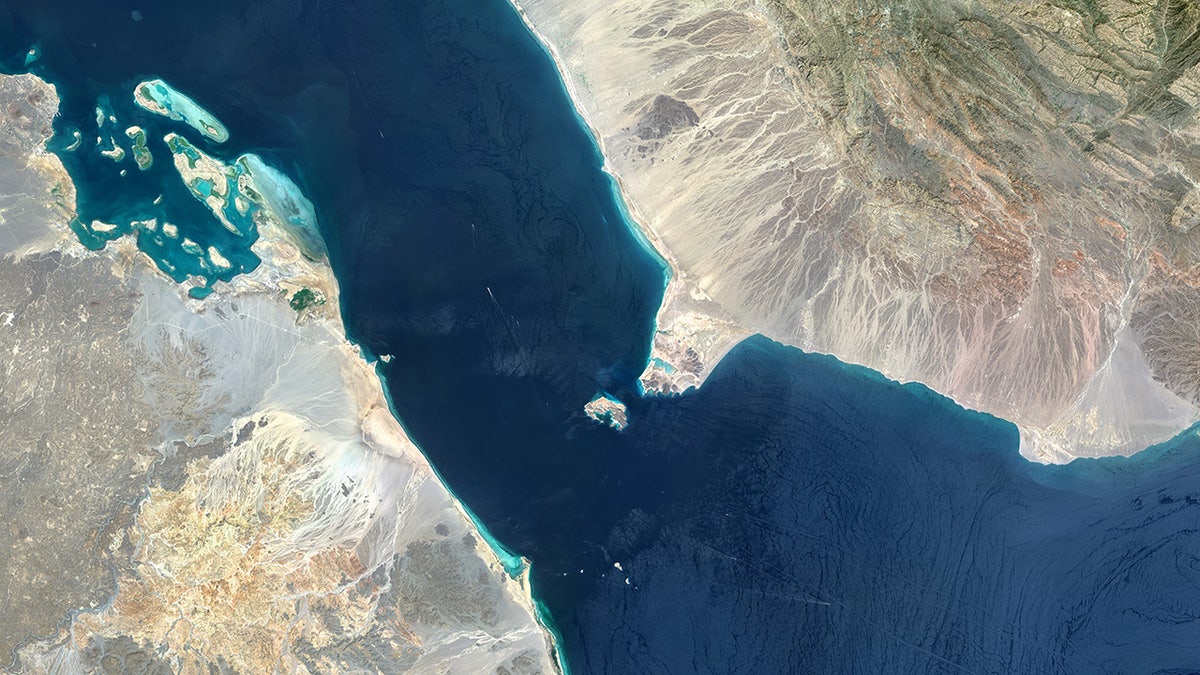
An aerial view of The Bab el-Mandeb Strait, a vital sea route linking the Indian Ocean and Mediterranean Sea through the Suez Canal.
Recent Houthi threats to close the Bab el-Mandeb Strait add to regional tensions. This narrow waterway is crucial for Saudi Arabia, which exports up to 7 million barrels of oil daily. Recent weeks have seen attacks on various ships in the Red Sea, including vessels from Saudi Arabia, India, and Egypt.
The U.S. maintains a substantial military presence in Djibouti along the Red Sea. However, this arrangement faces challenges due to China’s growing military and commercial influence in Djibouti. Edmund Fitton-Brown, formerly a British ambassador to Yemen and now with the Foundation for Defense of Democracies, noted doubts about Djibouti’s reliability as a U.S. ally. He suggested that the time might be ripe for Somaliland to become a more central partner.
Major General Ken Ekman, formerly involved in West African strategies, mentioned the Houthis’ potential to change U.S. recognition regarding Somaliland. He highlighted the need for the U.S. to reconsider its African strategy due to the Houthis’ increasing capabilities.
Houthi fighters took control of the Galaxy Leader Cargo off the coast of Hudaydah in November 2023.
Ekman also emphasized the challenges posed by the Houthis. Their strategy not only tests U.S. military prowess but also affects regional dynamics. U.S. Africa Command (AFRICOM) has traditionally focused on counterterrorism in Africa against al Qaeda and ISIS-linked groups, which currently pose no immediate threat to the U.S. homeland.
General Dagvin Anderson, the AFRICOM commander, recently discussed U.S. efforts in East Africa. During his meeting with Somaliland’s president, he reinforced the importance of continued U.S. engagement in the region for counterterrorism efforts and strategic stability.
Anderson also mentioned the limitations faced by Somalia’s government in countering al-Shabab terrorists and maintaining political stability. While the U.S. remains supportive of Somalia, ongoing instability may challenge future engagement.
The Berbera Port, positioned as Somaliland’s commercial hub.
Bill Roggio from the Long War Journal remarked on the U.S. dissatisfaction with Somalia’s internal issues, though noting the complexity of fully recognizing Somaliland’s independence. He acknowledged the possibility of a secondary base in Somaliland, complementing the existing base in Djibouti.
Bashir Goth, a representative of Somaliland to the U.S., emphasized the importance of dependable partners in Africa. He affirmed ongoing discussions with AFRICOM concerning Red Sea security.
Currently, the U.S. maintains official support for Somalia over Somaliland. A State Department spokesperson highlighted ongoing collaboration with Somali partners to counter terrorist threats crucial to U.S. national interests.
A new maritime defense coalition, including Saudi Arabia and 13 other nations, has formed to tackle the Houthi threat, although the U.S. is publicly not part of this alliance. The U.S. continues to express solidarity with Saudi Arabia against Houthi aggression.
Recent visits by AFRICOM Commander Anderson to Somaliland highlight growing U.S. interest. He assessed the security and operational capacity of the Berbera port. Similarly, Somaliland’s Defense Ministry has engaged with AFRICOM headquarters in Germany to further discuss Red Sea security issues.