
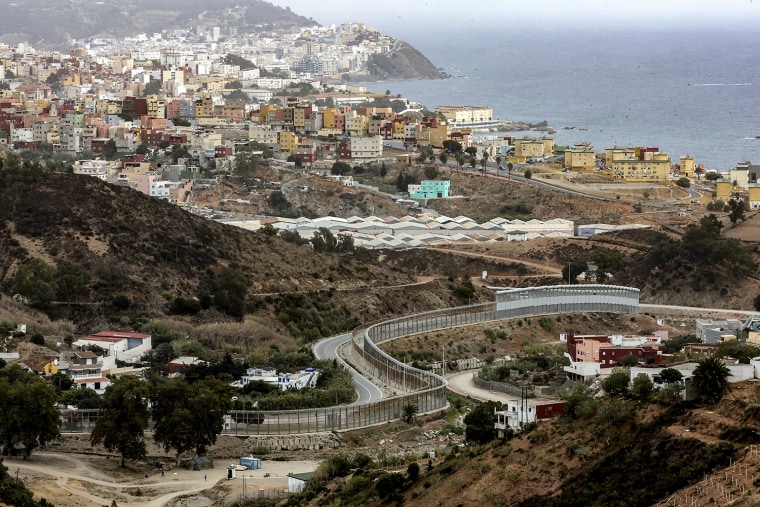
Between July 30 and 31, tens of thousands of migrants made their way from Morocco to Ceuta, a Spanish territory in North Africa. This unexpected mass crossing presented challenges for local authorities and infrastructure, serving as the initial test for the European Union’s new Pact on Migration and Asylum.
The swift influx of migrants highlighted potential weaknesses in Europe’s migration system, sparking a debate on whether the EU system is failing or functioning as planned. Many criticized the situation, including voices from Washington and European capitals. The U.S. State Department alleged that Spain facilitated mass illegal migration into Europe, a sentiment echoed by Denmark and Italy at the EU level. These countries, along with 22 member states, demanded cooperative EU border actions, accusing Spain of having policies that attracted undocumented migrants.
Far-right political parties in Europe seized the opportunity to criticize Spain and the EU’s overall migration approach.
Charles A. Kupchan from the Council on Foreign Relations noted the shock felt due to the unusual scale of arrivals, which is typically more gradual. The crowded arrivals and subsequent handling reignited discussions on European border practices, a persistently challenging political issue.
What Happened in Ceuta?
According to Spain’s interior minister, about 72,000 migrants crossed into Ceuta from Morocco over a few days. Some sources put the number between 50,000 and 60,000. The majority reached Ceuta by sea, utilizing swimming and makeshift flotation devices. Sadly, over 80 people died during the crossing, due to drowning or stampedes.
Ceuta, with a population of roughly 84,000, has repeatedly been a migration hotspot. It is one of two autonomous Spanish cities on Africa’s northern coast, along with Melilla. The recent surge was unparalleled in comparison to previous incidents, like in 2021 when 12,000 people crossed into Ceuta within two days.
What Caused This Migration Surge?
Multiple factors contributed to the crisis. The Spanish Supreme Court recently ruled against expedited returns of migrants arriving by sea, requiring regular deportation proceedings. This ruling provided migrants with better legal protection.
Misinformation rapidly spread online, suggesting migrants would not be deported if they reached either Spanish city. Rita Fernández from the CFR stated that social media, rather than smugglers, encouraged many to make the journey.
Criticism was also directed at Spain’s progressive migration policies under Prime Minister Pedro Sánchez. His administration’s regularization program attracted over a million applications from undocumented migrants seeking residency and work permits.
How has Spain Responded?
Spain responded with armed forces and police in Ceuta, using water cannons and tear gas to manage the situation. Ceuta’s leader declared a humanitarian and security emergency, as migration centers were already overcrowded prior to the influx.
Sánchez visited Ceuta, describing the surge as a violation of Spain’s sovereignty, and stood by his migration policies. Spain installed a floating sea barrier off Ceuta to deter future crossings. To support the unaccompanied minors caught in Ceuta, the Spanish government allocated $29 million, although many continue to struggle with shelter shortages.
What are the Broader Implications for Europe’s Migration Policy?
Ceuta was the first major test of the EU’s Pact on Migration and Asylum, aimed at enhancing coordination for migration management. Some EU states opted for unilateral border measures instead of using the pact’s mechanisms, indicating possible trust issues with the new system.
Irregular migration has remained a divisive political issue in Europe, aggravated by sudden large influxes. Following the Ceuta episode, 22 EU states called for an immediate, unified response. Italy and France reinforced border controls with Spain, and Portugal increased inspections at its southern borders.
An emergency EU meeting was held on August 4 to discuss improving situation awareness through early warning systems and social media monitoring. The EU migration chief emphasized solidarity with Spain, condemning divisive illegal migration debate, despite statistics showing a significant reduction in irregular border crossings.
Kupchan described Ceuta’s situation as a temporary breach, crediting Spain’s swift response as proof the system was operational, though not flawless. Further enhancements to border control are necessary, but the incident did not signify a crisis.