
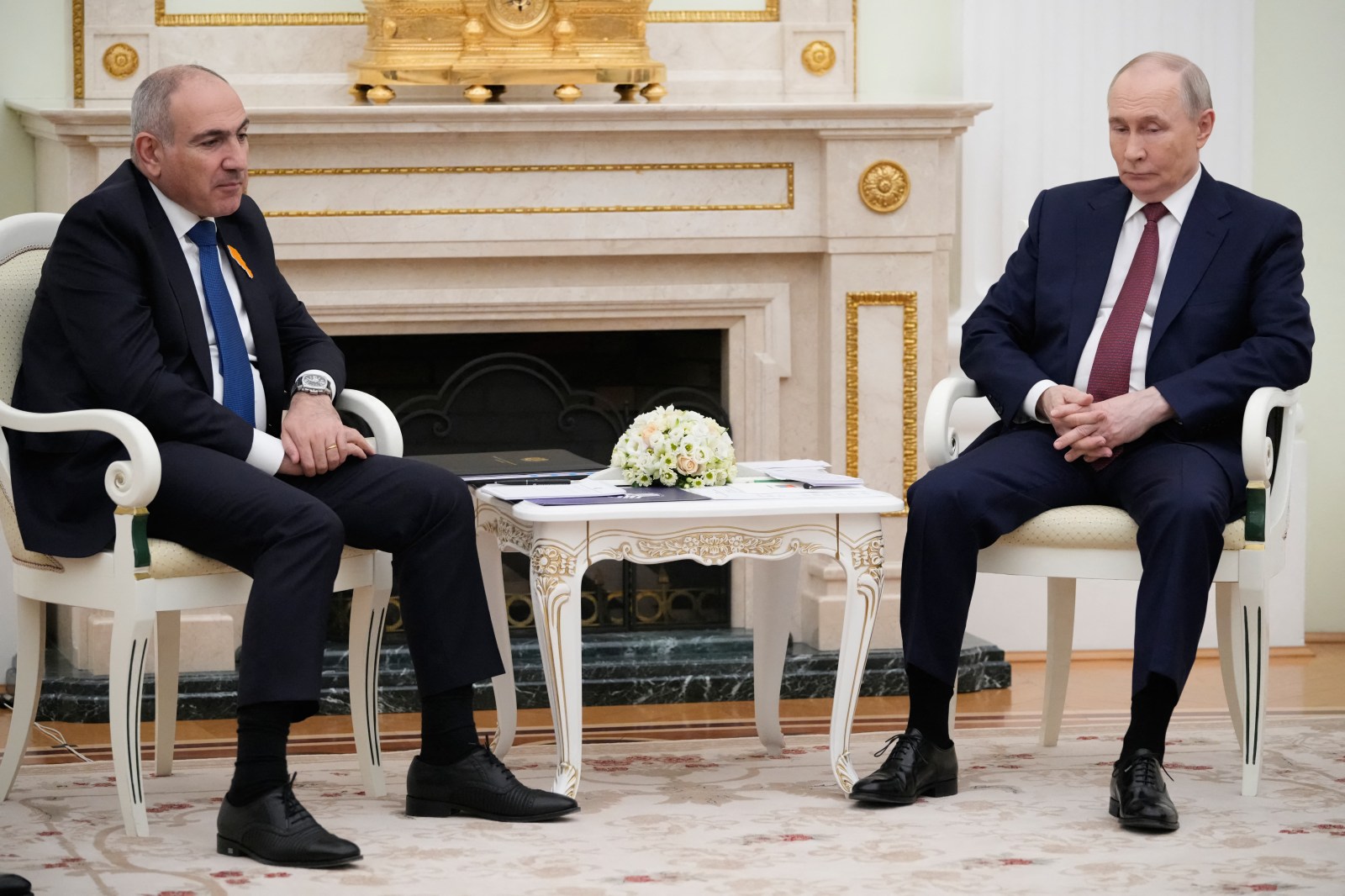
Armenia is contemplating leaving the Russia-led Collective Security Treaty Organization (CSTO), emphasizing the shift in its geopolitical posture. Armenian Prime Minister Nikol Pashinyan reaffirmed his February 2024 decision to pause cooperation with the CSTO, citing its failure to assist in conflicts with Azerbaijan. He expressed willingness to support any move by the bloc, consisting of six countries, to expel Armenia. Pashinyan stated, “I will be very pleased if the organization decides to expel the Republic of Armenia from the Collective Security Treaty Organization.”
Kremlin spokesperson Dmitry Peskov acknowledged Armenia’s prerogative to depart if it no longer sees membership aligning with its national interests.
Richard Giragosian, director of the Regional Studies Center in Yerevan, remarked that the CSTO’s inaction has demonstrated unreliable protection, especially amid incursions by Azerbaijan. Although diplomatic negotiations have progressed, he noted that the CSTO offers little security for Armenia. “Yet the Armenian leadership is both prudent and cautious in not unnecessarily provoking an over-reaction from Russia,” Giragosian said.
Historical Context
Armenia’s ties with Russia trace back nearly 200 years, beginning with the Treaty of 1828 with Iran, expanding Russian influence in the region. After briefly achieving autonomy in 1918, Armenia became part of the Soviet Union in 1920. Post-Soviet independence in 1991 did not sever military ties with Russia. Armenia joined the initial form of the CSTO in 1992 amid conflict over Nagorno-Karabakh.
The CSTO underwent changes, with members like Azerbaijan and Georgia exiting in 1999. Uzbekistan joined later but left in 2012. Nagorno-Karabakh has been a persistent source of tension, contributing to skirmishes. Despite Russian peacekeeping deployments, Armenian leadership doubted Russia’s willingness to act decisively in defense.
Pashinyan expressed concerns that Russia could face limitations in securing Armenia, pointing out the Russian Federation’s own challenges, especially since the 2022 invasion of Ukraine.
Current CSTO Members and Dynamics
CSTO membership includes Armenia, Belarus, Kazakhstan, Kyrgyzstan, Russia, and Tajikistan. Among these, Belarus has actively supported Russia’s actions in Ukraine. In 2022, CSTO responded to Kazakhstan’s request during unrest.
Moscow seeks to maintain cooperation within CSTO. Colonel General Andrey Serdyukov emphasized the growing importance of collective security during a recent event. Mher Sahakyan, leading a political research council in Yerevan, highlighted the CSTO’s reliability issues for Armenia since 2018. Attacks from Azerbaijan and Russia’s ties with Turkey raise questions about Armenia’s continued engagement in the CSTO.
US Influence and Armenian Alliance Shifts
The US has sought to position itself as an alternative partner. Under then-President Joe Biden, the US accelerated relations with Armenia. Trump’s administration continued this, fostering a strategic partnership and orchestrating the “Trump Route for International Peace and Prosperity” (TRIPP) agreement.
TRIPP aims to connect Azerbaijan’s mainland with its Nakhchivan exclave via a railway through Armenia. This infrastructure initiative supports broader US investments. Armenia is exploring Western partnerships and preparing for EU membership discussions.
Balancing Global Relations
Despite efforts to move West, Pashinyan remains cautious about fully detaching from Russian economic structures like the Eurasian Economic Union. Armenia is negotiating its place between East and West, advancing a diversification policy to attract multiple security partners without alienating Russia.
Sahakyan advised that Armenia navigate carefully, balancing between powers like the US and Russia, as well as countries in the region. Despite increased ties, he questioned US commitment to South Caucasus priorities.