
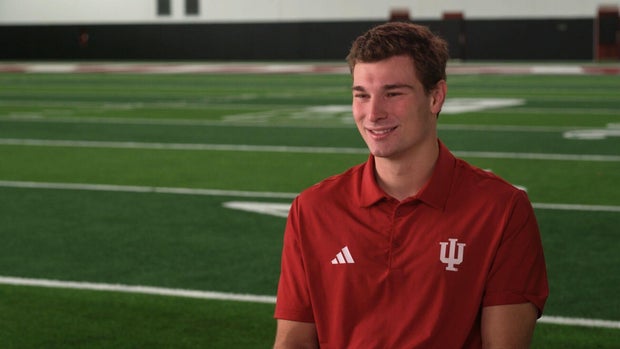
Indiana has provided the backdrop for numerous celebrated films, including “Hoosiers,” “Rudy,” and “Breaking Away.” Now, the state is the stage for another underdog narrative, this time in real life. For decades, Indiana University football experienced continuous defeat. But with the arrival of a new coach who had not yet reached the big leagues, the team became an unexpected favorite in college football.
Last December, we covered the Indiana Hoosiers’ perfect regular season. They proceeded to win three additional games, culminating in the school’s inaugural national championship. More than 55,000 fans gathered in Bloomington to witness this transformation.
Memorial Stadium in Bloomington, constructed from locally sourced limestone, is 65 years old but now hosts an invigorated football powerhouse. Previously known as a basketball-centric school, Indiana’s football team has gained newfound acclaim. This season highlights victories at both home and away, including a decisive winning touchdown against Penn State, celebrated as the play-of-the-year in college football. Surprisingly, they achieved all this with players often labeled as “overlooked.”
“I think a lot of people on our team, whether it’s coaches, players, or staff, have all been overlooked,” said Fernando Mendoza, Indiana’s star quarterback.
Fernando Mendoza himself encapsulates the rise of the team. Once a moderate performer in high school football, Mendoza recently won the Heisman trophy and became the NFL’s top draft pick. These accomplishments defy expectations, given Indiana’s historic struggle, with over 700 losses. The team’s victory against undefeated Ohio State, earning the Big Ten title, was astonishing. Indiana had not claimed the conference championship since 1967.
Don Fischer, the voice of Indiana football since 1973, described the transformation as unparalleled. “This is the greatest turnaround,” he noted, reflecting on the team’s remarkable journey.
Indiana’s football shortcomings were once attributed to a lack of recruitment successes, particularly among offensive and defensive linemen. The sport had not captured the local imagination. A low point occurred in a 1976 game against Ohio State. Indiana unexpectedly took a 7-6 lead, prompting then-coach Lee Corso to use a timeout for photos. The game ended with Indiana still at seven points, while Ohio State amassed 47.
A longtime fan, musician John Mellencamp, reflected on Indiana’s enduring challenges. Despite thin crowds, he funded an indoor practice facility, hoping to attract recruits. “Pretty thin,” he remarked, describing years when tailgates were more popular than the games themselves.
In 2023, after a difficult 3-9 season, athletic director Scott Dolson sought to fill a key vacancy with the right coach. He prioritized someone with head coaching experience and a focus on developing quarterbacks.
Dolson ultimately chose Curt Cignetti, a veteran coach who had consistently won at smaller schools but had been overlooked for bigger opportunities. This decision proved pivotal. Cignetti insisted, “I win. Google me.” Despite initial skepticism, Cignetti’s track record demonstrated consistent success.
Upon assuming his role, Cignetti detected a culture of resignation within the team. He sought to raise the standards, initiating changes to invigorate the program. His introduction at an Indiana basketball game was bold, dismissing rival teams and rallying fans.
Despite his commanding demeanor, Cignetti’s approach relies on fundamentals. He emphasizes the importance of a plan and cultivating a winning culture. Under his leadership, Indiana is unrecognizable, boasting a 24-2 record over two seasons and maintaining an undefeated home game streak.
Cignetti’s success partly stems from new rules allowing players more flexibility to transfer between schools and earn from their name, image, and likeness. Indiana capitalized on this, bringing in players from different institutions. Fernando Mendoza, for instance, came from Cal-Berkeley.
The financial aspect is significant. Donations, including support from alumnus Mark Cuban, have funded football advancements, even as academic budgets face cuts. Indiana spent over $60 million on football recently, underscoring the economic realities within collegiate sports.
Scott Dolson emphasized that football’s potential revenue could benefit the entire university. Winning is paramount to support broader institutional goals.
Despite concerns about sustainability, Indiana remains committed to football momentum, including substantial investments in coaching contracts like Cignetti’s eight-year, $90 million deal.
Cignetti acknowledged the evolving college sports landscape, stressing the need for adaptability. “You gotta adapt,” he said, upholding an ethos of strategic flexibility.
Indiana’s football narrative continues with the Hoosiers as the top seed in the College Football Playoffs. Yet, there’s a cautious optimism, acknowledging the fragility of success. Still, the program is determined to sustain its newfound stature.