
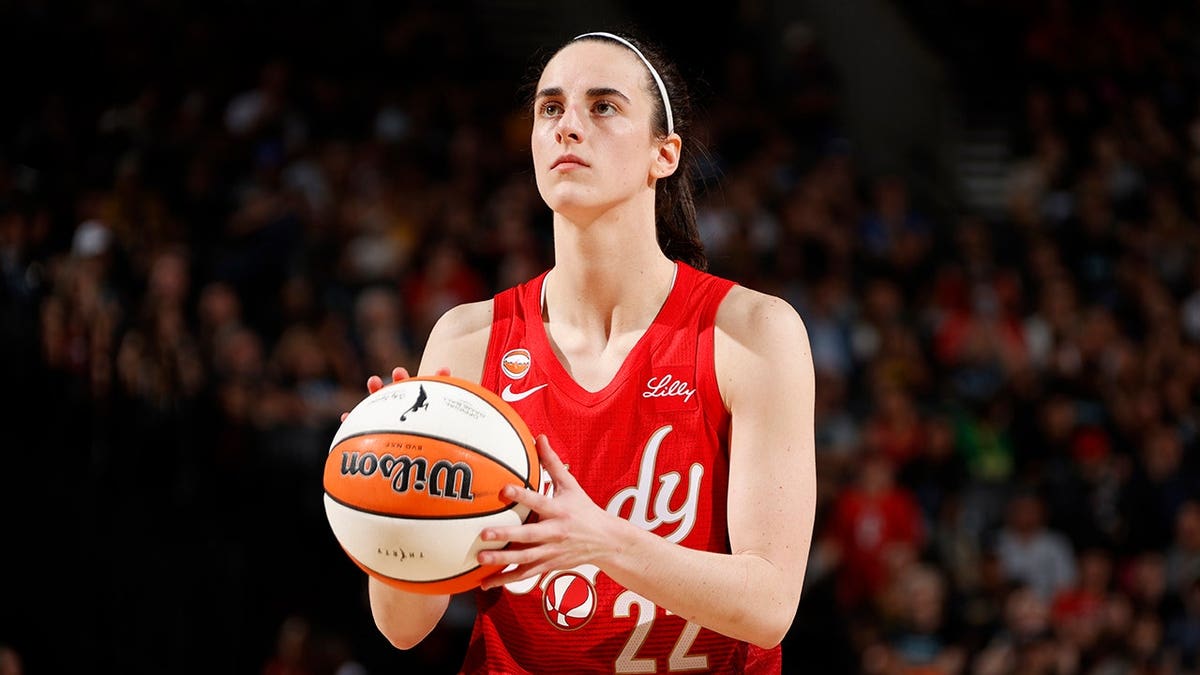
Caitlin Clark faced a significant question about biological males who “identify” as females competing in women’s sports. She addressed the matter cautiously, choosing not to disclose her personal stance.
Following the Indiana Fever’s 108-100 loss to the Minnesota Lynx, Clark was asked about teammate Sophie Cunningham’s opinion that biological males should not compete in women’s sports. Clark stated that it wasn’t a topic discussed in the Fever’s locker room. “I think it’s for leagues and governing bodies to work with their athletes to find solutions,” she remarked. “Our focus is on basketball and finding ways to improve,” she added.
When pressed for further reaction, Clark reiterated her initial response. Her answers indicated how the Fever approached the issue without taking a personal stance. She emphasized basketball and left the decision-making to leagues and governing bodies.
Clark’s statements differed from Cunningham’s belief that women’s sports should exclusively be for females, and she didn’t agree with Minnesota coach Cheryl Reeve, who supported inclusion by wearing a “Trans kids belong” shirt during the game.
Clark’s replies seemed carefully considered to avoid controversy. This likely didn’t please everyone as it seemed neutral compared to others in the sport.
Controversy Surrounding Sophie Cunningham’s Comments
Sophie Cunningham sparked debate by stating young girls shouldn’t compete against biological males, advocating for protection in locker rooms and competitions. Her comments garnered mixed responses, affecting Indiana during their road games. Critics and supporters demonstrated in cities like Seattle, Portland, and Minneapolis. Cunningham was booed, while opposing teams highlighted transgender inclusion.
During this time, Clark remained silent. Indiana protected her from media interactions after the first two games. Following the victory in Seattle, players Kelsey Mitchell and Monique Billings attended the press conference, accompanied by head coach Stephanie White. Despite achieving a triple-double against Portland, Clark still didn’t engage with the press, while Aliyah Boston and Makayla Timpson took the podium with White. A reporter’s inquiry about the controversy was cut short by the team’s public relations, ending the briefing prematurely.
On Sunday, Clark appeared before the media with Mitchell and White, delivering what seemed to be a well-rehearsed response. This suggests Indiana prepared Clark for inevitable questions on the topic.
Clark Avoids Taking Sides
Clark managed to address the subject without aligning with any side. Her neutral approach can be understood as an attempt to maintain her wide-ranging appeal, considering her commercial interests and diverse fan base. Aligning with one side poses risks of alienating parts of her audience, either transgender activists or fans opposed to mixing biological males in female sports.
Remaining neutral, however, doesn’t dissolve the controversy. Some argue Clark, as a prominent women’s sports figure, should use her platform to vocalize support for inclusion or protection of female sports categories. Her choice to refrain from taking a public stance aligns with her right to remain focused on basketball.
The WNBA encourages players to express social and political stances, as seen by Reeve and other players. Cunningham expressed hers in an interview. Clark, however, opted out of this trend, delivering a calculated and restrained response.