
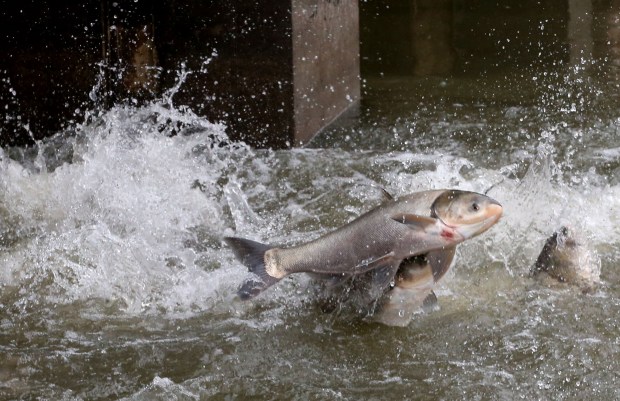
The Trump administration has halted efforts to curb the spread of invasive carp into the Great Lakes. Governor JB Pritzker condemned this decision, labeling it a severe threat to Illinois and the nation’s freshwater supplies. His remarks followed an appeal from his administration to revoke the federal stop-work order issued on July 24 at the Brandon Road Interbasin Project in Joliet.
“The Trump administration is attacking fresh water, clean water, drinking water for the Great Lakes and for the country,” stated Pritzker.
The infrastructure initiative aims to fortify defenses against invasive carp at the Brandon Road Lock and Dam on the Des Plaines River. This conflict adds to the longstanding tension between Illinois and federal authorities, with substantial regional implications. For decades, Illinois, Michigan, and the federal government have worked to stop the invasive silver and bighead carp, which threaten existing ecosystems and industries in the Great Lakes region.
A previous instance of mistrust between Pritzker and Trump had stalled the project’s progress. The recent deferment surprised Illinois following a notification from on-site contractors rather than federal officials. The state’s Department of Natural Resources has sought a meeting with project leaders through the U.S. Army Corps of Engineers. The Corps, confirming the stop-work order, stated the project is undergoing an administrative review. Spokesperson Gene Pawlik declined further comment.
Despite a memorandum signed by Trump last year that reaffirmed the project’s importance, he also criticized Pritzker for the delays. Furthermore, the U.S. Department of the Interior froze over $13.6 million allocated for three other carp mitigation efforts alongside the Brandon Road project.
Pritzker’s administration warns that delays could jeopardize both the drinking water supply for millions and the regional economy. Invasive carp, originally from China, were brought to the U.S. in the 1960s for vegetation control in aquaculture and sewage ponds. Floods in the 1980s and 1990s facilitated their escape into the Mississippi River, allowing them to spread quickly and move northward towards the Great Lakes.
The greatest ecological threat comes from silver and bighead carp, which lack natural U.S. predators, allowing their populations to grow unchecked. Their rapid reproduction and competitive nature for resources threaten entire ecosystems, making their potential entry into the Great Lakes alarming.
The $1.15 billion Brandon Road mitigation project represents years of collaboration among Illinois, Michigan, and federal bodies to avert such an outcome. The location is seen as a strategic choke point where experts hope advanced technologies can prevent the carp’s upstream movement, which currently challenges the effectiveness of electrical barriers near Romeoville.
“If the Great Lakes water supply is compromised by the Asian carp’s encroachment, it will impair our ability to keep that water clean and diminish the industries depending on the Great Lakes, as well as all states bordering the Great Lakes,” Pritzker emphasized.