
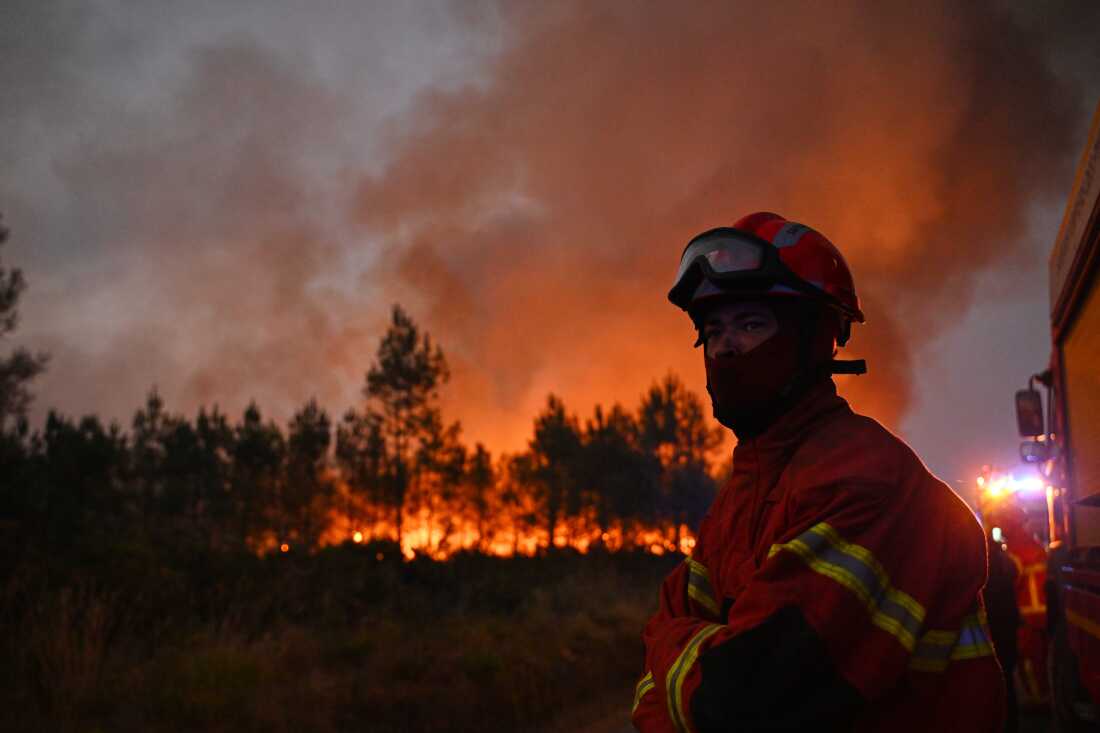
Firefighters Battle Wildfires in France
Firefighters are working tirelessly to control a massive wildfire near Lanton, southwestern France. As of Tuesday, July 28, 2026, authorities have increased evacuations along the Atlantic coast. This may be the largest evacuation outside wartime in France. Rising temperatures pose a threat to containment efforts.
Escalating Fires Near Lège-Cap-Ferret
New flames emerged near Grand Crohot beach. Local authorities responded with 23 aircraft dropping water and retardants, an increase from 18 previously. Gironde prefect Sophie Brocas noted, “The situation remains complicated. That’s clear. We’re not out of the woods.” About 60,000 evacuated residents from Le Haillan and surrounding areas can return. However, they are advised to remain alert.
Widespread Evacuations Across France and Spain
Approximately 330,000 people have been forced from homes in France and Spain due to extensive wildfires. Spain faces its fourth heat wave, with several fires still raging. Despite this, Spanish authorities have begun lifting restrictions after some progress. The Gironde fire has consumed an area four times the size of Paris, affecting 220,000 people.
Tourist Sites Affected
Evacuation orders impacted campsites, holiday villages, and leisure parks in Lacanau. Eric Brocardi from France’s national firefighters federation emphasized, “We are at a point of fragility.” Some tourists persisted with vacations despite risks, highlighting the delicate balance between safety and personal plans.
Fire Creates Its Own Weather
During intense periods, the Gironde blaze formed a rare pyrocumulonimbus cloud, a first in France. These clouds bring lightning, winds, and new fires. The national weather service warns of rising temperatures, complicating firefighting efforts.
Ongoing Battle Against Flames
In Le Porge, authorities note potential new outbreaks due to smoldering areas, heat, and low humidity. Firebreaks totaling 103 kilometers have been cut by military and forest crews. Injuries have been recorded among firefighters, further challenging operations.
Progress and Challenges in Spain
Spain sees hopeful progress as thousands return home. Approximately 20,000 evacuees have been allowed to return as restrictions lifting in Ávila and other regions. Elsewhere, minor fires near Toledo and Castellón have been controlled, allowing more people to return.
Persistent Smoke in Madrid
Smoke from fires has reached Madrid, with noticeable ash and smell in parts of the city. Interior Minister Fernando Grande-Marlaska conveyed optimism due to overnight containment efforts. However, impending extreme heat remains a threat.
Dealing with Record-Setting Fires
Fires in Ávila have burned over 500 square kilometers, setting a record in Spain. The two largest blazes threaten to merge, exacerbating risks. Spain’s annual total burned area matches records, with 13 fatalities marking one of the deadliest seasons.
“Look at how the valley is burned. Look at the houses, the people,” shared David Gonzalez, a local resident. “We feel anger and helplessness. It’s inhuman,” he added.
Prime Minister Pedro Sánchez stresses the urgent need for a national approach to combat worsening wildfire conditions driven by climate change.