
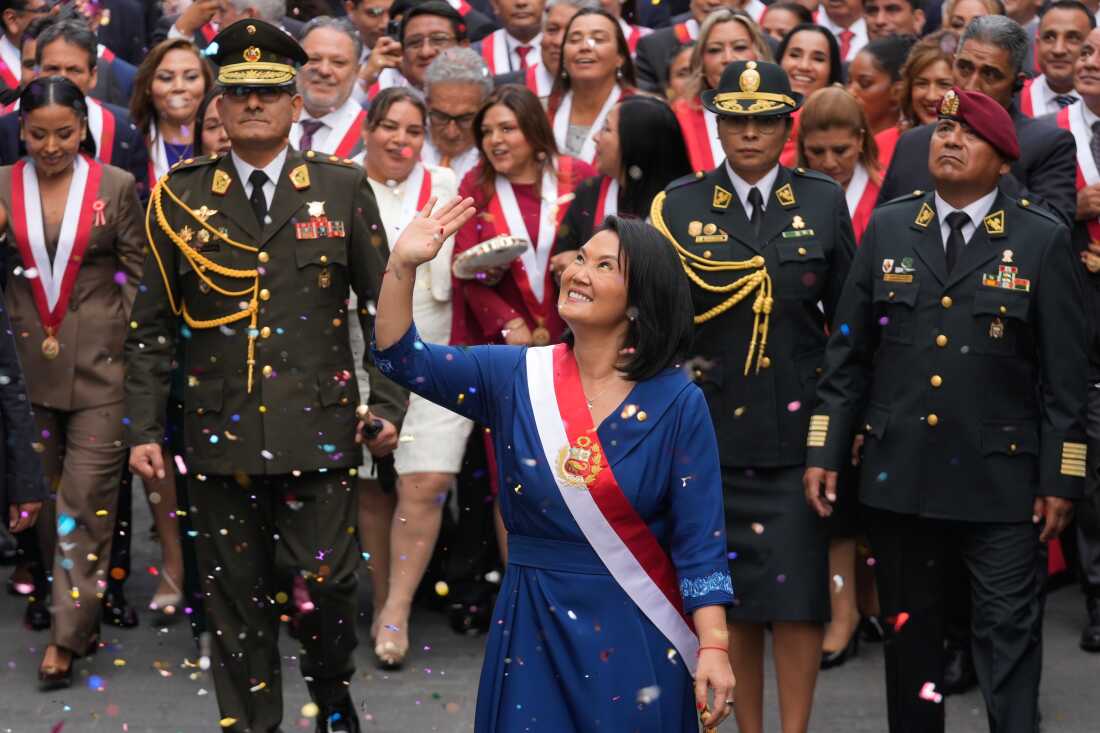
LIMA, Peru — Keiko Fujimori, leader of Peru’s major political party, has taken office as the nation’s president after winning the June runoff by a narrow margin. Her victory marks a shift towards conservative leadership in South America.
Fujimori, a four-time presidential contender, aims to reduce crime and boost economic growth amidst Peru’s turbulent political history. Of nine presidents in ten years, only three were elected by popular vote. The rest stepped in after predecessors resigned or were removed due to scandals.
Her Popular Force party, alongside Popular Renovation, will control half the senate seats, complicating efforts to remove her from office.
An Incoming Leader with Promises
Fujimori’s campaign highlighted plans to improve security in a country plagued by extortion. She promises infrastructure development through partnerships with private investors.
Keiko is the daughter of former President Alberto Fujimori, who combated terrorism but was later jailed for human rights abuses. During her campaign, she promised a tough approach on crime, including creating a megaprison inspired by El Salvador’s Cecot penitentiary and ensuring judges’ safety with reforms.
She announced plans to restructure social services to combat rural malnutrition and increase the minimum wage by 15%. The military will temporarily lead security efforts in troubled areas. Preparing for El Niño’s impact on Peru’s coast is also a priority.
“My goal is not only to administer the state,” Fujimori stated. “My main objective is to narrow the enormous social deficit that affects millions of Peruvians.”
Opposition Challenges
Opposition leaders demand reversal of laws from the previous legislature that allegedly weaken crime-fighting efforts. These laws impact preventive arrests and the handling of political party corruption.
They also call for an investigation into the deaths of 50 civilians during protests in late 2022 and early 2023 following the ouster of former President Pedro Castillo. Opposition figures protested Fujimori’s inauguration, citing these deaths and disputing her legitimacy.
Political Polarization
Fujimori received strong support in urban areas, but highland regions with larger Indigenous populations favored left-wing candidate Roberto Sanchez. He contested election results due to alleged inconsistencies abroad, but authorities dismissed his claims.
Despite political tensions, Peru maintains economic stability, with conservative fiscal policies and low interest rates. However, a notable gap in living standards persists between coastal and Andean regions.
Fujimori’s win, along with conservative victories in Colombia and Chile, highlights a regional shift from left-wing dominance seen in previous decades. Conservatives have secured numerous presidential victories across Latin America recently.