
Poor air quality has spread across multiple U.S. states recently. This is due to smoke from Canadian wildfires, regional wildfires, and summer ozone pollution.
Smoke from Canadian wildfires has drifted into parts of the Midwest and Northeast. The western U.S. wildfires are also contributing to localized smoke. As of July 19, 2026, the National Interagency Fire Center (NIFC) reported 40,560 wildfires across the U.S., burning over 3.8 million acres.
Hot, stagnant air worsens ground-level ozone pollution, which forms when sunlight and heat react with vehicle and industrial pollutants. Light winds prevent the pollution from dispersing, concentrating ozone and fine particles near ground level.
Air Quality Alerts Across States
National Weather Service (NWS) Air Quality Alerts issued around July 19 and July 20 show warnings or advisories in several states:
- Indiana
- Illinois
- Ohio
- Pennsylvania
- Colorado
- Idaho
- Washington
- West Virginia
- Michigan
- Minnesota
- Iowa
- Wisconsin
- Oregon
In Michigan, a statewide Air Quality Alert was issued for elevated fine particulate pollution (PM2.5) due to wildfire smoke. Officials warned PM2.5 levels would be “Unhealthy for Sensitive Groups,” with potential ozone increases.
In Minnesota, heavy smoke expanded into east-central and south-central regions, with the Air Quality Index reaching the “Red,” or “Unhealthy” category. Iowa reported PM2.5 levels deemed unhealthy by the Environmental Protection Agency.
Wisconsin was under a statewide advisory, with PM2.5 reaching “Unhealthy” to “Very Unhealthy” levels in some areas. Illinois, Indiana, and Ohio alerts included smoke, particulates, and ozone concerns. Further west, Oregon, Idaho, Washington, and parts of Colorado were affected by regional wildfire smoke.
Rising Wildfires Intensify Air Quality Issues
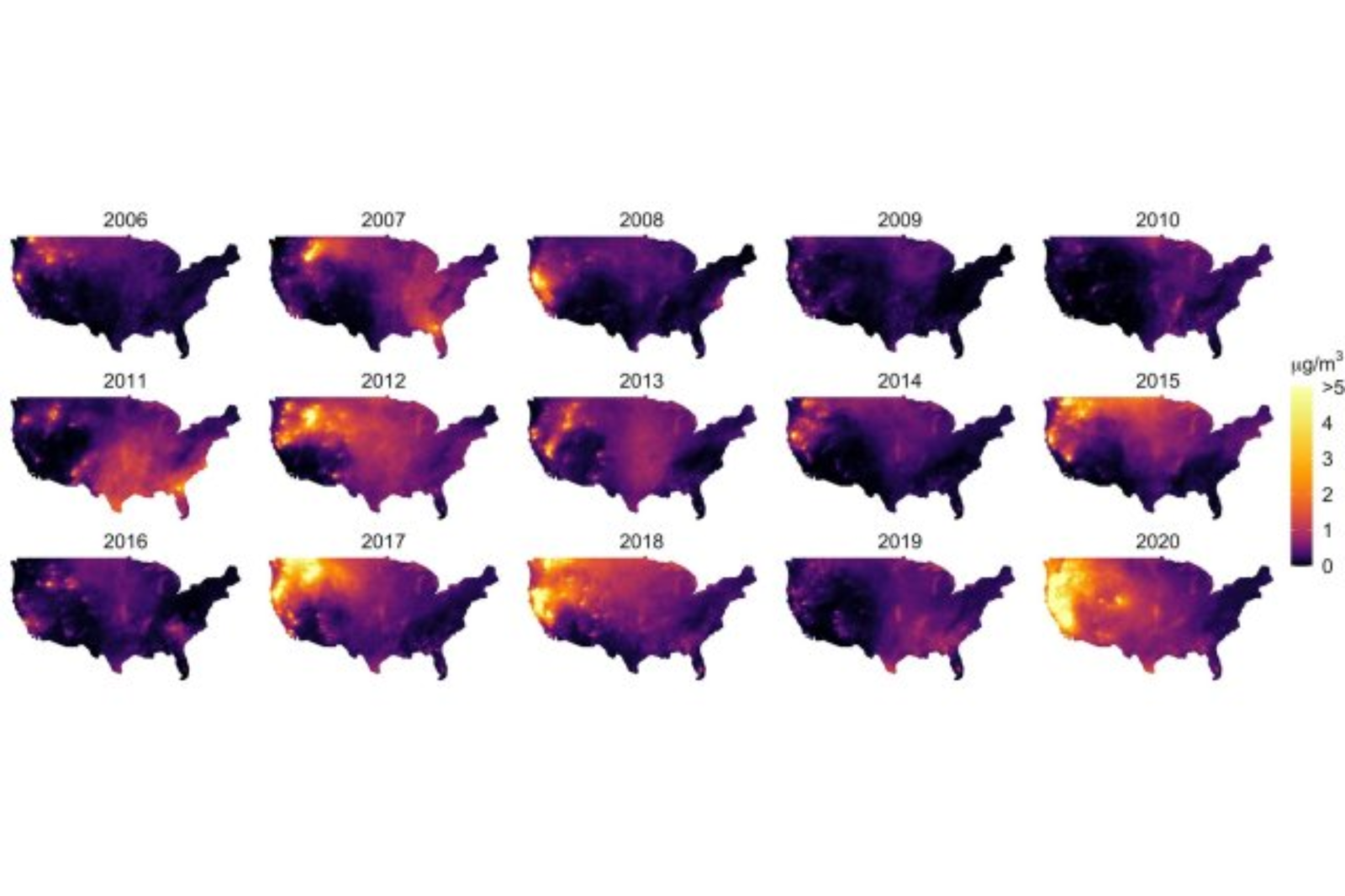
Wildfire smoke increasingly contributes to air pollution across the U.S. The Environmental Protection Agency (EPA) notes a rise in large wildfires in the U.S., Canada, and Mexico, increasing PM2.5 pollution.
Analyzing air quality data from 2006 to 2020, the EPA found not only increased wildfire smoke concentrations but also broader geographic impact. Communities far from fires now experience degraded air quality from smoke transported long distances.
Dangers of Wildfire Smoke
Wildfire smoke contains fine particulate matter, known as PM2.5, which can penetrate deep into the lungs and enter the bloodstream. The Centers for Disease Control (CDC) found recent studies linking smoke exposure to rises in emergency department visits, hospital admissions, and deaths.
High-risk groups include children, older adults, pregnant individuals, outdoor workers, and those with lung or heart conditions. When the Air Quality Index (AQI) reaches “Unhealthy,” the general public may experience symptoms such as:
- Coughing or wheezing
- Shortness of breath
- Burning eyes, nose, or throat
- Chest tightness
- Fatigue or dizziness
- Palpitations or unusual heart symptoms
Health Impact Beyond Smoke Events
A 2026 study in Science Advances estimated long-term exposure to wildfire-smoke PM2.5 linked to 24,100 deaths annually between 2006 and 2020.
A 2025 Stanford-led study estimated 41,380 excess deaths annually due to smoke exposure from 2011 to 2020. Researchers projected a 70 percent rise in smoke-related deaths by 2050, with economic impact potentially reaching $608 billion yearly.
Harvard researchers found that wildfire-smoke PM2.5 exposure has health effects lasting weeks beyond exposure. Health risks identified include:
- Ischemic heart disease
- Cerebrovascular disease
- Arrhythmia
- Hypertension
- Pneumonia
- Chronic Obstructive Pulmonary Disease (COPD)
- Asthma
Effects of Physical Activity
Health officials advise reducing outdoor activity during smoke events. Heavier breathing increases particles’ entry into the lungs. ERS research shows exercise can increase inhaled air volume by eight times.
Everyday activities increasing exposure include:
- Walking the dog
- Jogging
- Hiking
- Cycling
- Gardening
- Playing outdoor sports
Studies have linked smoke episodes to increased asthma-related emergency visits. CDC guidance warns smoke exposure can exacerbate chronic conditions. The American Heart Association noted increased emergency-room visits for cardiovascular issues during smoke events.
The NIH found fine particulate pollution is associated with genetic mutations driving cancer in non-smokers, indicating broader public health concerns.
Protective Measures
Public health officials recommend checking resources such as AirNow.gov for air quality forecasts. During high smoke or ozone levels, consider:
- Staying inside with closed windows and doors
- Using air conditioning with a high-efficiency filter
- Avoiding strenuous outdoor activity
- Moving exercise indoors
- Wearing protective masks
- Keeping asthma medication nearby
- Seeking medical attention for severe symptoms