
Statues within the U.S. Capitol honor iconic Americans like the social commentator and actor Will Rogers, known for his quip about Congress: “Every time they make a joke, it’s a law, and every time they make a law, it’s a joke.” This humor resonates with nearly 90% of Americans who express dissatisfaction with Congress. Carl Hulse, chief Washington correspondent for The New York Times, remarks on the enduring frustration with Congress. Hulse, a veteran reporter, states he has witnessed the institution’s decline, noting the lack of cooperation between parties as a significant barrier to progress.
Despite its challenges, Congress holds substantial constitutional power, as indicated by Article I. Hulse comments on the Republican party’s errors in ceding power to the administration, impacting areas like tariffs and war powers. He stresses that relinquishing power is permanent, affecting governance even under different administrations.
Legislative Challenges
Currently, Republicans lead both the Senate and the House, yet legislative breakthroughs are rare, and gridlock is common. Although they’ve passed impactful bills, such as a $4.5 trillion tax cut and a bipartisan housing bill, the 119th Congress has approved fewer bills compared to many predecessors. The partial government shutdown due to homeland security funding exemplifies ongoing challenges.
Critics from both parties demand more action, whether in altering federal spending or addressing specific issues. President Trump’s direct actions on trade and Iran demonstrate the executive branch’s dominance, often bypassing Congress. He pressures Congress on various issues, such as reforming federal voting rules.
Internal Party Dynamics
Congress faces uncertainty in leadership amidst Mitch McConnell’s hospitalization and Lindsey Graham’s sudden death. Hulse highlights the age and political climate challenges, contrasting it with the 1985 Congress composed of World War II veterans who prioritized legislative goals.
The two parties blame each other for the dysfunction. Rep. Peter Welch blames Republican leadership for chaos, while Sen. Katie Britt accuses Democrats of prioritizing politics over governance. Sen. Chris Coons observes Trump’s combative stance even towards his own party.
Struggles and Perceptions
Brookings Institution’s Sarah Binder and American Enterprise Institute’s Philip Wallach agree on Congress’s struggles and marginalization due to an empowered presidency. Binder points out that Congress often cedes its constitutional authority to the president, resulting in diminished legislative effectiveness.
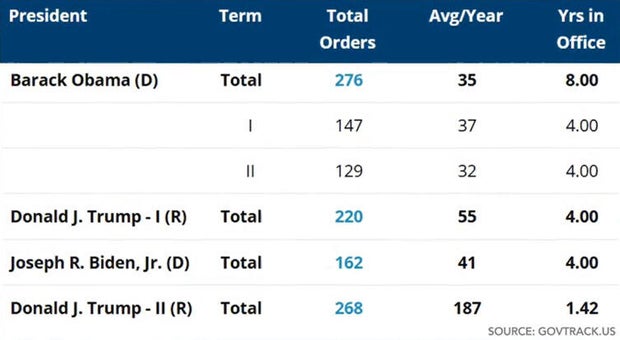
Wallach notes a shift in congressional roles, focused more on supporting or opposing the presidency than compromising for legislative solutions. As a result, many Americans wonder about Congress’s role amidst a flurry of executive orders from recent presidents, dramatically increasing under Trump’s term.
Public Expectations
Public dissatisfaction with Congress stems from its handling of critical issues like national debt and Social Security. Binder argues Congress should face scrutiny but also highlights that public expectations can sometimes be unrealistic given the polarized political climate and the need for bipartisan cooperation.
Binder maintains cautious optimism about Congress’s future, acknowledging persistent problems but believing in potential reform. Wallach, considering a long historical view, expresses hope that Congress might eventually find ways to reform itself and regain its central legislative role.
For further insights: The New York Times’ Carl Hulse, Brookings Institution’s Sarah Binder, and American Enterprise Institute’s Philip Wallach contributed their perspectives to this analysis. Story produced by Robbyn McFadden and Reid Orvedahl, with editing by Jason Schmidt.