
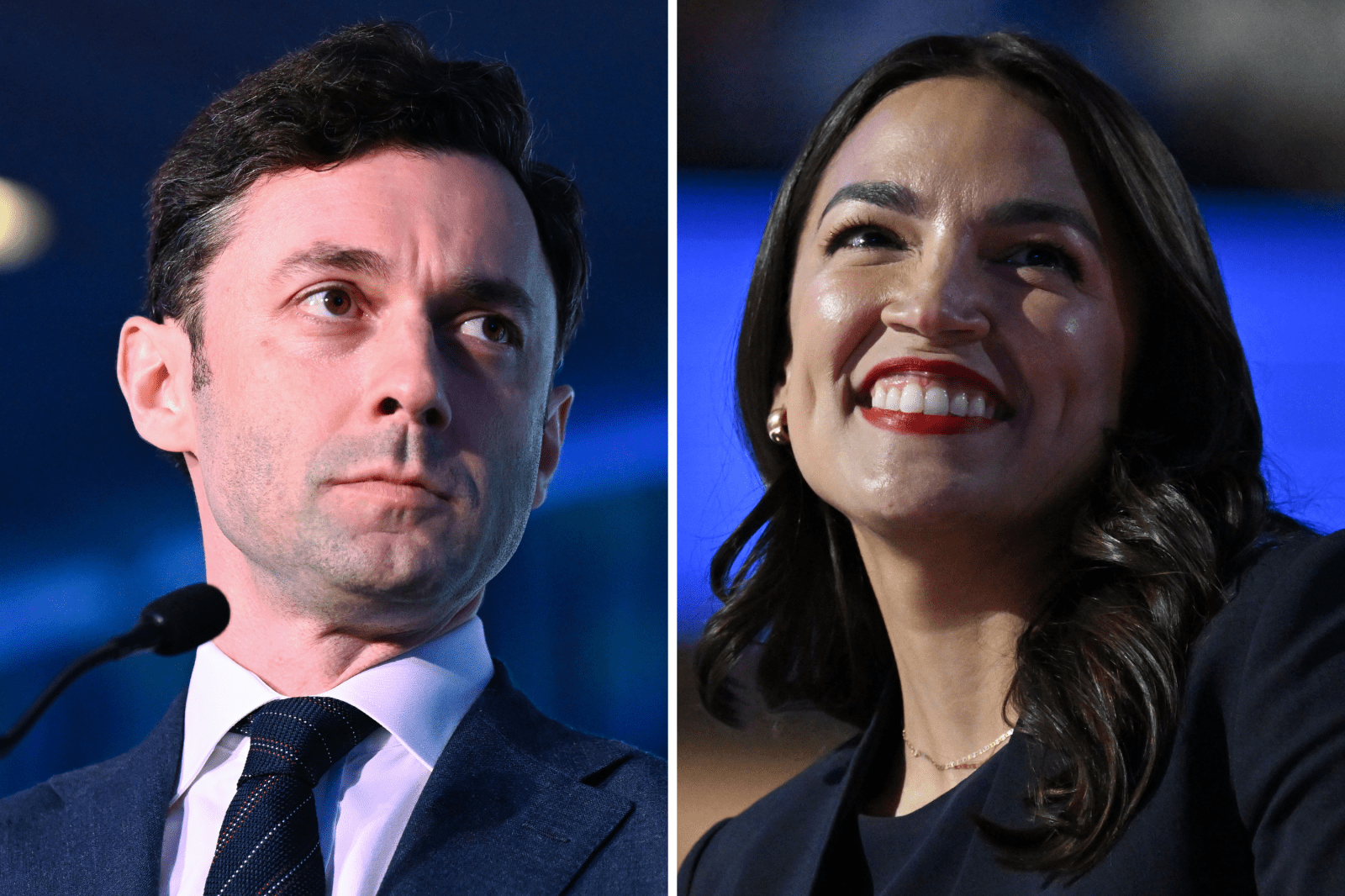
Representative Alexandria Ocasio-Cortez and Senator Jon Ossoff have gained traction against California Governor Gavin Newsom in Polymarket’s 2028 Democratic presidential primary prediction market. Polls show a fluid race as candidates begin to shape the prospective field. Many may officially announce their campaigns as early as next year.
On the Democratic side, potential candidates are honing their messages and visiting primary states. The goal is to build name recognition and connect with voters. Prediction markets provide a view into early public perception. They aggregate real-money wagers into probability estimates based on political developments. These markets reflect trader sentiment but aren’t infallible predictors of outcomes.
Newsweek sought comments from representatives of Newsom, Ocasio-Cortez, and Ossoff. According to Polymarket, Ocasio-Cortez and Ossoff have increased their chances of securing the nomination. Ocasio-Cortez saw her odds rise to 15 percent, up from 9 percent a month earlier. Ossoff’s chances grew to 14 percent, more than doubling his earlier prospects. Meanwhile, Newsom’s likelihood decreased to 18 percent from 25 percent in early June.
Former Vice President Kamala Harris maintained steady odds at around 8 percent. On Kalshi’s market, Ocasio-Cortez’s chances improved from 10 percent to 16 percent. Ossoff’s increased from 9 percent to 14 percent, while Newsom’s fluctuated between 21 and 22 percent.
Polling Results
Despite prediction markets leaning towards other candidates, Harris has led recent polls. A FocalData survey found her support at 33 percent, compared to Newsom’s 15 percent, Ocasio-Cortez’s 9 percent, and former Transportation Secretary Pete Buttigieg’s 8 percent. Other notable figures include Pennsylvania Governor Josh Shapiro at 7 percent and Arizona Senator Mark Kelly at 5 percent. The poll included 764 registered voters in late June.
McLaughlin’s poll also showed Harris leading, with 26 percent support compared to Newsom at 16 percent and Ocasio-Cortez at 9 percent. Participants showed 8 percent support for Buttigieg, with lesser support for others like Illinois Governor JB Pritzker. This survey involved 1,000 general election voters in mid-June.
An April Harvard/Harris poll echoed these results, giving Harris 50 percent support. Newsom trailed with 22 percent, while others like Shapiro and Ocasio-Cortez had lower backing. This poll had a sample of 2,745 registered voters and a margin of error of 1.87 percentage points.
Statements on 2028 Plans
Some Democratic figures have hinted at their 2028 intentions. Harris, active in key states, suggested she might run, emphasizing her experience close to the presidency. Newsom discussed potential candidacy in 2025 but has not committed. Ocasio-Cortez focused on broader goals beyond personal ambition in a discussion with David Axelrod. She emphasized policy changes like single-payer healthcare and workers’ rights.
Ossoff expressed no presidential ambitions, prioritizing his Georgia Senate reelection. Governor Gretchen Whitmer of Michigan also confirmed she will not run in 2028.