
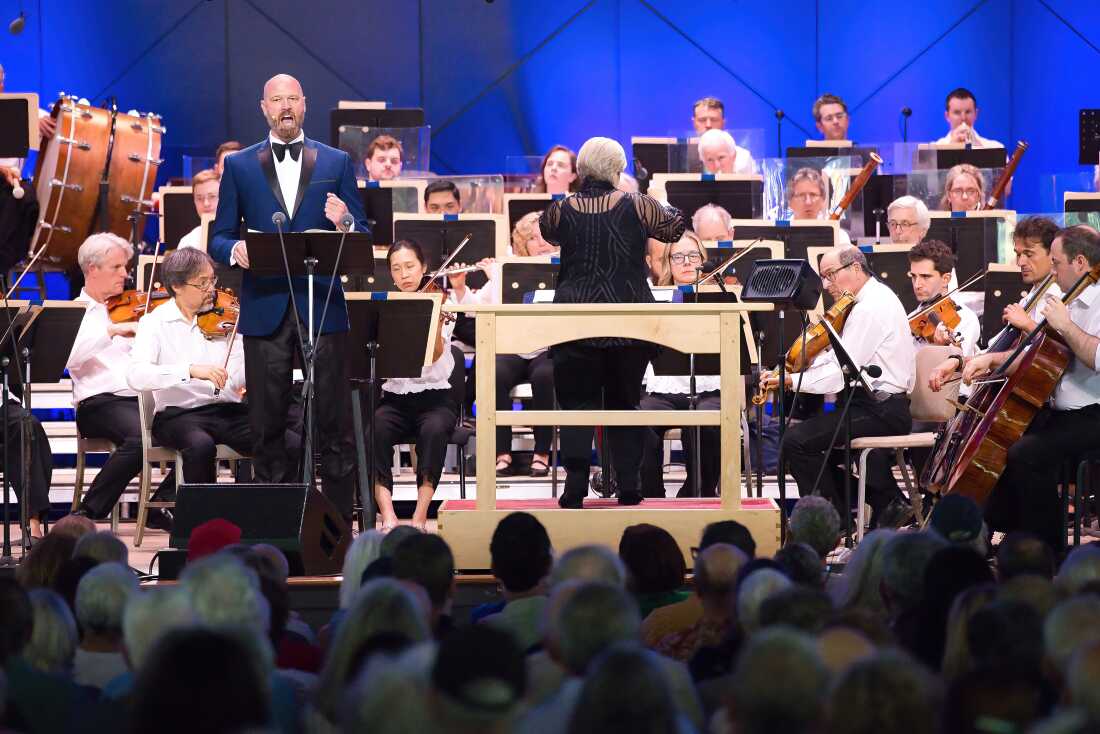
Baritone Zachary James, alongside the Boston Symphony Orchestra and led by conductor Karen Kamensek, performed Philip Glass’ Symphony No. 15 ‘Lincoln’ on July 5, 2026, at Tanglewood in Lenox, Massachusetts.
Originally anticipated to debut at the Kennedy Center during the United States’ 250th anniversary, Glass’ symphony, dedicated to Abraham Lincoln, found its world premiere with the Boston Symphony Orchestra instead. Philip Glass is celebrated as an esteemed American composer, having received the National Medal of Arts in 2015.
Lincoln has featured prominently in various works by Glass, such as The Civil Wars and the opera Appomattox. One of his operas, The Perfect American, even includes an animatronic Lincoln similar to the one seen in Walt Disney World’s Hall of Presidents.
This time, Glass focused exclusively on Lincoln, incorporating the president’s own words in the work. Though initially planned for debut with the National Symphony Orchestra, Glass withdrew it citing concerns over the Kennedy Center’s current political environment. In January, he announced his decision on social media, stating that the center’s values clashed with the message of his symphony.
Instead, the Boston Symphony Orchestra took the stage at Tanglewood to present the symphony as part of a program featuring a suite from John Williams’ score for Lincoln and Aaron Copland’s “Lincoln Portrait,” narrated by Alec Baldwin.
Philip Glass, now 89, declined interviews at the time. Conductor Karen Kamensek, who shares a longstanding professional relationship with Glass, appreciates how Lincoln’s words take center stage in the symphony, noting how they resonate with today’s issues while also offering insight into future challenges.
According to his program note, Glass wrote about Lincoln’s legacy of unity during a time of division, marking it as an apt subject for the country’s 250th birthday. Baritone Zachary James took on the role of Lincoln in the premiere, combining spoken and sung elements.
To speak the words of Lincoln without the pressure of singing was a unique experience,
he explained, highlighting the emotional freedom it provided. James valued Lincoln’s frankness and openness in his speeches, recognizing him as ahead of his time.
The symphony’s unconventional ending features quiet, sustained chords. Kamensek described them as columns of sound representing the pillars of society’s morals and values. During rehearsals, she instructed musicians to direct the sound towards one another, urging the audience to draw their interpretations.
This powerful piece, debuting near Independence Day, offers a reflection on shared values. The audio recording of the performance was made available through the Boston Symphony Orchestra and GBH Music.