
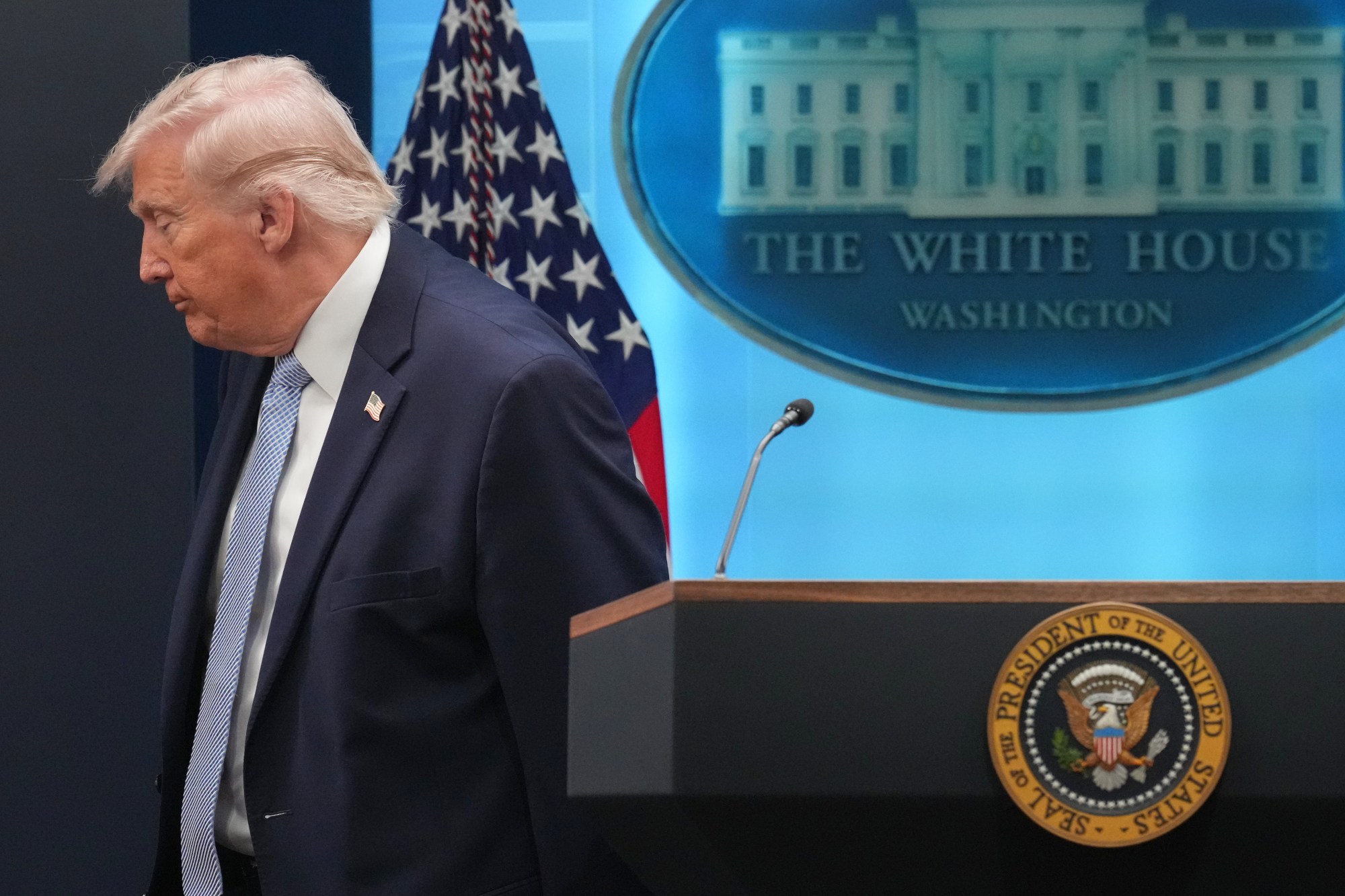
President Donald Trump recently engaged with reporters at the White House, commenting on the ceasefire with Iran. The swift violations of this ceasefire have cast doubt on Iran’s adherence to international agreements. Trump’s historic deal with Iran has faced criticism for its impact on U.S. interests, even more so than the Joint Comprehensive Plan of Action (JCPOA) under President Obama. Trump had critiqued the JCPOA for its shortcomings in curbing Iran’s nuclear ambitions and for releasing substantial funds to Iran.
Despite these concerns, Trump’s agreement has temporarily hindered Iran’s nuclear weapon development. He achieved this by damaging Iran’s military capabilities, including its navy, air force, and missile programs. Yet, to reopen the Strait of Hormuz and secure oil flow, Trump committed Gulf States and private investors to transfer billions to Iran. This payment was framed by Iran as reparations for U.S.-inflicted damage, without reciprocal compensation for American losses and deaths caused by Iran.
Gulf nations face the financial burden without compensation for Iranian attacks, while Israel remains uncompensated for its losses. Iran has also profited from illegal oil sales through Hormuz. The broader impact is a diminishing U.S. credibility in confronting global adversaries like China and Russia. Trump’s approach has been marked by decisive yet short-term military actions alongside key allies like Israel.
Trump’s inability to sustain military engagements is evident in cases involving Iran, Venezuela, and Ukraine. Future confrontations, particularly with strategically patient China, will test U.S. resolve. The maritime straits, vital for international trade, reveal strategic vulnerabilities, notably the Taiwan Strait and the Strait of Hormuz.
High-tech military systems have limitations against basic threats in narrow waterways, emphasizing the need for defense strategies against asymmetric operations. Trump should leverage his diplomatic skills, urging allies for proactive defense planning. NATO, under Secretary-General Mark Rutte, could play a supporting role. Trump aims for regime change in Iran to eliminate a hostile threat.
Joseph Bosco, a former director at the Department of Defense, supports these strategies for strengthening U.S. positions. His background includes roles focused on the Asia-Pacific region and U.S.-Taiwan relations.