
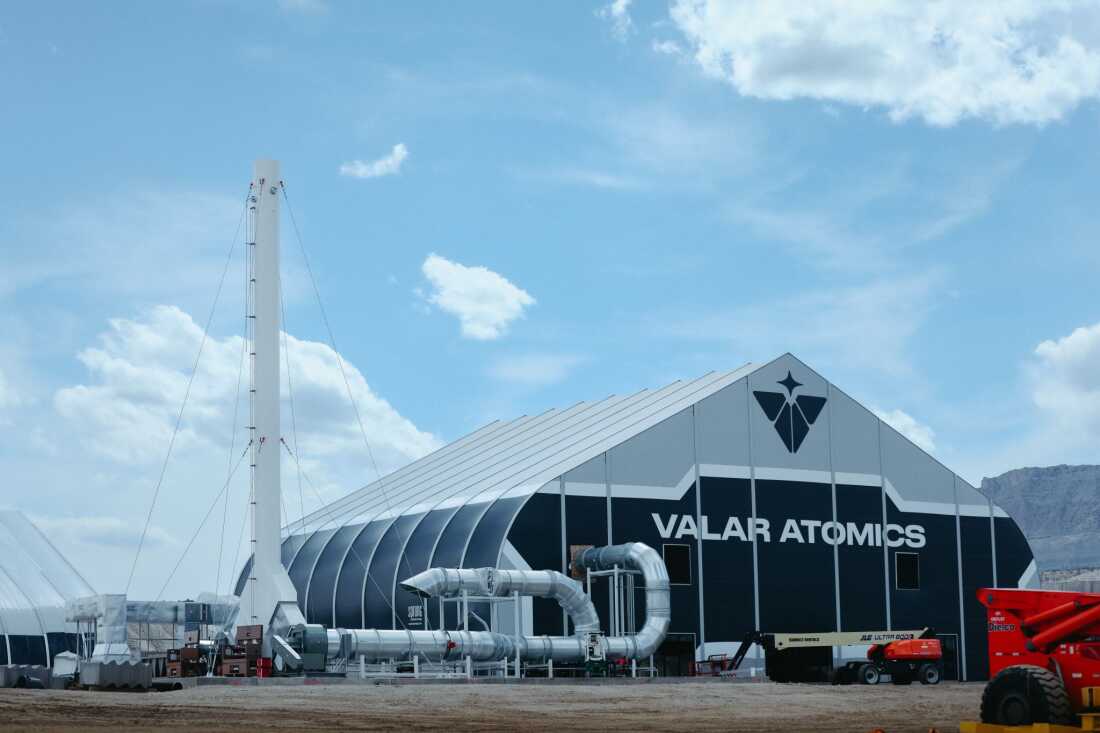
Valar Atomics is among the pioneering companies to activate its new nuclear reactor. On June 18, its experimental design commenced operations in a tent-like structure situated in the Utah desert.
A year prior, President Trump set a goal for American companies to construct three experimental nuclear reactors by July 4, 2026, marking the 250th anniversary of the Declaration of Independence. This led to the Department of Energy’s Reactor Pilot Program, aimed at accelerating test reactor projects by minimizing regulatory requirements.
The program has incited a nuclear race, with two companies achieving the activation milestone ahead of schedule. Antares Nuclear went critical on June 4, followed by Valar Atomics. Both reactors are now operational, producing significant heat from new reactor cores. Other companies are nearing project completion, showcasing rapid progress within a year.
Nick Touran, chief nuclear officer at Ocean Atomics, closely monitors the pilot program, although his company is not involved. He believes the initiative could invigorate the U.S. nuclear industry. President Trump enshrined this objective through an executive order signed in May 2025, seeking reactors by July of this year.
While some express excitement about the progress, others raise concerns. Edwin Lyman, director of nuclear power safety at the Union of Concerned Scientists, views the rush as a public relations exercise. He warns that reducing regulations might compromise decades of safety lessons.
Amidst the developments, companies like Radiant are making strides at the Department of Energy’s Idaho National Laboratory. Rita Baranwal, Radiant’s chief nuclear officer, outlines plans to build small reactors for varied applications. Their unique design employs uranium-filled balls rather than traditional tubes, enhancing operation and safety.
Safety considerations accompany the accelerated construction. The Energy Department revamped standards, facilitating regulatory approval without compromising safety, according to officials. Exemptions from environmental reviews cause apprehension among critics. Edwin Lyman stresses the importance of maintaining security and environmental monitoring as small reactors proliferate nationwide.