
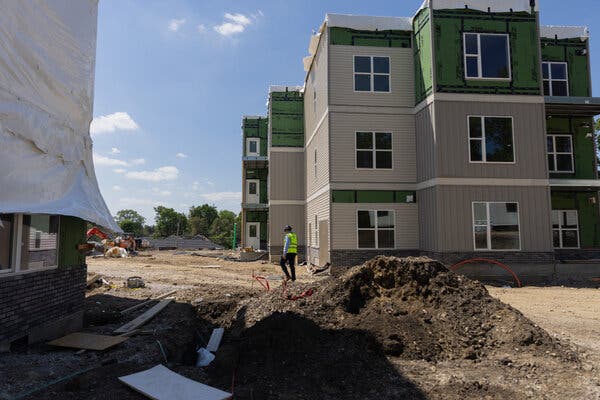
The House of Representatives passed a significant piece of housing legislation on Tuesday. This marked a rare bipartisan achievement ahead of the midterm elections. With President Trump’s signature expected soon, this bill becomes the most important housing legislation in 36 years.
The bill passed with a significant margin: 358 in favor and 32 against. This vote brought an end to months of contention between the House and Senate. The legislation aims to address the housing crisis by increasing supply in response to an acute shortage of new homes. On Monday, the Senate passed its version of the bill with an 85 to 5 vote.
The legislation’s success comes at a crucial time for President Trump, whose party is eager to secure a significant win before upcoming elections. Voter dissatisfaction with the administration’s handling of economic issues has been notable, with approval ratings at 33 percent according to a New York Times/Siena poll last month.
The bill nearly collapsed due to Republican disagreements, yet it reflects a shared commitment among legislators to tackle housing affordability issues. With its broad scope, the 21st Century Road to Housing Act aims to impact communities nationwide, addressing both rural and urban housing needs. The bill’s provisions aim to reduce housing costs through various measures.
The legislation seeks to ease federal regulations, streamlining the building process to make it cheaper and faster. It also plans to ease lending rules and provide incentives to communities that expand housing. Additional provisions offer aid to communities hit by disasters. One significant aspect of the bill, favored by President Trump, is the limitation on institutional investors’ market influence.
“It is the most important and most comprehensive housing bill of this century,” said Shaun Donovan, president of Enterprise Community Partners and a former secretary of the Department of Housing and Urban Development under the Obama administration. “It contains dozens of provisions that, taken together, go directly at the most important housing challenge of this moment, which is our housing supply.”