
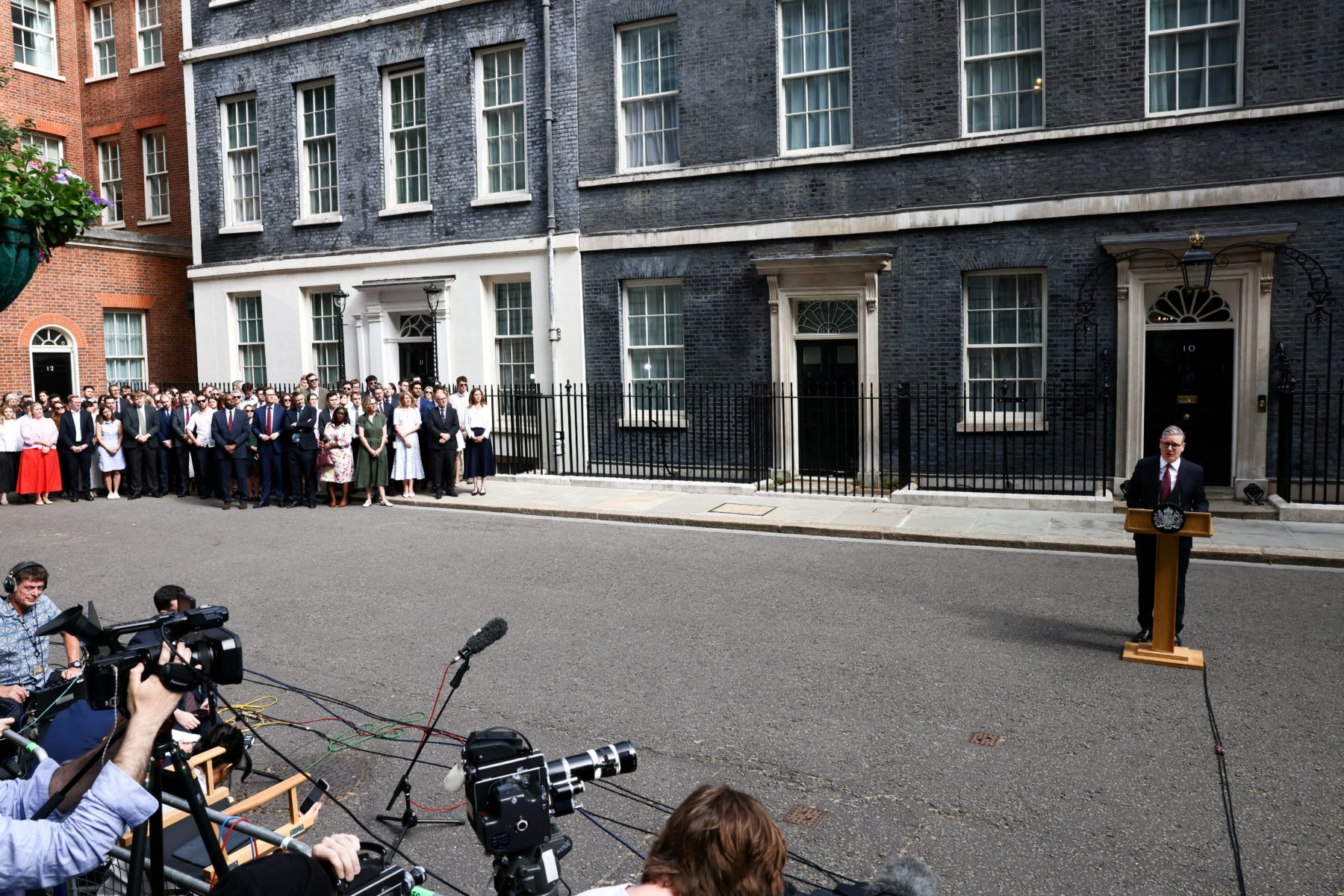
Keir Starmer, elected Britain’s prime minister to restore order after years of Conservative turmoil, is stepping down after less than two years in office. His resignation follows party infighting and a major error involving the Jeffrey Epstein scandal, despite not knowing Epstein nor being involved in his criminal activities.
Starmer announced his departure in an emotional statement on Monday. He will remain as caretaker prime minister until a new Labour leader is chosen. ‘The question my party is asking now is whether I am best placed to lead us into the next general election,’ he stated. ‘I have heard the answer of my parliamentary party to that question, and I accept that answer with good grace.’
Promising to end soap opera politics, Starmer’s tenure became marked by missteps. Rob Ford, a political science professor at the University of Manchester, noted that Starmer’s government turned into ‘the antithesis of what he said he was going to be about.’ The timeline for his resignation comes after Andy Burnham’s decisive win in the Makerfield by-election.
A series of resignations and challenges followed, paving the way for former Greater Manchester Mayor Andy Burnham to possibly enter 10 Downing Street.
Starmer’s downfall is a stark contrast to his rise on July 4, 2024, when he led Labour to power after 14 years, achieving 411 seats in the House of Commons. He pledged to restore ‘respect to politics’ and lead a government focused on ‘public service.’
The problems that contributed to his downfall were present from the start. Labour’s large parliamentary majority masked a lack of voter enthusiasm. The electorate backed the party more due to anger at the Conservatives than enthusiasm for Labour, earning the term ‘loveless landslide.’
Early controversies included accepting valuable gifts and policy reversals that stirred internal unrest. But his decision to appoint Peter Mandelson as the UK ambassador to the U.S. proved a miscalculation. Mandelson’s ties to Epstein led to Starmer losing credibility.
While successful in hauling Labour towards the political center after predecessor Jeremy Corbyn’s tenure, Starmer lacked the political instincts needed to navigate premier responsibilities. Despite once being chief prosecutor for serious offenses, opponents used his title, Sir Keir Starmer, to portray him as an elite, disconnected figure.
His background includes humble roots, the son of a toolmaker, with simple pleasures like soccer and local pubs. Despite his efforts, he was divisive; angering various voter groups and struggling domestically. However, he excelled internationally, especially in rallying European support for Ukraine.
Starmer’s tenure saw distinct tensions with U.S. President Donald Trump but also domestic achievements. He highlighted improvements in healthcare and economic recovery, stating that his successor would inherit a ‘stronger and fairer’ Britain. However, the Labour Party’s local election defeat in May led to Burnham’s ascent, initiating Starmer’s resignation.
Informed public discussion is vital for democracy. Support reliable journalism.