
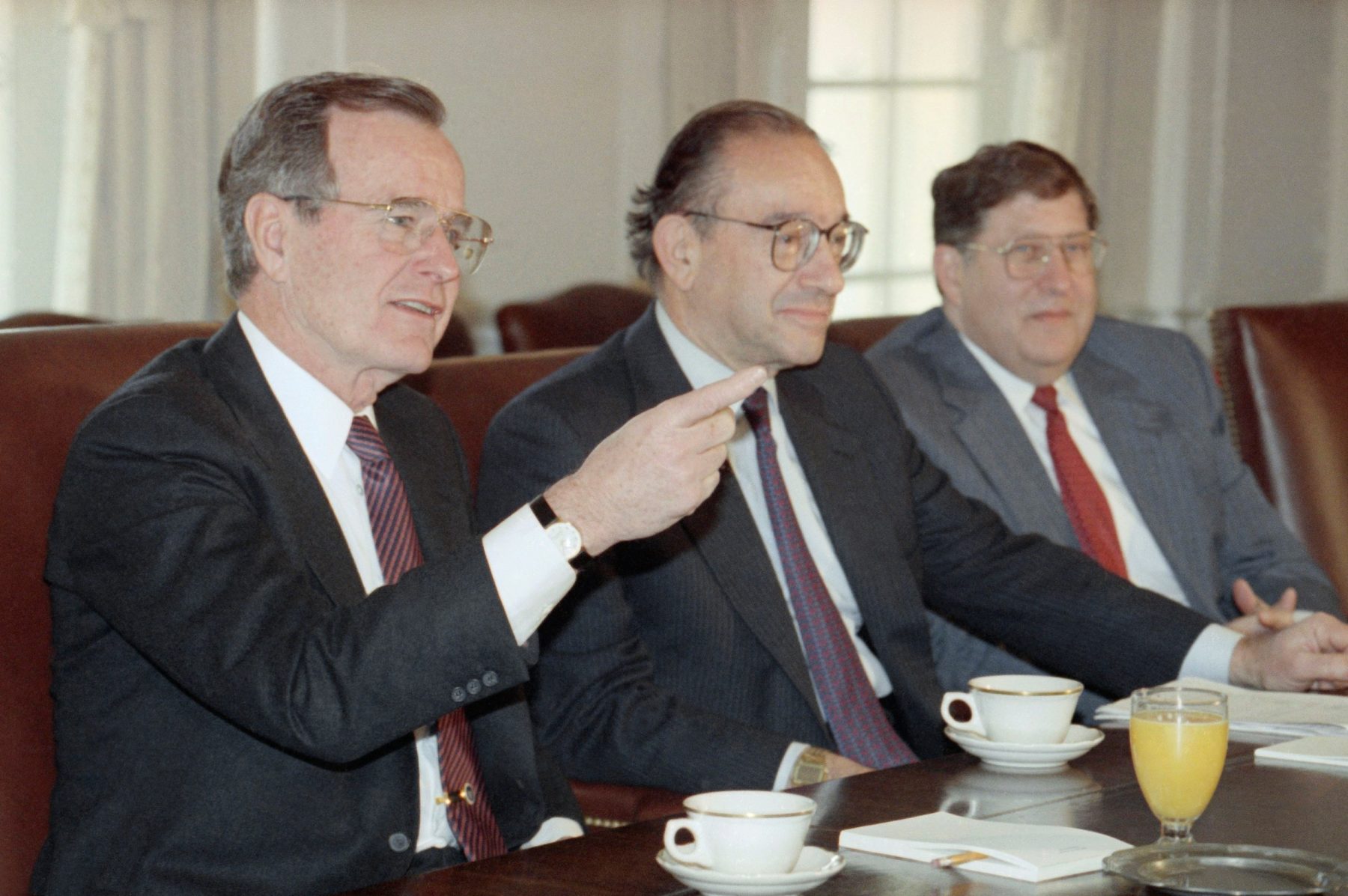
Former Federal Reserve Chair Passes Away
Alan Greenspan, former Chair of the U.S. Federal Reserve, died at the age of 100 from complications related to Parkinson’s disease. His wife, Andrea Mitchell, confirmed his passing. Known for his significant influence on American economic policy, Greenspan’s tenure at the Federal Reserve is remembered for both prosperity and challenges.
He had ‘irrational exuberance’ for baseball, the Washington Commanders, tennis, golf, and music, especially jazz,
Mitchell reminisced as she highlighted the personal side of Greenspan’s life. She fondly remembered him for his brilliance and kindness.
Economic Growth and Crisis
Greenspan was celebrated for his leadership during a period of substantial economic growth in the United States. Serving as Fed Chair from 1987 to 2006, he was often referred to as the “Oracle” for his impact on the economy. Under his stewardship, the U.S. experienced a notable economic expansion over a decade beginning in March 1991. Yet, his policies later faced scrutiny.
The era of growth ended with the 2008 financial crisis, which critics associated with Greenspan’s policies. His tenure coincided with a rise in stock prices and economic prosperity, but the easy-money policies and lax financial supervision contributed to the devastating housing market collapse shortly after he left the Fed.
Greenspan himself later acknowledged errors, noting that he underestimated the need for regulatory oversight over banks.
Global Influence and Reputation
Greenspan commanded respect both domestically and internationally. His remarks, like the famous “irrational exuberance” comment in 1996, often swayed markets. Known for his elusive communication style, Greenspan’s statements were closely analyzed for policy clues.
Despite his reputation being marred by the housing crisis, Greenspan’s earlier achievements included managing economic stability during crises such as Black Monday in 1987 and the Asian financial crisis in the late 1990s.
Early Life and Career
Born in Manhattan’s Washington Heights neighborhood, Greenspan was known for his aptitude in mathematics from an early age. Initially pursuing music, he later shifted to economics, earning a doctorate from New York University. His career included founding an economic consulting firm and advising political leaders on economic policy.
His early influences included Ayn Rand, with whom he formed a close relationship. Throughout his career, he maintained a strong belief in self-regulating markets, a position challenged by later developments.
Reflections and Later Years
After retiring from the Fed in 2006, Greenspan continued to engage with economic events, running his own consultancy, publishing books, and contributing to public discourse on economic issues. He remained active in defending the Federal Reserve’s independence against political interference.
Greenspan’s legacy encapsulates both the triumphs and tribulations of economic policymaking. His reflections underscore the difficulties of predicting market behavior, noting the sudden shifts in market sentiments.