
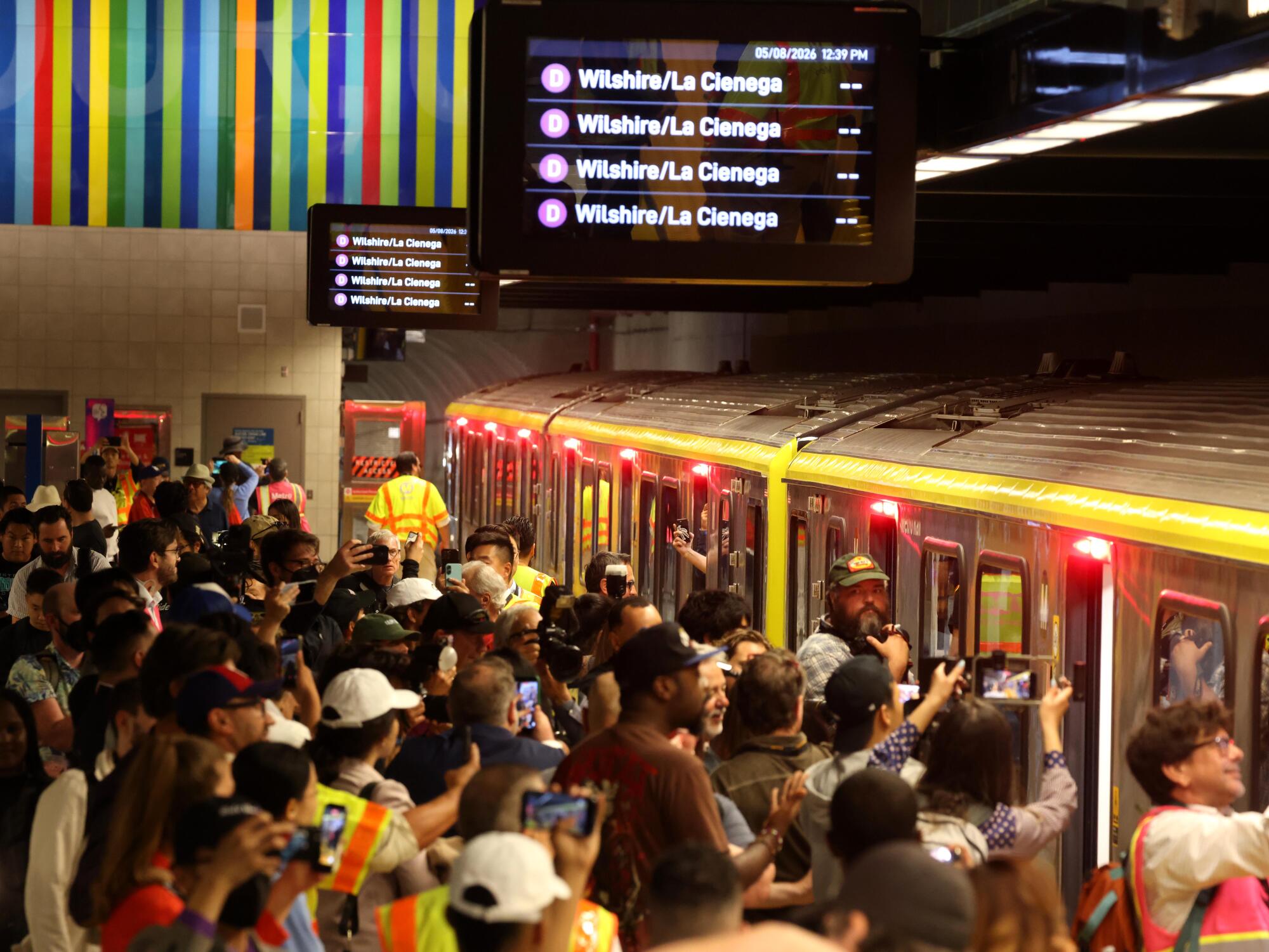
The long-awaited expansion of the Metro D Line in Los Angeles has finally become a reality. After years of delays since the 1980s, the subway has extended beyond Wilshire/Western into new stations at Wilshire/La Brea, Wilshire/Fairfax, and Wilshire/La Cienega. This development has exposed both positive impacts and challenges. The city feels more interconnected, with its sprawling nature slightly diminished.
New Connections
Metro’s latest stations demonstrate enhanced design, where art and architecture blend seamlessly. The inclusion of art is not merely decorative; it integrates into the station’s structure. Lighting complements the artwork and functional elements like escalators also serve as canvases for artistic expression. This approach builds on the Metro Art program, which has added over 200 artworks to the system since the early 1980s.
Particularly notable are the wide art bands that adorn the tunnels, providing visual focal points and encouraging platform engagement. An example is Mark Dean Veca’s “Miracle of La Brea,” reflecting nearby architectural forms and the area’s rich history. The D Line stations feature a coherent ‘kit of parts’ design, prioritizing legibility and connectivity.
Art and Infrastructure
The stations exude a cleaner and more modern appeal compared to their predecessors, which often featured inconsistent quality. Stations from the 2010s, like those on the troubled Expo line, struggled with balancing art and functional design. Now, newer stations achieve a better harmony, with improved lighting, sightlines, and infrastructure seamlessly integrating with art.
Above ground, however, these enhancements are less visible. Plazas suffer from a lack of welcoming features such as shade and seating, deterring potential community gatherings. While practical concerns like safety and maintenance are valid, these spaces miss the opportunity to be vibrant hubs of public life.
Areas for Improvement
Despite the expansion’s successes, several issues remain. Train frequency could be inconsistent, with wait times as long as 10 to 12 minutes. Additionally, a lack of nearby parking options and the final-mile problem persist. The current system primarily serves those reliant on public transit, lacking appeal for those who might otherwise drive.
Looking Forward
The introduction of subway stops serving Los Angeles’s denser areas marks a significant step forward. The D Line helps transform the Miracle Mile into a central transportation artery. It highlights the city’s ongoing struggle with distributing resources and initiative, yet it shows potential for enhancing physical connectivity.
For Metro to truly transform these expansions into community-enhancing venues, collaboration with local government, developers, and other stakeholders is essential. While the city’s underground infrastructure progresses, the above-ground challenge remains unmet. The subway’s arrival heralds a shift, but the surrounding city needs to evolve to maximize these advancements.