
Every few years, Major League Baseball treats us to a remarkable hot mic moment. Many elements must align for this to happen. The broadcast needs to be perfectly timed, and noise levels in the stadium must be manageable. Microphones should capture the exchange clearly. Both the manager, likely being ejected, and the umpire need to engage in an entertaining manner.
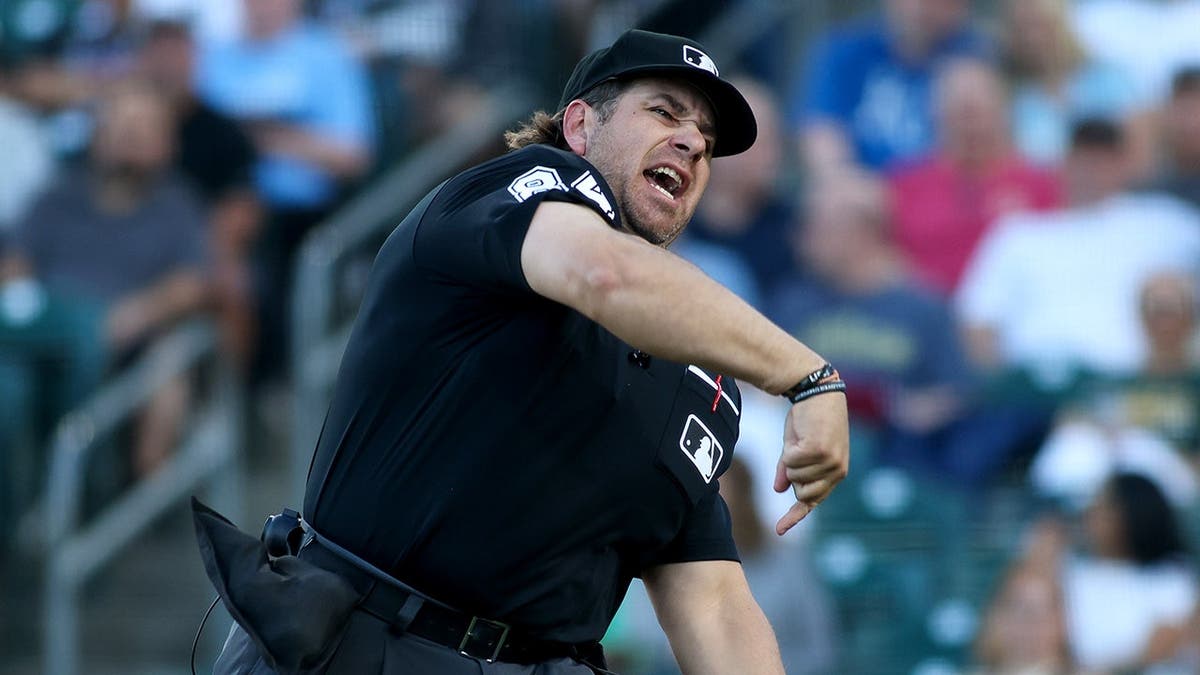
These factors contribute to why such moments are rare. Recently, during a game in West Sacramento, California, on April 29, 2026, home plate umpire John Libka ejected Athletics hitting coach Chris Cron in the first inning. This ejection paved the way for a notable interaction between A’s manager Mark Kotsay and the umpire over balls and strikes.
BLUE JAYS MANAGER JOHN SCHNEIDER DROPS F-BOMB IN HOT MIC MOMENT WITH UMPIRE
“That is f—ing ridiculous,” Kotsay exclaimed. “All I said was it was down. You missed three f—ing pitches in the first f–king inning.”
Though it didn’t reach the level of Terry Collins’ infamous ejection, it provided an engaging exchange. Kotsay criticized the use of Automated Ball-Strike (ABS) systems, arguing that umpires cannot rely on them to justify errors. He expressed frustration that teams are forced to use challenges early in the game.
Mark Kotsay further illustrated his point during a game against the Los Angeles Angels on June 19, 2026, when he was ejected after debating balls and strikes with umpire Dan Merzel.
Managers find themselves reluctant to use limited challenges during early innings. The stance that teams don’t want to waste challenges on early calls reflects the strategy shared by many in the league.
Recently, the Mets exhausted their challenges by the second inning, a strategy regarded as poor. This season, teams learned to avoid similar outcomes by not following the Mets or Red Sox’s pattern.
The reliance on ABS shouldn’t deter managers from critiquing the strike zone from the dugout. Baseball has a long tradition of allowing managers to voice their discontent, even as technology advances.