
President Donald Trump recently postponed the confirmation of his nominee to lead the nation’s intelligence agencies. This unexpected decision disrupted Senate efforts to renew a vital surveillance program and sparked tensions with Republicans on Capitol Hill.
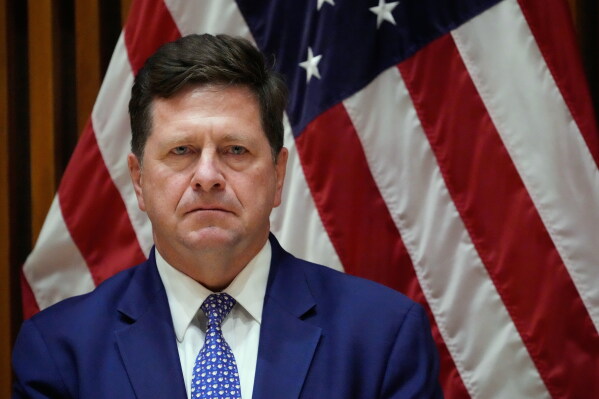
While attending the Group of Seven summit in France, Trump announced on social media his decision to delay the nomination of federal prosecutor Jay Clayton for the role of Director of National Intelligence. This was done just hours before Clayton’s scheduled hearing, despite bipartisan support for him.
Sen. Tom Cotton, Chair of the Senate Intelligence Committee, expressed his disappointment with the postponement. Despite this, he initially planned to continue with Clayton’s hearing unless directed otherwise by the president. Ultimately, the hearing was postponed at Trump’s instruction.
Trump’s decision increases the likelihood that his temporary appointee, Bill Pulte, will take over when the current director, Tulsi Gabbard, leaves office. Pulte, who has no notable national security experience, has faced criticism from both Republicans and Democrats.
In defense of Pulte, Trump described him as “fair” and “talented”. He criticized the accelerated effort to confirm Clayton as a “rush act by the Democrats”, questioning their reluctance to accept Pulte.
The delay also affects the renewal of Section 702 of the Foreign Intelligence Surveillance Act (FISA). This legislation is crucial for monitoring communications to prevent terrorist threats. Democrats have withheld votes for the bill until Pulte’s appointment is rescinded. As a result, the current surveillance authority has expired.
Further complicating issues, Trump stated he would not sign the FISA renewal without legislative changes requiring proof of citizenship from voters. Clayton’s current role as U.S. attorney for the Southern District of New York will not change until his replacement is confirmed.
Senate Majority Leader John Thune noted the uncertainty surrounding Clayton’s nomination and the need for clarity from the White House.
Virginia Sen. Mark Warner criticized Trump’s actions, describing them as an “extraordinary display of dysfunction” and claiming that the primary obstacle is “chaos and confusion” from the White House.
This situation is part of broader tensions between Trump and Senate Republicans, including a previous standoff over funding for immigration agencies.
Republican Sen. Thom Tillis expressed frustration with Trump’s actions, emphasizing the likelihood of bipartisan support for Clayton. He criticized the decision as undermining FISA reauthorization efforts.
Democrats argue Trump is compromising national security to advance political goals. Senator Elissa Slotkin, a former CIA analyst, criticized the potential appointment of Pulte.
Sen. Angus King expressed regret that Clayton’s nomination is stalled, particularly given his positive meeting with Clayton prior.
The delay of Clayton’s confirmation has implications for FISA and national security. Although a court order permits the program’s temporary continuation, communication companies may contest the government’s authorization to compel data cooperation.
Senate Democratic leader Chuck Schumer criticized Trump for showing “no interest in getting FISA done”.