
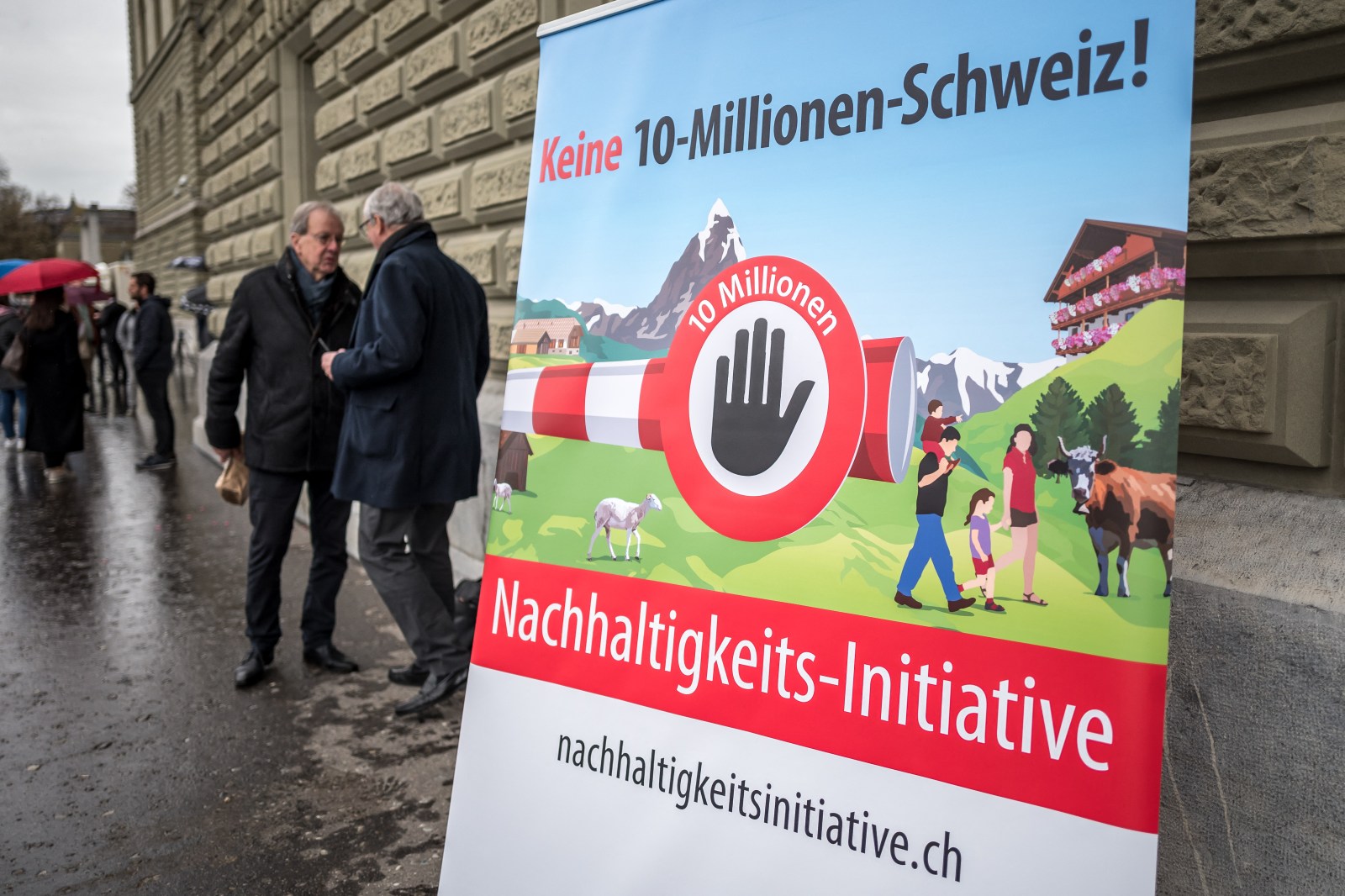
Swiss voters have decisively rejected a proposal to limit the country’s population to 10 million. This decision reflects a preference for economic stability and strong ties with Europe. The right-wing Swiss People’s Party (SVP) had supported the measure, which would have required government action, including possibly ending important agreements with the European Union, if the population exceeded 10 million before 2050.
The SVP argued that rapid population growth is straining housing, infrastructure, and public services, similar to debates happening across Western countries. However, nearly 55 percent of voters opposing the proposal, compared to 45 percent in favor, indicates a reluctance to embrace such drastic measures. Cloé Jans, from the Swiss public opinion research firm gfs.bern, told Newsweek that the proposal was seen as “too extreme.”
Jans noted that even though voters recognize concerns about population growth, housing costs, and infrastructure stress, they were not willing to accept the proposed solution. Opponents successfully highlighted the risks it could pose to Switzerland’s economy and its relationship with Europe.
The Problem Resonate, Not the Solution
While the proposal was rejected, the close vote reveals ongoing concerns about these issues. Since 2002, Switzerland’s population has grown from 7.3 million to over 9 million by 2025, aided by freer movements with the EU. The SVP suggested this growth threatens housing and public services and could harm cultural traditions.
The 2025 UBS Worry Barometer showed immigration as a top concern for 30 percent of Swiss people, after health issues (50 percent) and the environment (31 percent). Jans observed widespread unease but found that the proposed solution was seen as unfeasible.
Jans explained how surveys from gfs.bern indicate Swiss voters value EU ties and free movement; they also desire control over immigration numbers. This reflects a political culture prioritizing direct democracy and national identity.
Economic and EU Concerns Take Center Stage
Jans mentioned the opposition campaign effectively shifted focus to the risks of adopting the proposal. The ‘No’ campaign gathered support from the Swiss government, political parties, business groups, and unions, cautioning of potential economic damage and strained EU relations.
Switzerland is not part of the EU but relies on agreements for market access and free movement. Opponents warned that a population cap could endanger these arrangements. Jans highlighted issues with Switzerland’s labor market and the importance of foreign workers. She noted that about 43 percent of doctors in Switzerland are foreign-trained.
The Swiss State Secretariat for Migration 2025 report shows that most of the 165,386 foreigners who moved to Switzerland last year came for work, with two-thirds originating from the EU/EFTA.
Jans stressed that Swiss people were unwilling to risk their EU relationship. “In an uncertain world, a small country centrally located in Europe won’t risk harming ties with the EU, their closest ally,” she said. For many, maintaining a flawed status quo seemed safer than an uncertain change.