
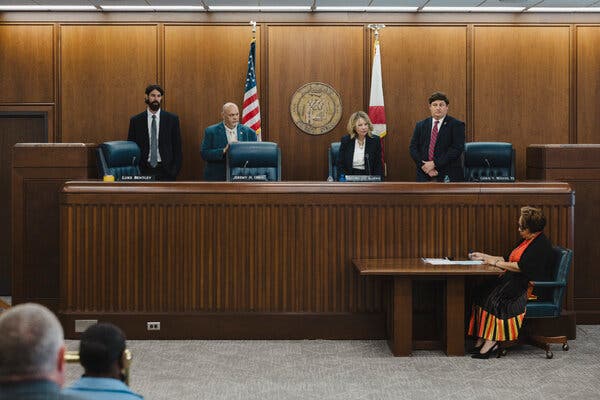
The Alabama Public Service Commission has recently emerged as a pivotal topic due to the upcoming runoff primaries. The discussion centers on electricity costs and data centers, with solar power unexpectedly joining the ranks of contentious issues.
Established in 1972, Jim Zeigler, a college student at the time, became renowned for rallying young voters against Bull Connor, a notorious figure of the civil rights movement. Connor had transitioned to a role at the Alabama Public Service Commission, which oversees water and power utilities in the state. Zeigler played a crucial part in removing Connor from the commission, eventually securing a seat himself.
Fast forward five decades. The commission’s seats have regained significance amid a heated national dialogue concerning artificial intelligence (AI) data centers. Currently, Zeigler, now 78, is focusing his campaign on portraying data centers as adversaries. Alongside this, he has taken a surprising stance against solar power and carbon dioxide emission reduction efforts.
“Alabama is being targeted by huge data centers, solar farms, and carbon capture operations,” Zeigler expressed at a recent Elmore County Republican Party event. “If anybody tries to sell you on the idea of these data centers and solar farms because of jobs and economic development, tell them that you know better.”
The connection between solar power and data centers is a matter of perspective among different groups. Concerns about the sprawling data centers stem from their consumption of significant amounts of power and water, posing challenges for regular citizens to manage or afford. Moreover, solar power and renewable energy have their critics, notably President Trump.
As the runoff approaches, the debate over the commission’s role in handling these complex issues remains intense, reflecting broader national discussions on energy and infrastructure.