
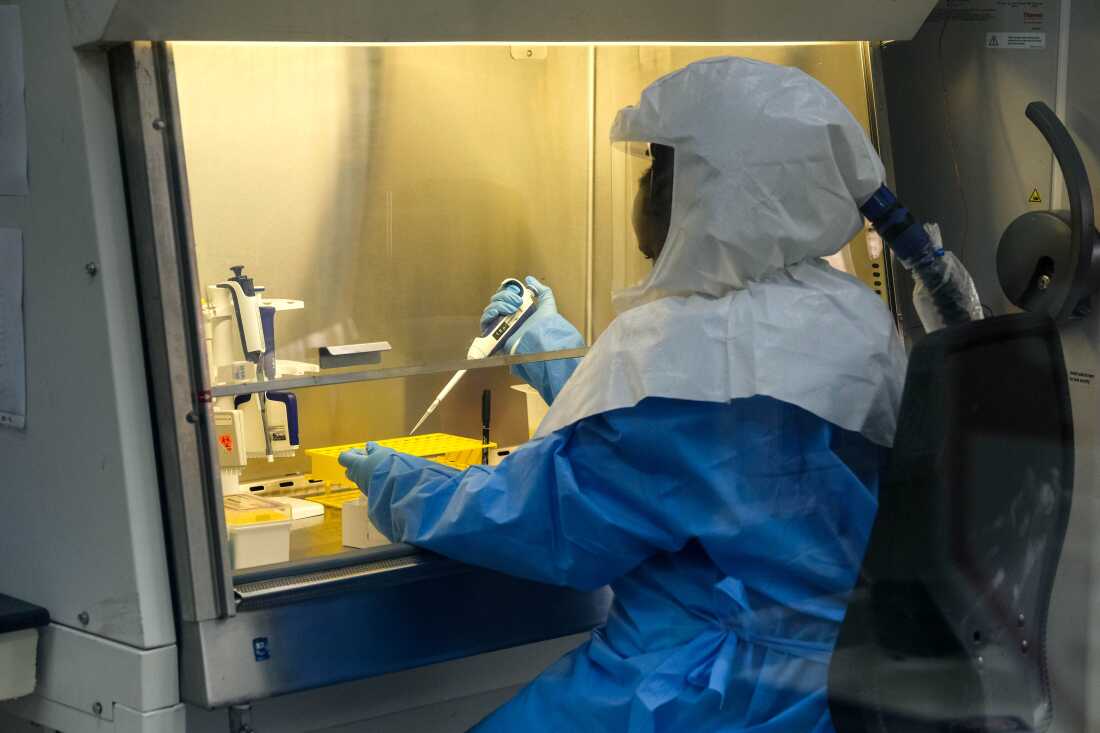
Sophia Mulei, a laboratory technologist, works with a control sample at the Viral Hemorrhagic Fever Laboratory at Uganda Virus Research Institute in Entebbe, Uganda. This lab plays a central role in testing Ebola samples. In mid-April, health officials in the Democratic Republic of Congo began to grow concerned about potential Ebola cases. These concerns arose due to deaths in the northeastern region that resembled the virus’s characteristics, prompting officials to collect and send samples to the Bunia lab.
Initial Testing and Delays
The lab received the initial samples on April 30th, as detailed by Jean-Jaques Muyembe, the general director of INRB, DRC’s national biomedical research center. The samples were tested using GeneXpert, a machine designed to automate the detection of specific viral DNA segments. Initially, the results were negative, as were subsequent tests weeks later. Ultimately, more specialized tests in Kinshasa confirmed Ebola. The GeneXpert’s inability to identify the rare virus species present caused a delay, leading to the mid-May announcement of an Ebola Bundibugyo outbreak.
This month-long delay allowed the outbreak to swell, becoming one of the largest ever recorded. Suspected cases surged past 1,100, overwhelming labs with samples. “The initial response was significantly hampered due to inadequate on-ground diagnostics,” says Caia Dominicus, senior technical adviser for the International Pandemic Preparedness Secretariat. Timely testing is crucial for isolating patients and halting virus transmission.
Progress in Testing Capacity
Diagnostic efforts have made strides since, according to Abdirahman Mahamud of the World Health Organization. Although testing capacity has improved, it is insufficient for an outbreak potentially reaching 20,000 cases by August. “We still lag behind,” warns Mahamud. Additional resources will be necessary if cases continue to rise geographically or numerically.
A Shift in Diagnostics
RADI-One has significantly enhanced testing capabilities. This device can detect Bundibugyo from patient samples and requires less training and equipment than standard lab tests. It can be deployed in smaller clinics close to outbreak sites like Mongbwalu, a heavily impacted mining town. Currently, seven labs and a mobile lab can process tests in northeastern DRC. Larger labs, such as those in Bunia, manage over 100 samples daily, according to a technician. This individual requested anonymity due to concerns about job security for speaking with media without authorization.
“We have no backlog and samples are analyzed immediately, with results available within one to twelve hours,” said the technician. Africa CDC is collaborating with the WHO and DRC to introduce 50 RADI-One devices by June’s end, but Dominicus emphasizes more may be needed, as availability is limited. WHO negotiations with the South Korean manufacturer KH Medical are in progress to supply additional devices.
Sample Transport and Rapid Test Potential
Sample transport poses further challenges, as it often takes days and some locations are nearly inaccessible. Continued conflict, population displacement, and community distrust exacerbate diagnostic difficulties, according to Dominicus. Rapid tests, similar to those employed during COVID, may provide solutions. These use a small blood sample on a paper strip to yield results in minutes. “The quicker someone tests positive, the sooner isolation can occur to prevent spreading,” explains Abraar Karan, infectious disease physician at Stanford University.
While rapid tests are less sensitive and may miss cases, they offer critical insights into outbreak scale and management. Muyembe stresses community rapid testing’s importance. It could include the deceased, whose remains often involve communal contact, risking transmission. However, no rapid tests currently exist for Bundibugyo. Tests for common Ebola strains might work, but field efficacy is uncertain. Robert Garry, a Tulane University microbiologist, asserts that developing a Bundibugyo-specific test could be swift.
Efforts to establish rapid tests are deemed valuable by Ranu Dhillon, a global health physician advising Guinea in 2014. While developing treatments or vaccines would take longer, existing tests could be validated quickly. This simultaneous evaluation would ascertain performance alongside traditional methods. Substantial investment in both lab-based and rapid testing is critical, Dominicus states, as diagnostics often receive less attention than vaccines or therapeutics. “Diagnostics provide necessary information for decision-making,” she emphasizes, noting the difference appropriate diagnostics could have made in preventing outbreak severity.