
The term “words taken down” may not resonate with those outside Capitol Hill, but it usually signifies a disturbance in the House of Representatives. Recently, the House witnessed a tumultuous event during a debate on a war powers resolution concerning Lebanon.
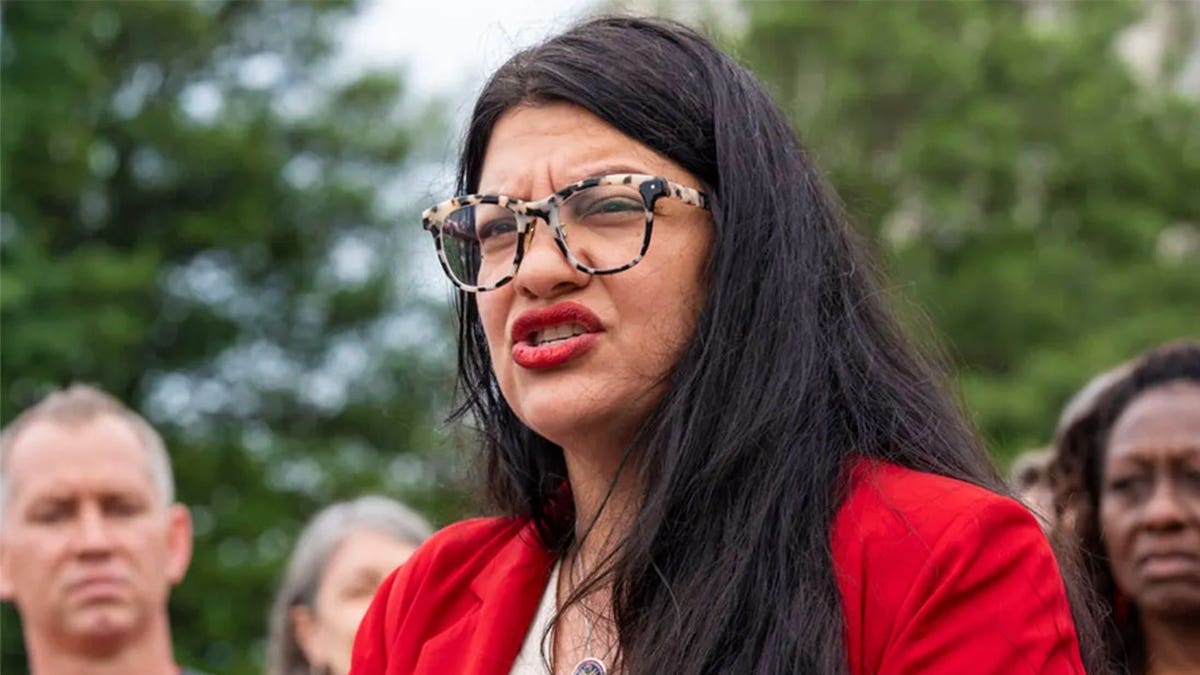
Rep. Rashida Tlaib, D-Mich., introduced the proposal aiming to limit President Trump’s conflict with Iran as tensions rose in other areas of the region. Tlaib, a Palestinian-American and one of only two Muslim women in Congress, is known for her outspoken views against Israel.
“We must end U.S. participation in the Israeli apartheid regime’s invasion of Lebanon. The Israeli military continues to target journalists like Amal Khalil and use our tax dollars to commit war crimes,” Tlaib stated.
Rep. Rashida Tlaib faces a censure threat from the House, accused of “celebrating terrorism” through a pro-Palestinian speech.
However, the debate became contentious when Rep. Max Miller, R-Ohio, criticized Tlaib, mentioning Hezbollah and making personal attacks.
“Its members are butchers that you like to hang out with to a certain extent. Yes, you advocate for terrorists on a daily basis. You advocate for a terrorist regime every single day,” Miller, who is Jewish, charged.
Tlaib reacted vocally, but her words were unclear as she wasn’t on the mic.
“Oh, I’m sorry. Are we getting a little emotional?” Miller mocked.
The scene escalated with Tlaib shouting at Miller from across the chamber, prompting Rep. Jay Obernolte, R-Calif., presiding over the debate, to intervene.
“Colleagues, this is a serious topic. We will debate it respectfully and deliberately,” Obernolte cautioned. “Is the gentlewoman from Michigan making a motion?”
Tlaib made her way to a mic. “Yes, Mr. Speaker, I am. That is a direct attack on my character. I please request to strike the words down,” she demanded.
Her motion halted the debate on Lebanon’s war powers resolution and other House business.
The phrase “words taken down” refers to documenting language that may violate House rules, prohibiting personal attacks and impugning colleagues’ motives.
Tlaib believed Miller’s words breached decorum, leading to an investigation as business in the House paused.
If a member’s language violates rules, they may be asked to withdraw the statement and apologize. Refusing leads to ruling them out of order, expunging the speech, and suspending them from speaking for the day.
If the chair concludes a rule violation, an appeal can lead to a roll call vote or a motion to “table the appeal.” After an hour-long standoff, Miller did not retract his words.
“The words of the gentleman from Ohio contain an allegation that the gentlewoman from Michigan is a ‘butcher’ and affiliated with a terrorist organization,” Obernolte declared. “Such remarks impugn the patriotism and loyalty of the member of the House.”
He ruled the remarks out of order and expunged them.
House Foreign Affairs Committee Chairman Brian Mast, R-Fla., while unable to speak for Miller, issued a statement: “I’m going to deliver a message from Rep. Miller of Ohio—‘Yes, I said it. I own it. And I stand by it.’”
As the discussion continued, efforts to submit records and transcripts relating to Tlaib were met with objections from her side.
Reflecting on past incidents, such as a 1994 clash involving Rep. Maxine Waters, D-Calif., disputes in the House often required intervention from leadership.
Now, with developments in AI, Obernolte suggested that AI could handle future disputes, stating, “AI is very good at this. You give it a rules manual and a specific instance and ask, ‘Is this in compliance with rules or is this a violation?’”
While members may continue saying words worthy of being “taken down,” AI as an umpire in the House may still be in the future.
Chad Pergram serves as Chief Congressional Correspondent for FOX News Channel (FNC), joining the network in September 2007, based in Washington, D.C.