
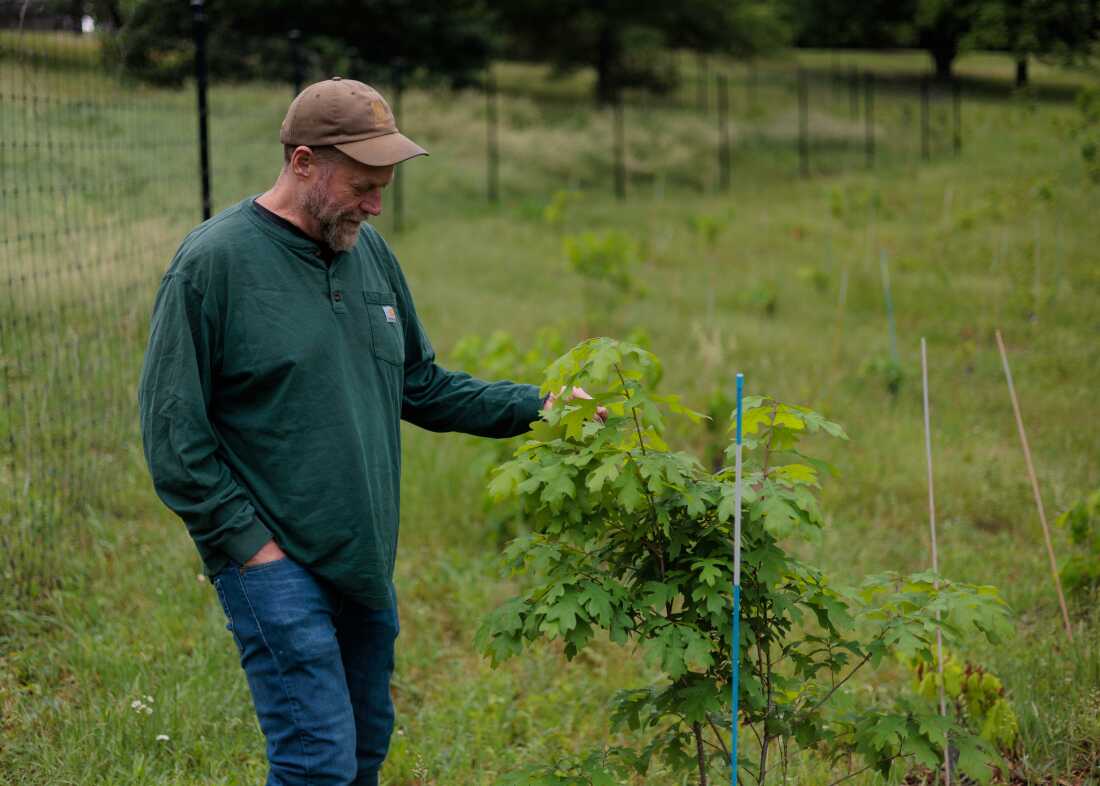
A visit to Baltimore’s Cylburn Arboretum finds Morgan Grove, a former Forest Service researcher, examining a white oak tree. The tree was planted by agency scientists, and Grove’s inspection symbolizes a broader discussion about Baltimore’s unique recycling facility and the challenges facing the U.S. Forest Service.
Unlike other cities that pay to discard fallen trees, Baltimore turns them into usable products like furniture and flooring at Camp Small. Shaun Preston, who manages the facility, credits Forest Service scientists with providing critical early support. “The Forest Service helped us with research and development,” Preston noted, highlighting the critical role of federal expertise.
Nationally, the Forest Service operates a vast network, employing over 1,000 workers in locations like Baltimore and remote forest areas. These employees engage in diverse projects across the U.S., collaborating with local entities like Camp Small.
“We prioritize managing national forests for their purposes and ensuring maximum value to taxpayers.” – Chief Schulz
Yet, changes loom. On March 31, the Forest Service announced reorganization plans, signaling closure threats for research facilities, including Baltimore’s. This aligns with budget propositions from President Donald Trump, who suggested eliminating the research budget entirely.
At an April budget hearing, Forest Service Chief Schulz expressed goals of fiscal responsibility by relocating headquarters from Washington, D.C., to Salt Lake City, Utah, and closing ten regional offices.
Documents reveal cost-efficient leasing arrangements for facilities under consideration for closure. For instance, the Forest Service rents property in Hawaii for a one-time fee of $1. Elsewhere, like Fort Collins, Colo., costs $1 million annually, contrasting with leases almost free elsewhere.
Dr. Paul Hessburg, a Senior Research Ecologist, emphasizes the value of owned research facilities, citing minimal costs and significant research contributions. Maintenance across owned structures is necessary, with widespread assets totaling billions in deferred expenses, yet roads and bridges are more costly to maintain.
The potential closures raise concerns for those like Morgan Grove, emphasizing localized research’s necessity. His projects demonstrate the irreplaceable role of site-based ecological work.
Scientists argue that moving threatens research continuity and community relationships, crucial for projects like Camp Small’s. Relocations risk permanent disruptions to data collection and analysis.
Current Forest Service researchers express readiness to resign over forced relocations, emphasizing the necessity of maintaining long-term, location-specific studies. In Baltimore, Forest Service efforts facilitate public engagement with green spaces.
Forest Service leadership faces union challenges, asserting that proposed reorganization violates congressional funding protocols. Negotiations continue, yet employees foresee potential research devastation.
The agency’s research legacy, deemed the world’s largest, hangs in the balance. Research cutbacks threaten data essential for public land management and community protection from environmental threats.
Forest Service researcher Dr. Hessburg concludes, “Managing almost 200 million acres of national land requires significant effort. Losing the largest forestry research organization bears consequence.”
NPR invites further insights on federal agency reorganization by contacting reporter Chiara Eisner via Signal or email.