
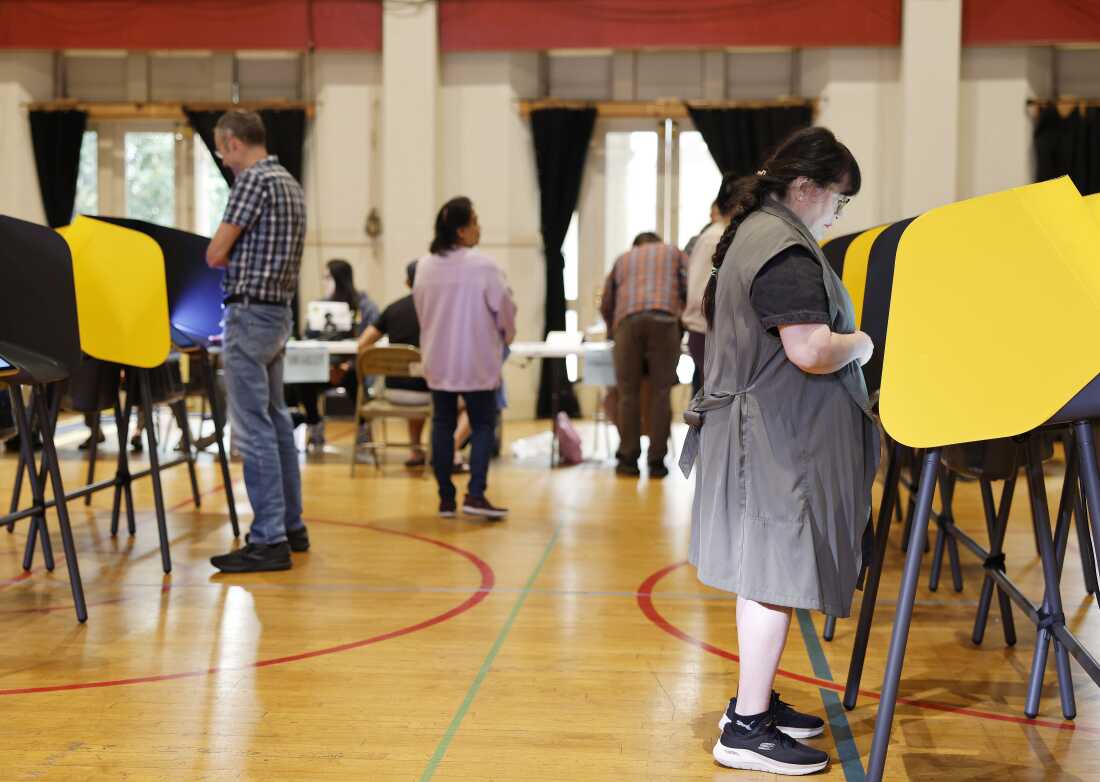
In Pasadena, California, voters recently cast their ballots on November 4, 2025. A significant Republican-led voter overhaul is making waves on Capitol Hill, now featuring a photo identification requirement under the renamed Safeguard American Voter Eligibility Act, or SAVE America Act. President Trump is pushing to transform elections in this pivotal midterm year, eliciting strong opposition from critics who argue the measure would disenfranchise millions.
The U.S. House narrowly passed the SAVE America Act last week, primarily with Republican support and a single Democrat endorsement. This approval comes nearly a year after the previous version of the SAVE Act, but this new proposal faces resistance in the Senate. The challenge lies in the Senate’s 60-vote requirement to bypass the legislative filibuster, with Democrats voicing their disapproval. Some Republicans suggest methods to circumvent the filibuster, though GOP leaders remain hesitant.
New requirements under this overhaul demand proof of citizenship, such as a U.S. passport or a birth certificate paired with valid photo ID, for voter registration. Additionally, voters must present photo ID when voting. Representative Bryan Steil, R-Wis., emphasized strengthening legislation with this addition in prepared remarks, explaining the limitations of current law relying on attestation without documentary proof.
Federal laws already prevent non-citizens from voting, and instances of fraud by non-citizens are extremely rare. Despite this, states take varying measures to verify citizenship, and 36 states require some form of ID, with many insisting on photo identification.
Democrats criticize this iteration of the SAVE Act for intensifying voting difficulties for millions lacking requisite identification. For example, about half of Americans lacked passports in 2023. Critics argue the immediate implementation of this act strains both voters and election officials without providing necessary funding. Violations by officials could lead to criminal penalties, exacerbating concerns over this legislative push.
While the Senate’s approval appears unlikely, Trump and his administration are amplifying public support by referencing polls showing broad backing for the identity requirements. Trump’s previous failed efforts to overturn election results and seed distrust in electoral processes are seen as connected to this legislative effort.
Michael Waldman from the Brennan Center for Justice, a voting access advocate, labeled the measure as a “power grab” under legislative disguise. Trump has recently suggested the nationalization of elections and hinted at enforcing voter ID through executive orders, despite judicial blockage due to constitutional overreach.
Key Additions in the SAVE America Act:
- Photo ID specifications: Accepted forms include U.S. passports, driver’s licenses, state IDs, military IDs, and tribal IDs. Provisional voting and specific affidavit options exist for those without ID, including individuals with religious objections to photography. Those voting by mail must also include photo ID copies.
- Name discrepancy guidelines: Affidavit requirements allow voters to verify name changes post-marriage, addressing concerns for millions, particularly women, whose current legal names don’t match birth certificates.
- Exemptions: The act contains specific exclusions for absent military members and their families.
- Voter list verification: States must submit voter lists for comparison against the Systematic Alien Verification for Entitlements (SAVE) system, which is now restructured as a national citizenship check. Some states adopt SAVE aggressively, despite notable privacy and accuracy issues, with misidentified U.S. citizens flagged.