
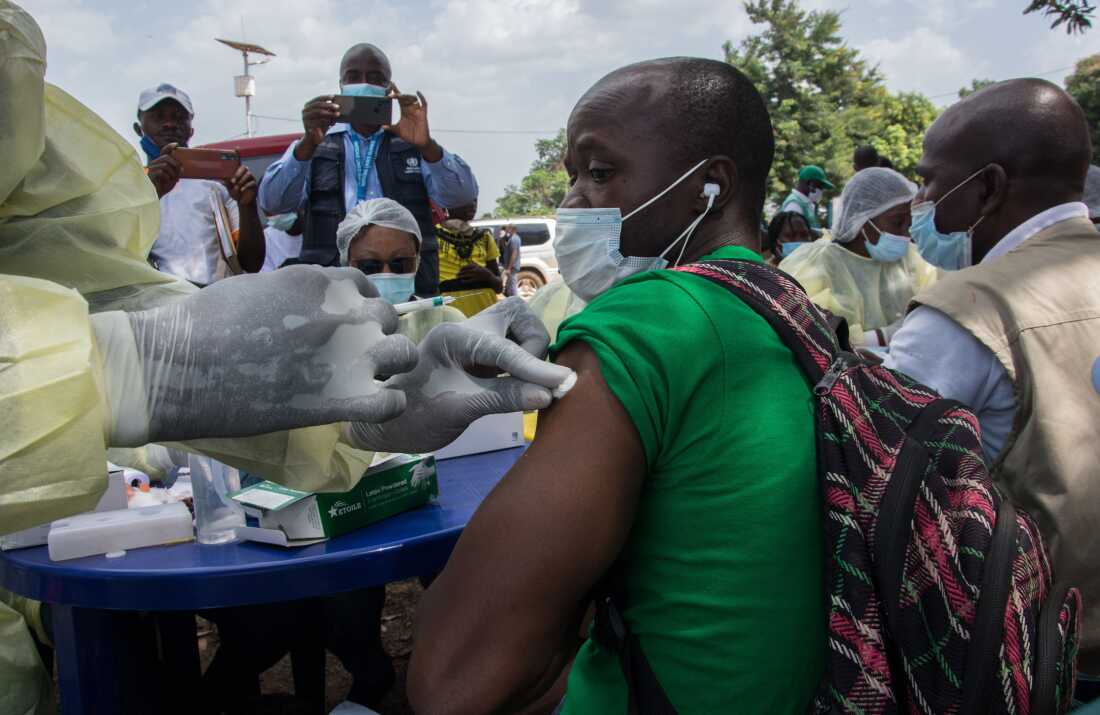
In Gueckedou, Guinea, a health worker from the Guinean Ministry of Health prepared to administer an anti-Ebola vaccine on February 23, 2021, following a new outbreak. The outbreak emphasized the need for a vaccine targeting the Bundibugyo Ebola virus species, currently spreading in the Democratic Republic of Congo and Uganda.
The first Ebola vaccine, approved in 2019, targets a different species than Bundibugyo. This presents a challenge as there are no approved vaccines or treatments for Bundibugyo. To address this, two global vaccine non-profits have committed over $100 million to accelerate Bundibugyo vaccine research and development.
The Coalition for Epidemic Preparedness Innovations (CEPI) announced a $62 million investment to fast-track three vaccine candidates. Gavi, a global vaccine alliance, pledged $40 million to foster a market for a potential vaccine. “Ebola is a deadly killer, and we’ve seen multiple outbreaks where a well-matched vaccine makes a difference,” states Nicole Lurie, CEPI’s executive director.
Researchers are exploring Bundibugyo-specific vaccines. CEPI’s sizable investment signals urgency to develop a vaccine, though it will take months to determine its effectiveness and even longer for widespread use. This is crucial as the DRC outbreak remains one of the largest recorded, continuing unabated.
The World Health Organization (WHO) commends the push to fast-track candidate vaccines. WHO’s Anaïs Legand emphasizes the need for rigorous testing, following ethical guidelines through clinical trials. Planning for these trials is ongoing, as shared by WHO officials.
Historically, the U.S. played a major role in researching vaccines amid outbreaks. However, changes under the Trump administration, such as the withdrawal from WHO, have altered its involvement. The Division of Clinical Research at the U.S. National Institute of Allergy and Infectious Diseases (NIAID) was instrumental in the 2014 West Africa Ebola outbreak, collaborating on vaccine trials that led to the Ervebo vaccine approval in 2019. Elizabeth Higgs, a former NIAID associate director, now works with WHO, advises that global disease preparedness networks are stepping up in response.
Vaccine Development Efforts
CEPI funds are being directed to three vaccine developers: IAVI, University of Oxford, and Moderna. IAVI receives up to $3.2 million and is furthest along. Their candidate uses a vesicular stomatitis virus (VSV) similar to the Ervebo vaccine. Researcher Thomas Geisbert highlights its effectiveness in monkey trials, showing the vaccine provides protection swiftly post-exposure—a critical element for outbreak containment. However, limited doses exist for larger clinical trials, with more production anticipated to take several months.
The University of Oxford, receiving up to $8.6 million, adopts a strategy akin to the Oxford/AstraZeneca COVID-19 vaccine but tailored for Bundibugyo. Oxford collaborates with the Serum Institute of India, aiming for readiness within one or two months. Moderna garners up to $50 million to create an mRNA vaccine, drawing on past success against the Zaire Ebola species, though specific dosing strategies remain undecided.
Challenges in Clinical Trials
These vaccines require testing through clinical trials in areas like the DRC or Uganda, where Bundibugyo is active. Conducting trials during outbreaks is inherently challenging due to shifting case locations and, in this instance, the ongoing conflict in northeast DRC.
Distrust and misinformation, including rumors denying Ebola’s existence or maligning aid efforts, complicate these efforts. Engaging communities for trial participation is essential, notes Laurie from CEPI. Higgs, working with WHO, confirms ongoing measures to rigorously evaluate these candidate vaccines’ safety and efficacy.