
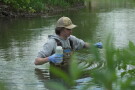
Hannah Ray J Childs spends her days navigating the rapids of the Maquoketa River in Iowa, finding solace and community in whitewater kayaking. Despite the thrill, she protects herself from potential illness caused by the river’s pollution, using nose and ear plugs. Many are baffled by her passion for a sport in waters considered unclean.
Iowa is a stark example of water pollution struggles in the Midwest. The state’s agricultural prominence contributes significantly to this issue, with fertilizers and manure from farms draining nitrates and phosphorus into waterways. This runoff fosters an aquatic dead zone in the Gulf of Mexico.
In a struggle to manage these challenges, Iowa’s largest city imposed water use restrictions last summer. Many state waterways are deemed unfit for swimming or drinking, with pollution affecting public health and recreational activities. Despite efforts, such as voluntary actions and incentives to reduce nutrient runoff, the state remains distant from its pollution reduction targets.
“If we don’t get people invested in their local river, their local community, how are we ever going to ask them to take care of it?” Childs remarked.
Lake Darling exemplifies the ongoing battle against pollution. Although improved in recent years, the lake struggles with recurring E. coli and algal blooms, a concern for local recreational activities. Strategies include increased conservation efforts and changes in farming practices to control runoff.
Iowa’s issues are emblematic of broader challenges in the Midwest, with voluntary measures preferred over mandates. Environmental groups argue for more stringent rules, while local successes in wetland restoration and conservation provide some hope.
Farmer cooperation remains crucial, despite high supply costs and limited returns from sustainable practices. The persistence of these challenges highlights the need for a balanced approach.