
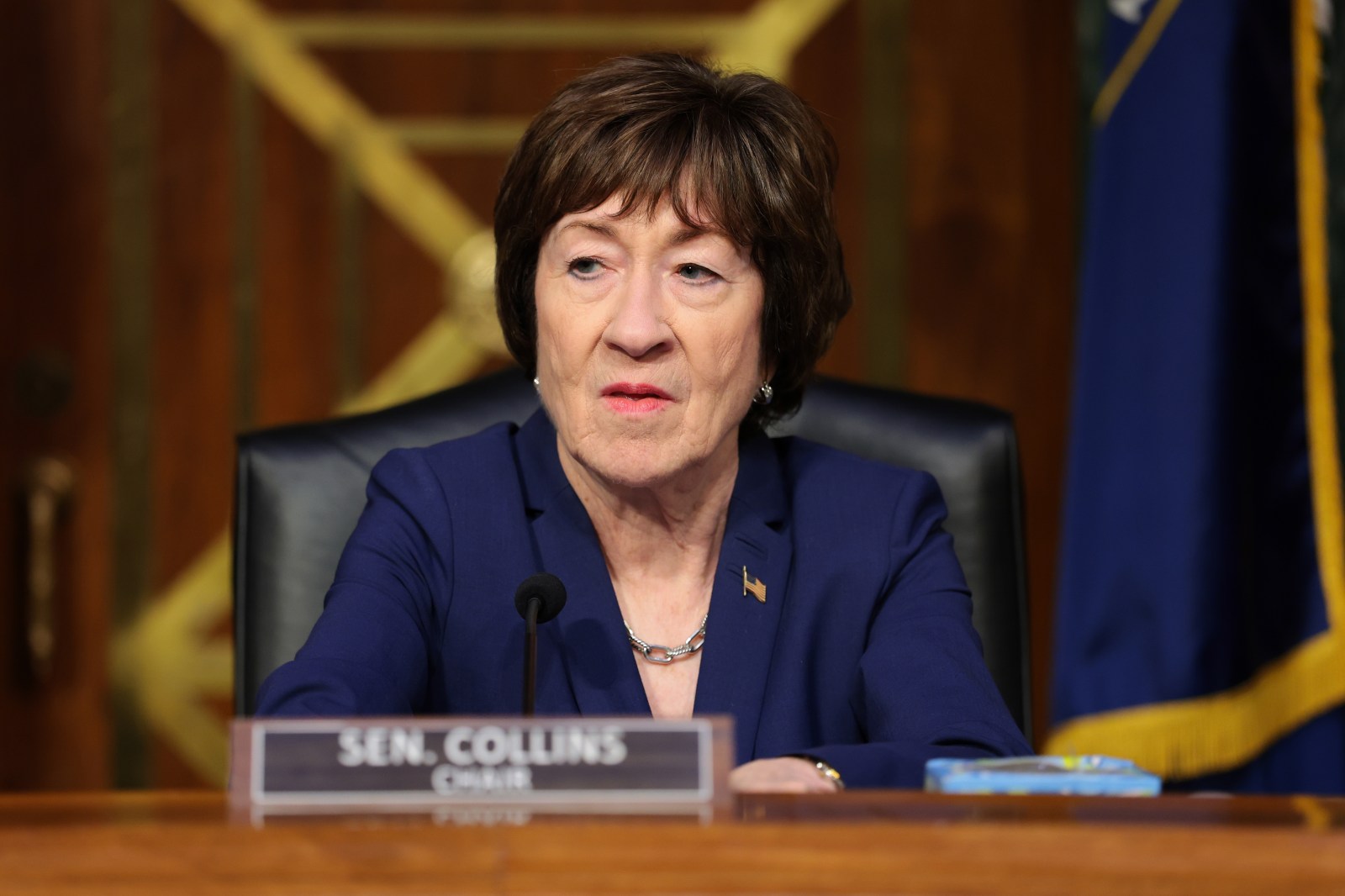
The Polls Indicate a Tight Contest
The 2026 U.S. Senate race in Maine has become a closely contested race. A recent poll by Fox News, conducted from August 6 to 10, shows Democratic candidate Troy Jackson holding a slight lead over Republican incumbent Senator Susan Collins. Jackson stands at 48 percent, while Collins is at 46 percent. This result falls within the poll’s margin of error of 3 percent, highlighting a competitive election.
Previously, a June survey had placed Collins ahead of former Democratic nominee Graham Platner with 50 percent support compared to Platner’s 47 percent. Following allegations of misconduct and sexual assault, which he denied, Platner withdrew from the race. The latest poll involved 1,000 registered voters in the state.
Susan Collins’ Challenges
Collins, noted for her moderate stance within the Republican Party, has at times diverged from former President Donald Trump. Nevertheless, 55 percent of those polled expressed extreme or very high concern about her frequent alignment with Trump. This may pose a challenge in a state where voters often favor candidates from both major political parties, making independent voters significant in statewide elections.
Introduction to Troy Jackson
Troy Jackson’s nomination as the Democratic candidate brought notable changes to the electoral landscape. Following Platner’s withdrawal, Jackson, a fifth-generation logger from northern Maine, emerged as the nominee. His previous role as president of the Maine Senate allowed him to emphasize his working-class background and experience representing rural communities in the state. This may appeal to voters who normally do not support Democratic candidates, particularly in rural areas.
Understanding the Current Dynamics
The recent polling data suggests a fierce competition but does not foreshadow immediate setbacks for Collins. Despite Jackson’s narrow lead, it falls within the margin of error, and Collins’ established history in Maine is formidable. With months until the election, both campaigns have time to influence undecided voters. Jackson’s potential vulnerabilities could include scrutiny over his progressive policies and political evolution. Collins may face questions regarding her affiliations with the Republican Party and former President Trump, along with her stances on policy matters.
Support bases show divided preferences. Jackson receives robust backing from liberals, young voters, college graduates, and union households. He leads among voters under 45, while the gender support among men is balanced. Collins garners strong support from conservatives, White evangelical Christians, non-college-educated voters, and rural residents.
Comparing to Platner’s standings in June, Jackson maintains support among women, college graduates, and suburban voters. He notably gains among the under-45 demographic. Collins’ support among men has decreased by 10 points.
While Collins retains strong backing from MAGA Republicans, her support is considerably lower among non-MAGA Republicans, with nearly 20 percent of them favoring Jackson instead.
Conclusion and Expectations
Despite Jackson’s early lead, the Maine Senate race is widely seen as a toss-up, with Cook Political Report categorizing it similarly. As the November 3 election nears, key factors will involve Collins’ capability to regain moderate and independent support versus Jackson’s potential to expand his lead into a broader coalition.
Insights from Other Polls
A Pine Tree State Poll by the University of New Hampshire Survey Center, conducted in July, showed Jackson with 49 percent against Collins’ 46 percent. Meanwhile, the Hart Research Poll conducted by a Democratic sponsor, Senate Majority PAC, presented Jackson with 49 percent and Collins with 45 percent, leaving 6 percent undecided. These surveys had margins of error of 2.9 percent and 3.5 percent respectively, capturing varied levels of voter support.