
For the past fourteen years, Xi Jinping has aimed to replace U.S. leadership with his vision of governance informed by the Communist Party of China. Now, at 73, speculation surrounds the possibility of Xi continuing as the general secretary of the CCP beyond 2024, despite breaking precedent by taking a third term in 2022.
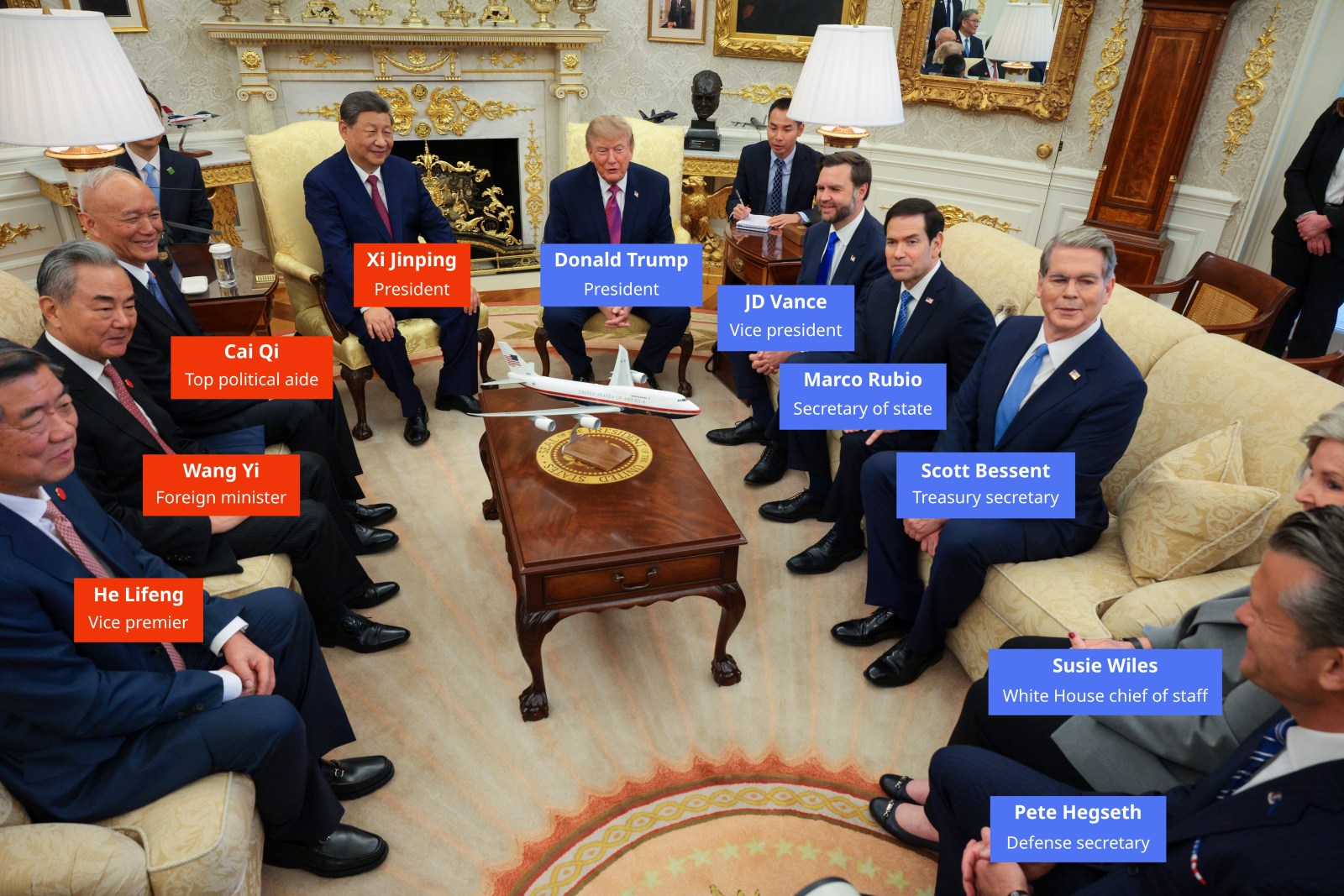
The upcoming party congress presents an opportunity for leadership change, yet Xi’s presence at a summit with President Donald Trump has forced observers to speculate on succession prospects based on those accompanying him. Protocol does not always equate to power; among the potential candidates, Chief of Staff Cai Qi holds institutional clout and is part of the influential seven-member Politburo Standing Committee, handling Xi’s security.
Premier Li Qiang, another close ally, has a longstanding relationship with Xi, dating back to their time in Zhejiang province. Commended for his handling of COVID-19 in Shanghai, Li ranked second in the Politburo Standing Committee following his promotion to Beijing.
Xi’s inner circle extends to family, with his wife Peng Liyuan recognized as a skilled political operator, and their daughter, Xi Mingze, maintaining a strategic low profile despite her Ivy League education.
Among other notable figures are Li Xi, the CCP discipline chief; Ding Xuexiang, the top vice premier; and Zhou Hongxu, Cai’s deputy and head of the Central Guard Bureau, all of whom were elevated at the previous congress.
China’s internal dynamics present challenges. Xi’s leadership endured myriad purges, recently ousting Generals Zhang Youxia and Liu Zhenli, heightening fears of destabilizing political rivalry post-Xi. Observers worry about the increasingly harsh political climate amidst economic challenges, although Xi could mitigate fears by designating a successor.
The proverb depicting those closest as potential threats suggests Xi’s consolidation of power inserts risk into close relationships, potentially affecting Cai and Li Qiang’s positions.
Seasoned observers like economist Li Hengqing highlight trust deficits within the system, exacerbated by continuous purges since Xi’s rise to power, impacting both civilian and military sectors. Li refers to ancient Chinese poetry to underscore loneliness at the top, and the precariousness of succession.
Rumors of Xi’s declining health, fueled by his habits and recurring speculation since his ascent in 2012, cast uncertainty around his leadership longevity. Ultimately, planners must contemplate Xi’s potential death in office.