
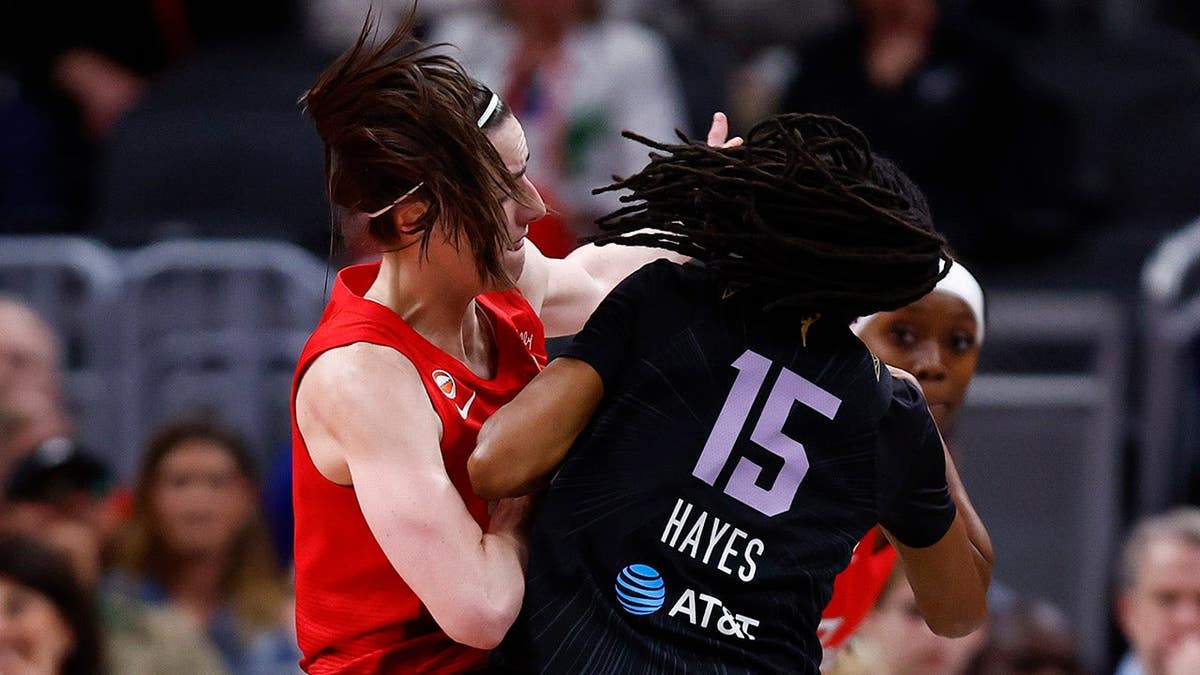
The Women’s National Basketball Association (WNBA) has gained significant attention recently, drawing focus to both the league and its players. An incident involving Golden State Valkyries guard Tiffany Hayes, known as Tip Hayes, and Indiana Fever star Caitlin Clark exemplifies the challenges that come with increased visibility.
During a recent game, a heated exchange unfolded on the court between Hayes and Clark. Clark, returning from a back injury, contributed significantly to her team’s victory over the Valkyries with 22 points and nine assists. Hayes, coming off the bench, scored 19 points. The exchange escalated when Clark hit a deep three-pointer while Hayes defended, leading to verbal exchanges between the two players.
Trash talk is a well-known element in competitive sports, aimed at gaining a mental advantage. However, this incident extended beyond the game. Hayes was later overheard on a live microphone appearing to make remarks indirectly about Clark, although it was not explicitly clear.
Post-game social media interactions further fueled the situation. Screenshots of Hayes engaging with fans on Threads were shared widely. One post hinted at aggression towards Clark, and Hayes’ response drew attention. Though no direct threats were made, the implication led to a polarized fan reaction.
The WNBA introduced the “No Space for Hate” initiative in 2025, outlining its commitment to maintaining respectful discourse both online and in arenas. The initiative includes tools to detect hateful comments, enhance security, and provide mental health resources. The league has previously acted quickly on related allegations, conducting thorough investigations.
As the WNBA gains notoriety, largely due to players like Clark, the league faces a dilemma. It benefits from the attention and revenue Clark generates but must also address and manage the accompanying scrutiny of players’ actions and remarks.
The league’s stance on such matters, especially regarding player interactions with fans, remains crucial. Requests for comment by OutKick on the league’s awareness and potential actions regarding Hayes’ social media activity have not yet been addressed.
This situation highlights the balance WNBA players must strike as they navigate their roles in a league now under a brighter spotlight. The league’s commitment to its “No Space for Hate” platform will determine its ability to maintain a positive environment amid growing interest and scrutiny.
Reporter Dan Zaksheske from OutKick has been covering this unfolding story.