
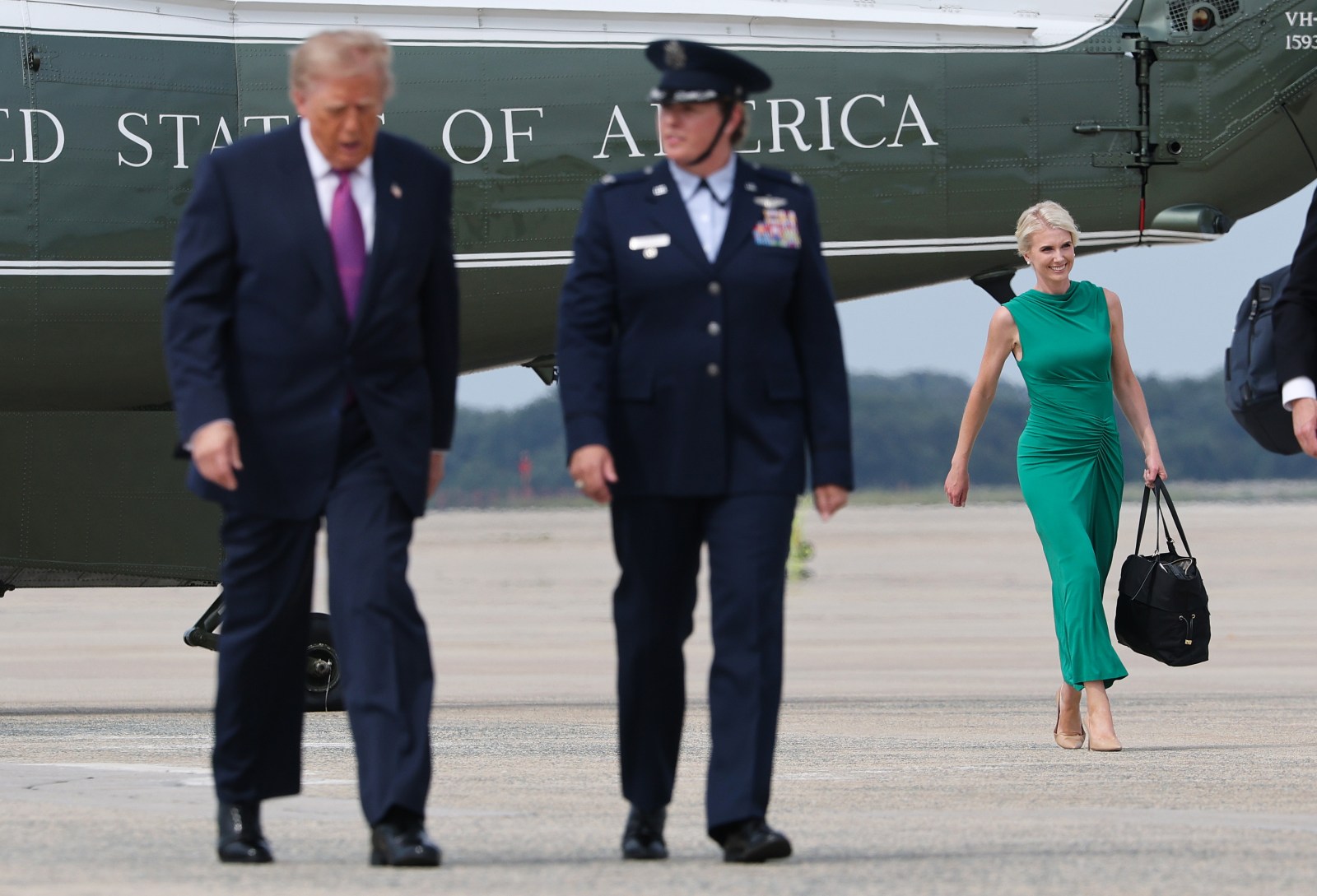
The White House has defended President Donald Trump’s decision to provide $45,000 in cash gifts to several of his aides, describing the payments as personal holiday gifts that are permissible under federal law and ethics rules. Natalie Harp, a special and executive assistant to Trump, reported receiving the cash gift in her financial disclosure, naming Trump as the provider and labeling it as a ‘cash gift for the holidays.’
In addition to Harp, communications adviser Margo Martin and aide Chamberlain Harris also reported receiving the same amount. These gifts were made beyond their annual government salaries of $150,000. Trump also gifted $20,000 to Walt Nauta, the Oval Office operations director, according to financial records.
The White House Press Office, responding to inquiries, stated via a social media post that Trump has a tradition of giving Christmas gifts to individuals within his circle, including both government employees and those in the private sector. The administration emphasized that these gifts are unrelated to the recipients’ official duties and comply with legal and ethical standards.
Despite the White House’s stance, the payments have raised concerns among ethics experts. Richard Painter, former chief White House ethics lawyer under President George W. Bush, indicated to The Washington Post that these gifts might breach federal laws against salary supplementation from external sources. Painter is a noted critic of Trump.
Don Fox, former acting director of the Office of Government Ethics during the Obama Administration, stated that while the situation does not clearly indicate a violation, the payments are ‘troublesome’ as they could create a sense of obligation towards the president. Former Palm Beach State Attorney Dave Aronberg highlighted that the substantial nature of these gifts poses legitimate ethics and legal questions, as federal law typically bars salary supplementation by private sources.
The main issue is determining why Trump gave this money. If these were genuine holiday gifts, unconnected to government work, it serves as a stronger defense. Conversely, if the funds acted as bonuses or extra compensation for government duties, this could breach the federal salary-supplementation law, exposing both parties to potential ethics investigations, civil penalties, and, in severe cases, criminal scrutiny,
Aronberg commented.
Furthermore, recent reports have scrutinized Harp’s growing visibility alongside Trump, raising questions about her influence and access within the administration.
This story is ongoing and will be updated with further details as they become available.