
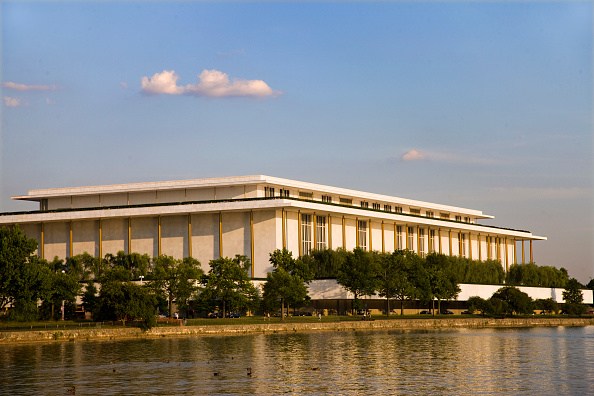
Photos revealing the aftermath of the removal of weeping willow trees outside Washington’s Kennedy Center have sparked renewed interest on social media. The trees were cut down in October 2025 due to safety concerns. A Kennedy Center spokesperson confirmed this to Newsweek late on Tuesday.
Testimonies in Court
Earlier this year, Kennedy Center Executive Director Matthew Floca testified in federal court. He stated that most of the willow trees, originally part of the center’s design, had been removed because of decay.
Social Media Buzz
Some social media posts linked the removal of the willows to President Donald Trump. However, Floca testified that he and Trump had not specifically discussed the trees or replacements. He mentioned that a weeping cherry tree could be an ideal replacement.
Court Opinion
On May 29, 2026, U.S. District Judge Christopher R. Cooper released a federal court opinion. It cited Floca’s April testimony from a lawsuit by preservation and architecture groups challenging the Kennedy Center’s renovation plans. Cooper referred to the felled trees due to decay, and Floca’s suggestion of weeping cherry trees as replacements.
Floca, previously the vice president of facilities, reiterated that he had not discussed the willow trees with Trump. He asserted that replacing the willows with cherry trees would not significantly alter the Kennedy Center’s exterior, a point Cooper questioned given the center’s original design’s historical value.
Reason for Tree Removal
The court opinion quoted Floca, mentioning that most willows in the original design had decayed. Forbes reported that the trees were planted in shallow beds over concrete decks, limiting their lifespan and leading to decay and instability. One tree fell during a storm, and others showed signs of dying before their October 2025 removal.
Legal Disputes and Preservation Concerns
The willow trees were part of a broader legal dispute concerning renovations at the Kennedy Center. Preservation and architecture groups filed a lawsuit to stop the renovations until necessary reviews and approvals were completed.
Judge Cooper expressed concerns about alterations to the Kennedy Center’s historic features. The Kennedy Center’s columns and willows were deemed crucial to its eligibility for the National Register of Historic Places, according to the D.C. State Historic Preservation Office. The center’s columns had been repainted from gold to white, and the willows were set to be replaced by another species.
Historical Background of the Willow Trees
Willow trees were part of the original landscape design of the Kennedy Center, which opened in 1971 as the John F. Kennedy Memorial Center for the Performing Arts. The Cultural Landscape Foundation noted that a planting plan developed around 1965 included red oaks, flowering crab apples, red maples, and willows. Rows of willows were positioned in raised planter boxes on the center’s south and west terraces overlooking the Potomac River.
The federal court opinion emphasized the willows’ role in the Kennedy Center’s original design and its historic character. However, neither the opinion nor historical records confirm whether the trees removed in October 2025 were the originals planted at the Kennedy Center’s inception.
Trump’s Involvement
Trump became chairman of the Kennedy Center’s Board of Trustees in February 2025. He played a significant role in the institution’s overhaul and renovation plans. When asked about the willows, Floca confirmed that neither he nor Trump had discussed the trees or their replacements.
Floca shared his belief with the court that ‘a weeping cherry tree would be perfect’ as a replacement. Renderings released by Trump in March showed cherry trees lining the Potomac-facing terrace where willows had been located. The broader renovation is part of ongoing legal proceedings, as Justice Department lawyers argued in an August filing that the Kennedy Center is at risk of demolition without substantial repairs.