
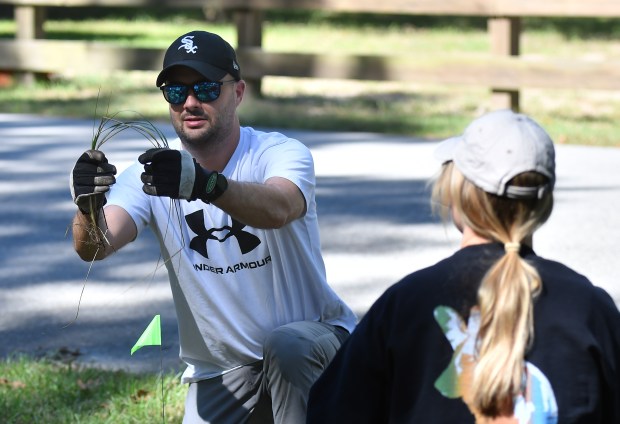
Marram grass has found a new home at Indiana Dunes State Park, thanks to an effort by volunteers. On Saturday, the grass, originally growing in a parking lot, was relocated to a more suitable location within the park. Participants learned not only how to plant marram grass but also why it plays a critical role in the Indiana Dunes ecosystem.
Understanding Marram Grass
Jessica Deerwester, a Natural Resource Technician, explained the significance of marram grass to volunteers. Known scientifically as Ammophila breviligulata, its name means ‘sand friend.’ The plant’s roots stabilize the sand by growing both deeply and outwardly to secure the sand in place.
Marram grass is considered a pioneer species—it is often the first to grow in sandy areas, paving the way for other plant species to flourish. Deerwester highlighted its ability to expand six to ten feet per year through its roots and its remarkable drought resistance, with leaves curling to capture moisture.
Efforts During National Public Lands Day
In celebration of National Public Lands Day at the Indiana Dunes State Park campground, volunteers successfully planted nearly 100 marram grasses. Deerwester marked planting locations with flags, indicating where each grass should be planted. By folding the leaves down, Deerwester demonstrated a method to prevent transplants from being uprooted by the wind.
The placement of marram grass on an island previously maintained by park crews aims to reduce maintenance tasks, particularly during the busy summer season, while aesthetically enhancing the area. The dune grass also attracts wildlife, such as the racerunner lizard, known for its impressive speed.
Volunteer Contributions
Vida Bartasius from Burns Harbor, a devoted park volunteer, joined the activity, expressing her deep connection to Indiana Dunes, having visited for over six decades. Ben and Amanda Kalinowski from Highland also participated, drawn by their love of the area. Amanda shared her experience with native plantings in Lake County, while the Moffitt family from Plainfield contributed during their camping trip, aiming to visit all state parks in Indiana.
Engagement with the Park Community
The initiative not only enriched the volunteers’ understanding of environmental stewardship but also fostered a sense of community among attendees. Deerwester emphasized that planting is ideally done in early spring or fall to circumvent peak growing times.
This project reflects broader community efforts to preserve the natural environment and promote the sustainability of park ecosystems, ensuring that future generations can continue to enjoy the beauty and biodiversity of Indiana Dunes State Park.