
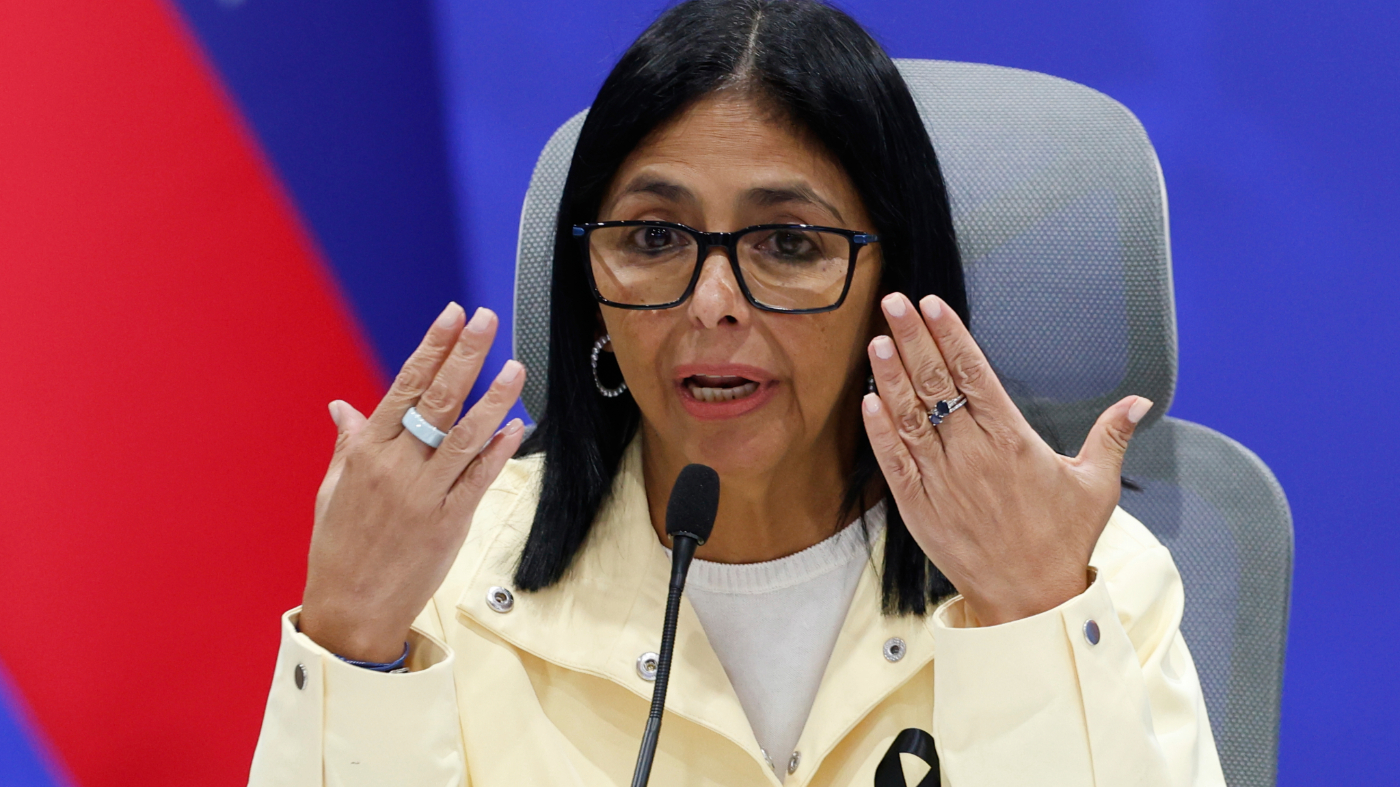
In Caracas, Venezuela, Acting President Delcy Rodríguez recently addressed the government’s response to earthquakes occurring back-to-back. This marks a significant shift in Venezuela’s political stance following the removal of Nicolas Maduro in January.
In stark contrast to past Venezuelan leadership under Hugo Chavez, who once accused Israel of sponsoring terrorism, current leaders are extending olive branches to Israel. In April, Rodríguez offered greetings for Passover, emphasizing peace and religious freedom in Venezuela.
Since severing longstanding ties with Tehran, Venezuela has taken steps to align itself with Israel. This was evident when the country extradited Ali Zaki Jalil, a Hezbollah agent, to Panama. Additionally, Alex Saab, linked to Maduro and charged with money laundering, faced extradition to the U.S. for aiding groups backed by Iran.
The diplomatic shift includes relinquishing highly enriched uranium, a security concern for the Americas and Israel. This action resulted from collaboration with the U.S., UK, and the International Atomic Energy Agency.
“We have received a highly professional and skilled team from Israel,” Rodríguez remarked, acknowledging Israeli assistance after recent earthquakes.
Israeli Prime Minister Benjamin Netanyahu praised efforts to rebuild Venezuela and strengthen relations, highlighting Israel’s involvement in structural assessments post-earthquake.
Despite these diplomatic gestures, Venezuelan leaders face criticism for maintaining problematic narratives while striving for international approval. The interim government’s quest for legitimacy involves strategic engagement with Israel.
Nonetheless, demands from the Venezuelan populace remain firm: releasing political prisoners, facilitating the return of exiles like María Corina Machado, and ensuring fair elections.
Arturo McFields, an exiled journalist and former ambassador, emphasizes that genuine progress in Venezuela requires addressing these fundamental issues.