
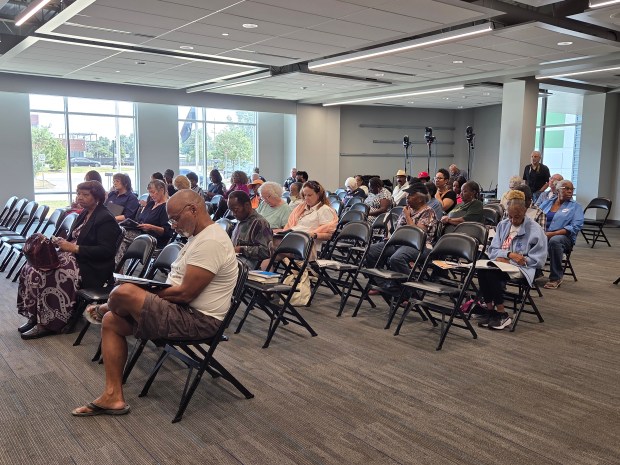
Before the August 11 derecho, utilities legislation was already a priority for the Indiana Black Legislative Caucus. After the storm, with communities struggling with intermittent power outages, the caucus committed to enhancing the House Enrolled Act 1002. This commitment was made during a town hall at the Hammond Sportsplex.
Although useful in some respects, HEA 1002 fell short in areas, noted State Representative Cherrish Pryor, D-Indianapolis. The caucus gathered at Hammond’s Sportsplex on Saturday to discuss bills from the 2026 session of the Indiana General Assembly and local concerns.
Pryor detailed significant changes including a shift from budget billing to ‘levelized billing,’ aimed at reducing confusion about fluctuating payments due to unpaid balances. Utilities are now also required to reconfigure billing bi-annually.
The bill addressed disconnection notices, ensuring they are prohibited during both cold winter months and hot summers due to associated health risks.
Utilities requesting rate increases from the Indiana Utility Regulatory Commission must now present performance metrics regarding service affordability during outages.
State Senator Mark Spencer, D-Gary, responded to widespread power outages, noting that they affect food, medicine, and local businesses. “Investigations are underway,” he mentioned, as audience members confirmed extended power losses.
The caucus managed to pass beneficial legislation like Senate Enrolled Act 164 for urban micro farm studies and SEA 232 to regulate property purchases by City of Gary officials.
House Bill 1114 ensures that Medicaid and HIP patients with Stage 4 cancer receive necessary treatment, shared Pryor.
Senate Bill 277, signed by Governor Mike Braun, rendered many functions of the Indiana Department of Environmental Management optional, raising concerns from Senator La Keisha Jackson, D-Indianapolis. “Indiana, already in the top three for water and air pollution, may face further degradation,” Jackson added.
Other initiatives, like preventing the Bureau of Motor Vehicles from selling license information and restoring property tax deductions to surviving spouses of World War I veterans, did not pass. Studies on water use and utility regulation in data centers also failed, yet these remain focal issues for the caucus.
State Representative Earl Harris Jr., D-East Chicago, chairs the IBLC and aims to reduce the supermajority post-November elections to bolster caucus initiatives. He highlighted the Spencer Deery election decision, emphasizing the importance of every vote, referencing a close Indiana Supreme Court decision affecting local offices.
Michelle L. Quinn reports for the Post-Tribune.