
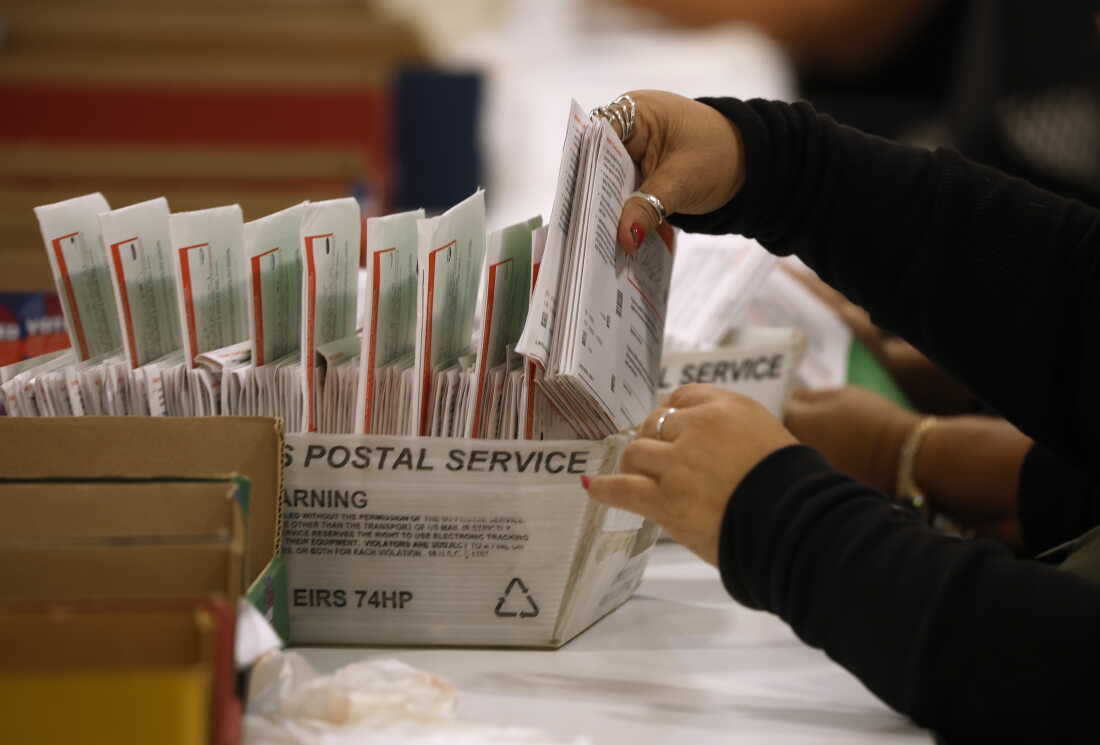
An election worker processes mail-in ballots in California. The Supreme Court has been asked to intervene by the Trump administration to lift a block on a U.S. Postal Service (USPS) plan linked to President Trump’s attempts to limit mail-in voting for the upcoming midterm election.
A federal judge in Boston has issued a temporary restraining order that currently halts key parts of this plan. The legal battle over Trump’s mail-in voting strategy continues. Below is an overview of the situation surrounding mail-in voting for the midterms:
Impact of USPS Plan on Mail-In Voting
Currently, the USPS plan has not modified mail-in voting procedures for the midterms. The court order hinders specific elements of the plan, such as state requirements. Eligible voters in their respective states can still vote by mail, with USPS expected to handle mail-in ballots as it has in the past.
Potential Changes from the USPS Plan
The suggested USPS plan included stipulations requiring state election officials to provide names and addresses of mail-in voters to USPS. It also required specific barcodes on mail ballot envelopes. If these requirements are unmet, USPS declared it would not deliver ballots for those election offices.
Start of Mail-In Voting for Midterms
The mail-in voting period begins with North Carolina, where absentee ballots are mailed out starting Friday. Other states will commence sending their mail-in ballots later in the month.
Feasibility of USPS Plan for Midterms
Experts in election operations express skepticism about implementing the USPS plan without significant disruption. A whistleblower claims that USPS has inadequately tested its online portal system for collecting mail-in voter details. Concerns exist over a policy for verifying ballot envelopes that might result in ballots delayed or not received by voters in time for elections.
Arguments Surrounding the USPS Plan
Prompted by a March executive order from President Trump, USPS devised this plan to hinder illegal voting by non-U.S. citizens. Despite USPS claims for regulatory purposes, studies indicate such voting is exceedingly rare. Opponents argue USPS lacks authority to dictate mail-in voting rules.
Supreme Court Involvement
Previously, the Supreme Court addressed a procedural matter regarding one of the lawsuits linked to the order in August. However, it has yet to deliver a verdict on the order’s legality or the USPS plan.
Note: USPS financially supports NPR.