
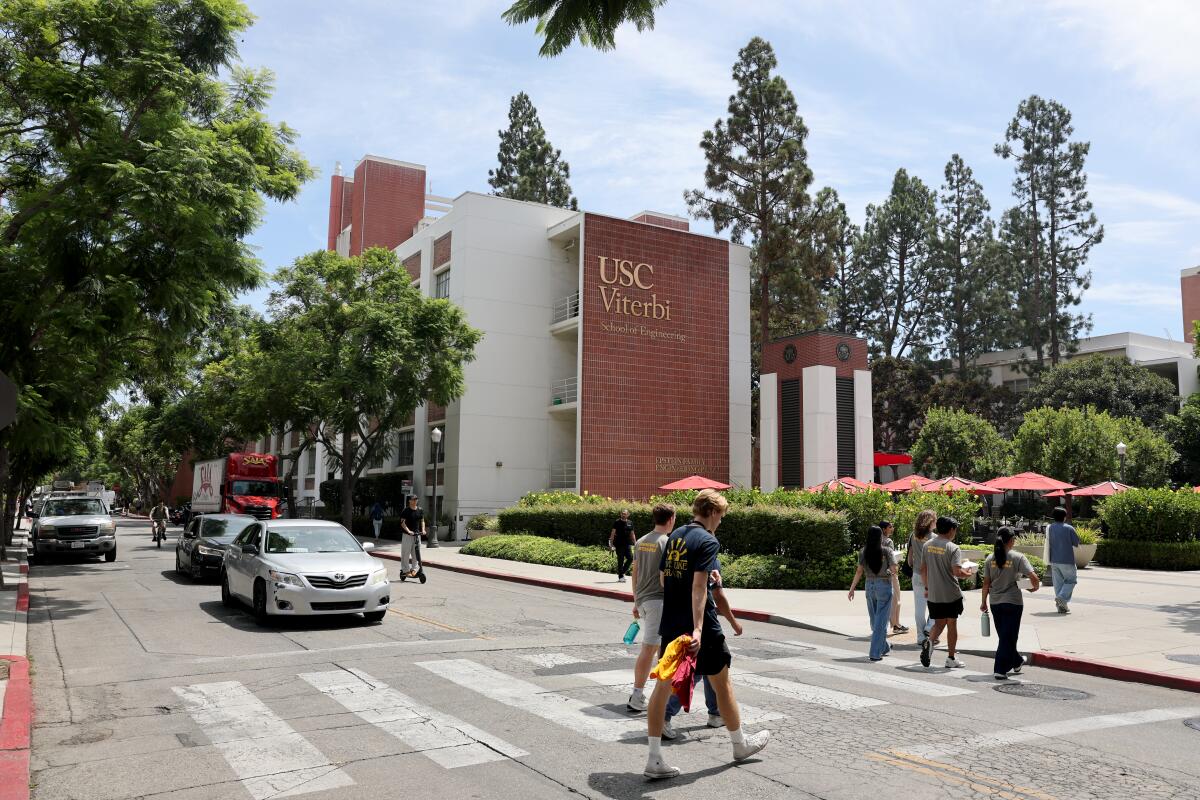
USC and UCLA are integrating artificial intelligence (AI) and digital technologies into their academic offerings as the new school year begins. Both universities have introduced new AI majors and initiatives, reflecting a broader trend in higher education to leverage these technologies in coursework.
USC’s AI Initiative
At USC, the Viterbi School of Engineering has launched its first undergraduate degree in artificial intelligence. This major is part of the Mark and Mary Stevens School of Computing and Artificial Intelligence. Students will spend four years learning how to build AI technologies applicable across diverse fields like drug discovery, robotics, and agriculture. Ethical considerations are included in the curriculum to address societal impacts.
According to Erik Johnson, Viterbi’s vice dean for academic programs, the focus is on creating a diverse educational experience. At USC, an AI degree is designed not only to teach system usage but also to guide students in designing and building AI models.
“Teaching AI ethics is essential,” Johnson explained. Students must engage with questions about responsibility for self-driving cars or biases in policing algorithms.
AI Programs Nationwide
Other California campuses, like UC Santa Barbara and San Diego State, have launched AI-focused programs as well. However, not all institutions are creating AI majors. Schools like Stanford integrate AI tracks into existing computer science programs, providing students with fundamental AI and machine learning knowledge.
Several prestigious universities, like Carnegie Mellon, MIT, and the University of Pennsylvania, offer undergraduate AI degrees, underscoring the increasing importance of AI education.
UCLA’s Digital Humanities Department
UCLA has a different approach by establishing the nation’s first freestanding Department of Digital Humanities. The department’s bachelor’s degree aims to integrate AI tools in sociology, archaeology, and the study of race and gender.
Alexandra Minna Stern, dean of the UCLA Humanities Division, noted the rising demand for a digital humanities major in Los Angeles. “It’s about critically engaging with AI,” Stern stated, emphasizing that the curriculum is neither a celebration nor a condemnation of AI.
Courses explore AI’s historical and ethical context. Todd Presner, a professor in the department, uses class exercises to illustrate AI’s potential for misinformation and distortion.
Bridging AI and the Job Market
Alumni have found that combining digital humanities with other fields can differentiate them in the job market. Cynthia Gong and Kedaar Sridhar, both UCLA graduates, cited how their education enhanced job prospects and functionality in real-world applications.
Michael Horn from Harvard noted that these programs meet the changing demands of the market, as universities receive signals from students and employers about the relevance of AI knowledge.
While it remains uncertain if new AI degrees will lead to direct careers, the move reflects a shift towards adapting curricula to rapidly evolving technological landscapes. USC and UCLA’s initiatives aim to deliver what future employers want in new hires: the ability to navigate and ethically shape the use of AI.