
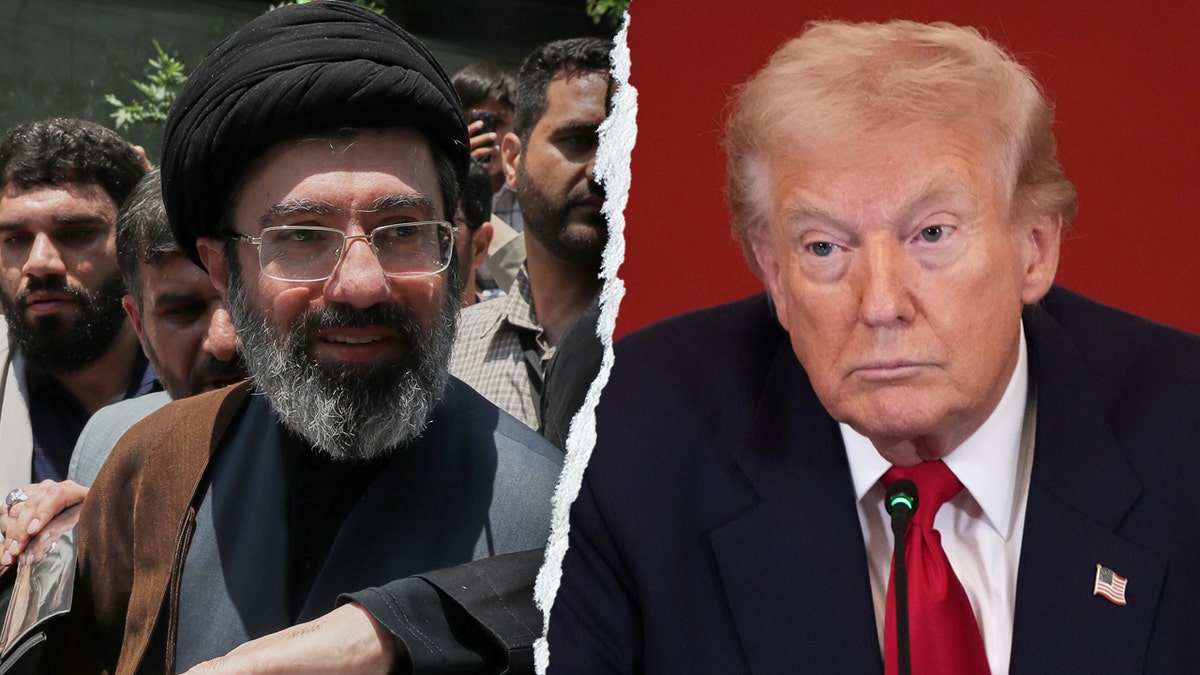
In Jerusalem, US-Iran tensions have intensified following heated exchanges between Iran’s Supreme Leader Ayatollah Mojtaba Khamenei and President Donald Trump. Khamenei, who remains out of public sight since a joint US-Israel airstrike, claimed that the process of the US ‘collapse’ had accelerated. This statement followed the Republican defeat in the midterm elections, which some interpreted as a political boon for Iran.
The White House responded by emphasizing its strategic control over vital areas like the Strait of Hormuz and pointed to Iran’s deteriorating economy. A spokesperson asserted that Trump’s administration is positioned to act in the best interests of the US.
Iran has heightened its anti-American rhetoric, including an exhibit representing Trump in a mock execution, coinciding with the anniversary of the US Embassy seizure in 1979. Additional threats were directed toward Western Europe, showcasing potential military targets in France, Germany, and Britain.
Navid Mohebbi, a former media analyst for the US State Department, observed that Iran’s narrative suggests its actions have inflicted a political defeat on Trump in Washington. He argues this is part of a psychological and political campaign designed to exaggerate the electoral cost for American politicians confronting Iran.
Mohebbi believes Trump should continue confronting Iran due to sustained threats and unresolved issues, particularly concerning Iran’s nuclear capabilities and ballistic missile program. He notes that Iran’s strategic behavior and hostility towards the US and allies have not fundamentally changed.
Former Pentagon official Simone Ledeen supports aiding the Iranian populace while avoiding US boots on the ground, indicating that regime change is necessary for altering Iran’s behavior. Commentator Ben Shapiro praised Trump’s approach to Iran’s nuclear issue as one of his most significant foreign policy achievements.
Despite Trump’s firm stance, some experts believe Iran’s strategy involves waiting out his administration. This perspective suggests that Iran views current US pressures as temporary and expects a future Democratic administration to reduce military action risks.
Jason Brodsky from United Against Nuclear Iran remarked on Iran’s view of the midterm results as a sign that electoral consequences might deter future US military initiatives. Yet, he notes Trump’s unpredictability and remaining term could still pose challenges to Iran.
The article reflects ongoing US-Iran dynamics and the interplay of military strategies, political tactics, and international rhetoric. As these situations evolve, the path forward for both nations remains critical and complex.