
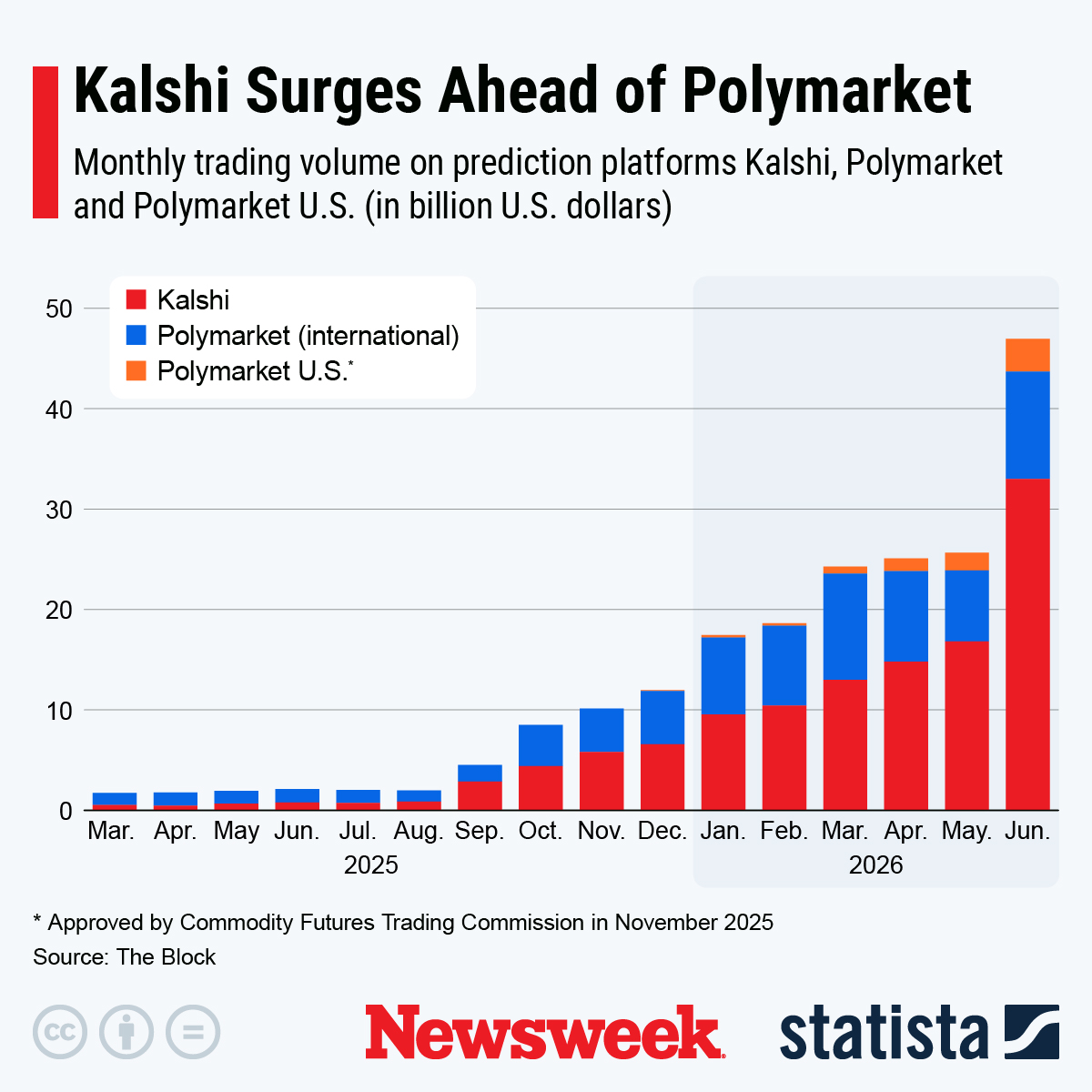
Thursday brought news that a White House employee was put on unpaid leave over allegations of betting on the content of Donald Trump’s speeches. This occurrence was not entirely shocking. It reflects a broader trend with “prediction market” platforms like Kalshi and Polymarket, which are often seen as havens for gambling or potential insider trading.
However, when bets extend beyond trivial matters to significant topics like elections or secret military operations, these platforms might offer insights into truths otherwise hidden in today’s overwhelming information environment.
Making Inside Information Public Knowledge
This publication does not support insider trading. However, prediction markets have opened a practice once dominated by the wealthy and powerful. Previously, influential figures could profit from insider knowledge through trades or investments, while the public remained uninformed. That dynamic has shifted.
Though prediction markets do not morally justify using secret information, they expose it. Now, anyone with insider knowledge can place bets beyond stock markets, and these bets leave traces. Observing these traces can reveal the hidden forces impacting global events and policies.
For instance, if a low-level staffer places a revealing bet during a White House press briefing, it might expose falsehoods disseminated by the administration. In another situation, a U.S. special forces soldier was charged with illegal trades after allegedly using classified military information, suggesting that betting actions can spotlight concealed government actions.
Public Polling for the Digital Age
In distinguishing opinion polling from prediction markets, it is vital to appreciate their differences. While polling captures thoughts, prediction markets reflect where people wager money. Yet the key discrepancy lies in speed.
Polling serves as an essential political tool, assessing public sentiment and behavior. Despite this, polling struggles to keep pace in the digital era. Rapid news cycles mean public sentiment changes faster than traditional polls can measure.
Research suggests this swift adaptability could mean greater accuracy. For example, Polymarket outperformed traditional polls in forecasting the 2024 Presidential Election, notably in swing states, as per a Vanderbilt University study. While further research is necessary, keeping an eye on prediction markets can provide more reliable indicators ahead of elections compared to sensational news.
Thinking Bigger: Benefits and Risks
Prediction markets, while useful for personal understanding, have broader applications. They could revolutionize climate forecasting. Reliable climate predictions have been challenging due to varied information demands and manipulative incentives. However, prediction markets might create transparent odds for accurate outcomes, as suggested by U.K. researchers in Nature. This approach could increase forecasting accuracy.
However, caution is warranted. Congressional resolutions now prevent Senators from prediction market involvement, with potential similar actions for others. While prediction markets hold benefits, they can be exploited. Could influential figures or organizations leverage these markets to manipulate geopolitical events?
Prediction markets hold significant untapped power. Although prone to misuse, they can offer solutions in a complex world. Approach them with awareness and precision.